


Watch Case

If you rotate several timepieces, loose drawers and improvised trays quickly lead to scuffs and misaligned bracelets. A dedicated watch case solves that by combining a shaped interior with a reinforced shell, so each watch sits stable, protected, and ready to wear. Choose a case once, and you reduce accidental knocks and micro‑scratches for years.
This page focuses on the case itself: the architecture that shields, the cushions that cradle, and the slot layout that matches your routine. Expect practical comparisons, measurable guidance, and expert tips to size the right capacity and select the right materials. Browse, compare, and find a watch case that fits your habits and elevates daily use.
Unlike open trays or rolls, a structured case provides a rigid envelope and a lined cavity. That combination limits shock and friction—the two main causes of hairlines on polished bezels and clasp rash on bracelets. Key parts to examine are the shell, hinges/closure, interior lining, and the geometry of the watch pillows.
| Criterion | Case‑specific insight |
|---|---|
| Shell rigidity | Hard‑sided boxes disperse point loads; soft capsules absorb everyday bumps but can compress under heavy weight. |
| Lid design | Glass lids aid quick viewing; solid lids block UV and add privacy for storage at Home or office. |
| Lining and pillows | Microfiber reduces abrasion; removable pillows simplify repositioning and let you clean dust with ease. |
“Many buyers feel there are only bargain or ultra‑premium watch box options. A well‑built case fills the middle ground with durable shells, soft linings, and tested hinges that simply protect better.”
For bracelets, choose pillows with a compressible core. You’ll avoid spring‑bar stress and keep the clasp centered, preventing uneven stretch marks on the links.
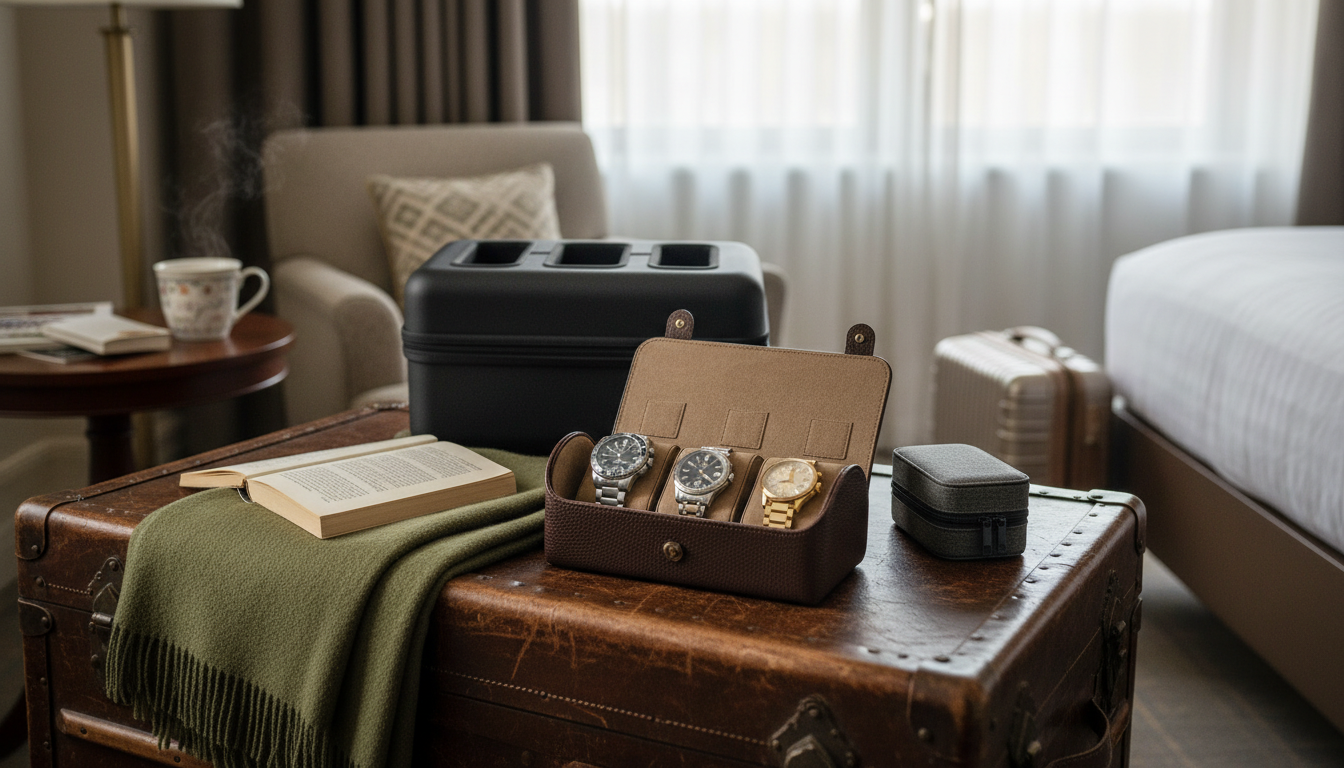
Capacity is more than a number; it changes how a case behaves on a shelf, in a drawer, or on the move. A single tube protects one piece during service or gym sessions; a 3‑slot travel box supports a weekend selection; 6‑ to 12‑slot cabinets suit curated display at Home. Each slot geometry needs enough clearance for tall domed crystals and thicker dive clasps.
| Capacity | Typical use for a case |
|---|---|
| 1 slot | Service visit, day trip protection, or safeguarding a dress watch in a bag. |
| 3 slots | Weekend split: field, diver, dress—kept separated and visible. |
| 6 slots | Weekly rotation, often with a glass lid to scan choices at a glance. |
| 12 slots | Display cabinet scale; needs wider hinges and stable feet to prevent tipping. |
If compact portability is your priority, explore our three‑watch formats, which balance footprint, slot spacing, and protective padding for everyday travel.
Check “slot pitch” (center‑to‑center spacing). A tight grid invites bezel‑to‑bezel contact; a wider pitch keeps crowns and pushers clear.
On the road, a case prevents shock, crush, and moisture issues that standard pouches can’t handle. Look for pressure‑resistant shells, “foam only” modules with pre‑cut recesses, and zipper tracks that don’t snag straps. For air travel, a low profile fits side pockets while still isolating each watch.
| Travel case type | Strength in transit |
|---|---|
| Soft leather capsule (1–3 slots) | Lightweight, compressible, great for carry‑on; add stiffener panels for added safety. |
| Hard‑sided resin (3–10 slots) | Impact‑resistant, foam inserts lock watches in place; excels in overhead bins or checked luggage. |
| Wood display box (6–12 slots) | Best for Home display; add corner padding if you must transport. |
Need more capacity without sacrificing portability? Consider five‑slot editions that remain slim enough for a backpack while adding a balanced middle row to minimize jostle.
Some travel cases use tempered glass for viewing with reinforced frames, while others favor solid lids to reduce glare and improve scratch resistance.
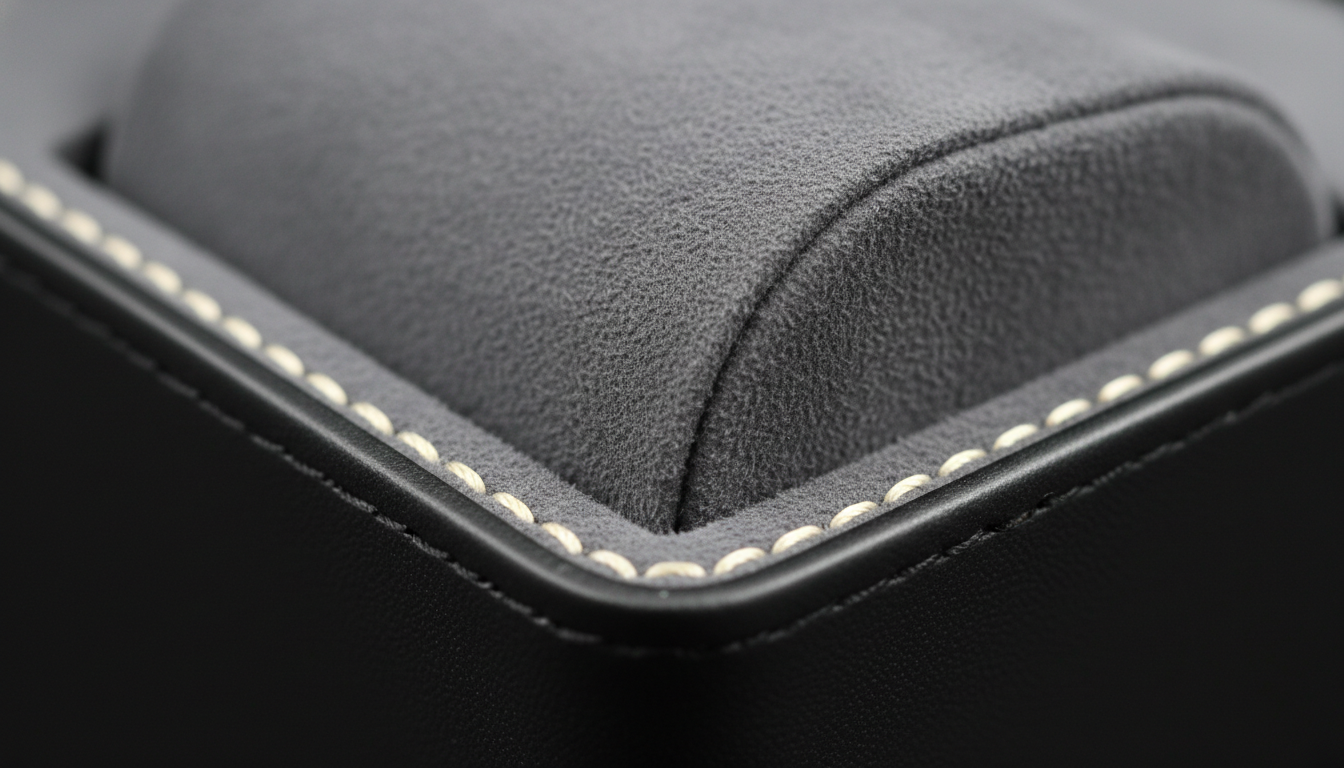
The heart of a case is its insert system: pillows, dividers, and removable trays. Well‑designed interiors keep crowns clear, bracelets relaxed, and dials visible. Pillows should compress easily to fit men’s and slim wrists without straining straps. Dividers must be tall enough to block bezel contact even when the lid is closed.
| Insert option | Benefit inside a case |
|---|---|
| Microfiber pillows | Scratch‑safe contact; easy to dust with a soft brush. |
| High‑density foam “slots” | Firm placement; great for travel and for bracelets that need extra stability. |
| Removable tray | Transforms a storage box into a portable display for quick selection. |
Building a compact display at Home? Review 4‑watch options that keep spacing generous and viewing angles comfortable without the footprint of larger cabinets.
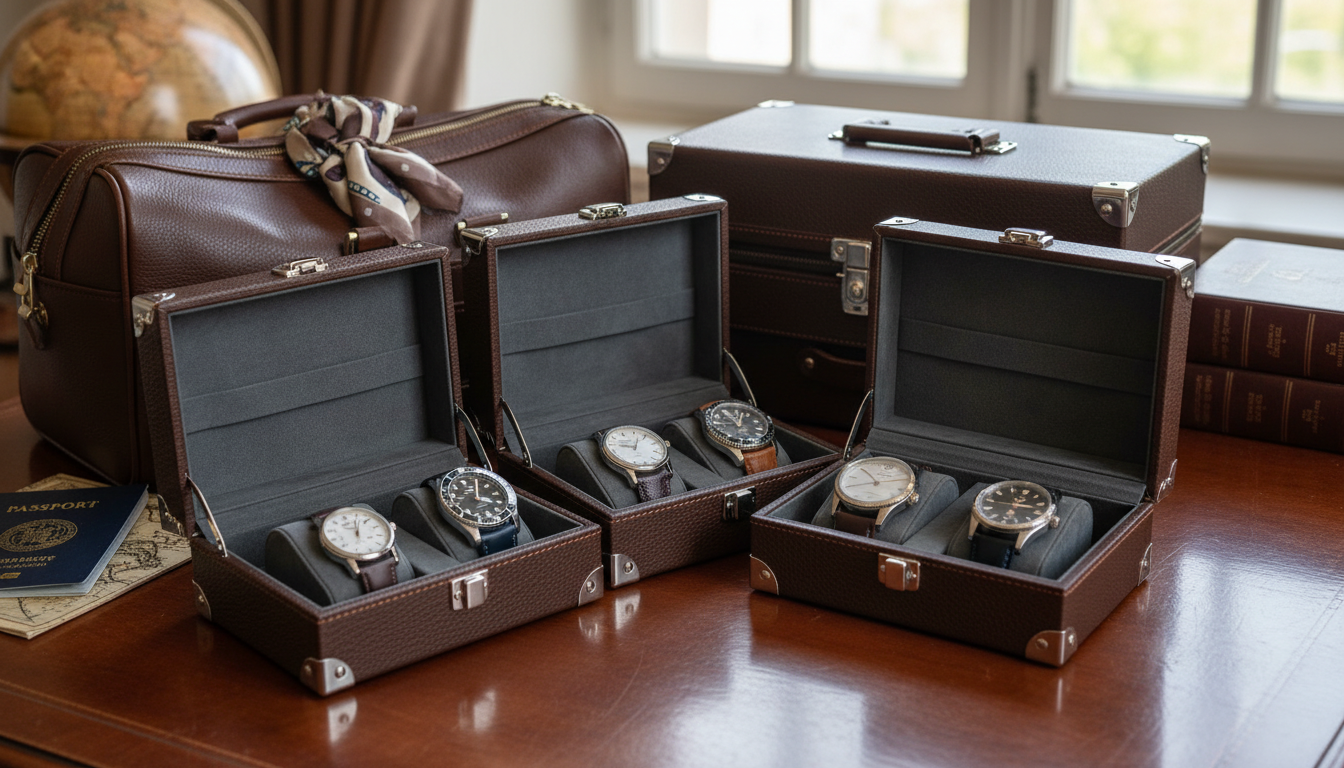
Use these criteria to size the right case and avoid returns. Each point maps to a measurable feature so you can compare models objectively.
| Use‑case | Recommended case features |
|---|---|
| Carry‑on travel | 3‑slot soft capsule, zipper, padded dividers, silica pouch pocket. |
| Desk display | 6–12 slot wood box, glass lid, wide base, anti‑scratch feet. |
| Small apartment | 4–5 slot compact with drawer, solid lid, vertical storage footprint. |
Prefer a compact four‑place layout with a refined palette? Consider the four‑slot, vanilla‑tone storage that balances soft lining, stable cushions, and a clean, understated look.
A case combines a rigid outer body with plush interiors that stop lateral movement. That mix reduces bezel rub, clasp contact, and dust ingress. Compared with open trays or rolls, the case architecture adds impact control, consistent slot geometry, and better long‑term surface preservation.
A roll is flexible and slim, but watches can press against each other if not packed perfectly. A 3‑slot case isolates each watch with dividers and pillows, so crowns and bezels never touch. For weekend travel, a compact box offers structured separation and faster access. See a colorful option like the three‑slot Rubellia piece for balanced portability.
Single cases cradle one timepiece with dense padding, which is great for gym bags or service visits. They protect crystals from keys, prevent bracelet kinks, and keep finishing clean in transit. A subtle pick like the single‑watch dusk edition adds reliable protection without bulk.
Yes—choose pillows with compressible cores and wide shoulders. Check slot height for tall divers and ensure dividers keep pushers clear. Hard‑sided shells with thicker walls also help stabilize heavier pieces while preventing clasp‑to‑case contact.
Dust with a soft brush, vacuum gently with a fabric nozzle, and rotate silica pouches monthly. For leather‑lined pillows, avoid aggressive cleaners; a light wipe keeps fibers smooth. For robust daily use, the leather triple holder in Toundra pairs durable shells with easy‑care linings.
Look for aligned hinges, stable feet, solid lid frames, and consistent slot pitch. A glass lid aids quick selection; a solid lid adds privacy. Consider a refined three‑place display such as the Paladin triple case when you want presence without a large footprint.
A well‑chosen watch case does what open storage cannot: it locks each timepiece into a soft, precisely sized space inside a reinforced shell. That design keeps bracelets relaxed, bezels pristine, and selections visible at a glance. If you value compact elegance and measured protection, explore a focused option like the Paladin three‑watch display and size capacity to your rotation.


