


10 Watch Winder

If you rotate through several automatics, a 10 watch winder solves the daily reset ritual by keeping every caliber powered on cue. Mentioned twice here for clarity: a 10 watch winder isn’t storage; it’s an engineered rotation system that sustains power reserve, preserves date and moonphase settings, and minimizes wear from manual resets.
Expect consistent TPD, precise directional control (clockwise, counterclockwise, bi-directional), and whisper-quiet drives designed for bedroom silence. Below, you’ll find how these winding units differ from static boxes, what specs matter (TPD, rotor independence, pillow fit, noise in dB), and how to choose confidently. Browse the models on this page, then use the guides, tables, and FAQ to finalize your pick.
Unlike a static display box, a winder mimics wrist motion with controlled turns-per-day (TPD) and timed rest cycles. A precise program avoids overwinding while preventing the mainspring from sitting fully wound for long stretches. A 10 Watch Winder scales this control across ten independent rotors, so each movement can receive its own regimen.
| Movement/Complication | Typical TPD Range | Direction |
|---|---|---|
| Time-only, three-hand automatic | 650–800 | Bi-directional or per spec |
| Day-date / GMT | 700–900 | Often bi-directional |
| Chronograph (automatic) | 800–1000 | Per movement spec |
| Annual/Perpetual calendar | 850–1200 (tuned conservatively) | Per maker recommendation |
Set each rotor based on the watch’s recommended TPD and direction. If unknown, start with 700–800 TPD bi-directional and verify power-reserve stability over a week.
A 10 watch winder centralizes upkeep: no more re-setting moonphases or annual calendars after weekends. By keeping torque delivery steady, it supports lubrication flow and reduces crown wear from frequent manual winding.
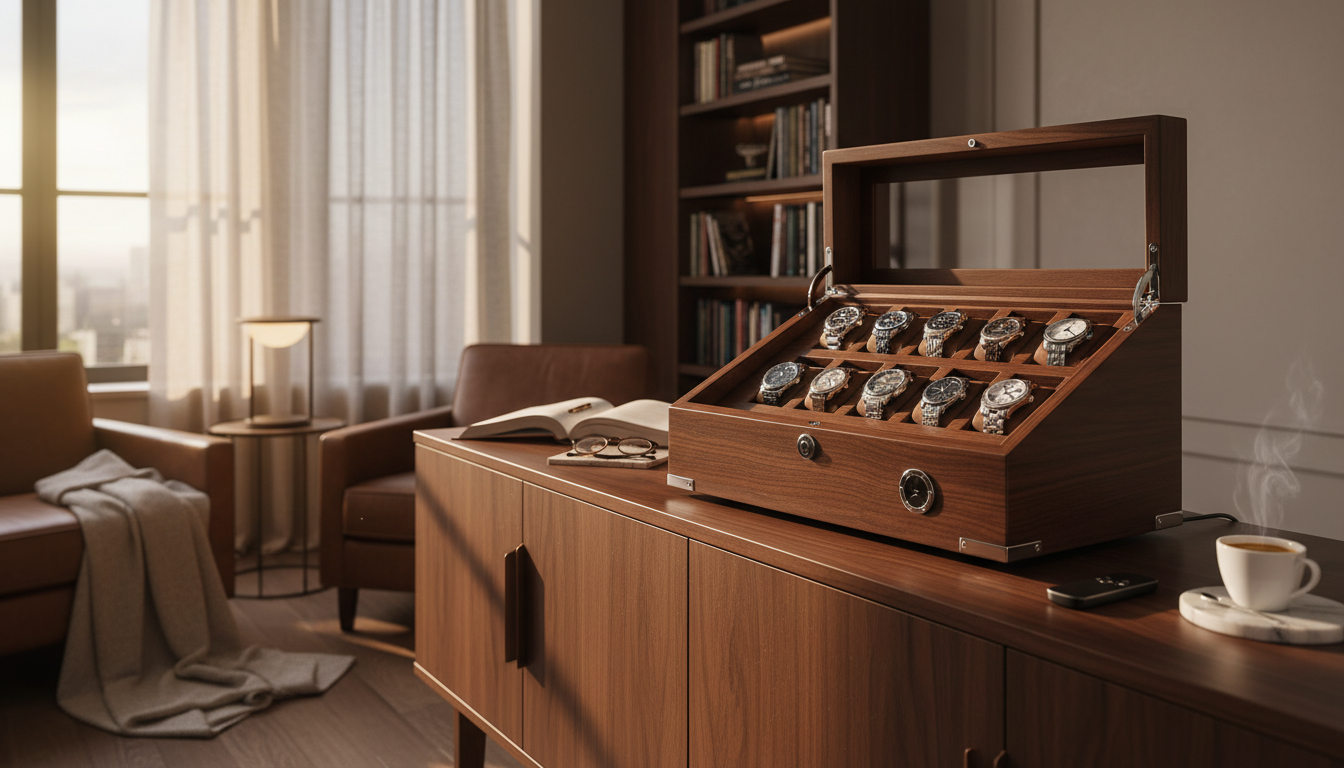
Ten-rotor systems come in three layouts. Drawer-style inserts hide the mechanics while presenting a flat front; cabinet units showcase rotors behind a lockable glass door; tabletop boxes are compact and easy to reposition. Each format influences noise perception, dust control, and access to controls.
| Format | Strengths | Considerations |
|---|---|---|
| Drawer insert (10 winders per drawer) | Invisible integration, low dust, neat cable runs | Requires depth; plan airflow and service access |
| Cabinet unit | Display with LED, door lock, quick viewing | Add weight; verify motor stop when opening |
| Tabletop box | Portable, budget-friendly, simple install | Less isolation; ensure low dB rating |
A typical single-rotor module weighs around 0.4 kg. A 10-rotor cabinet can exceed 5–8 kg depending on wood density, glass thickness, and the power supply configuration.
If you want to compare beyond ten-rotor cabinets and inserts, see the broader automatic-winder range here: the wider automatic-winder lineup.
A 10 watch winder also centralizes keys and accessories, with many layouts including a concealed drawer for straps and tools, typically under the rotor array.
Across ten seats, small imperfections add up. Focus on materials, mechanics, and ergonomics that keep every watch secure and every program stable.
| Criterion | What to check |
|---|---|
| TPD range & modes | 650–1950 TPD, CW/CCW/bi-directional, start-delay and rest cycles |
| Pillow fit | Width and compressibility, secure clasp channel, oversized case support |
| Power & runtime | AC adapter, optional battery pack, efficiency in standby |
| Noise isolation | Damping grommets, gearbox quality, cabinet material mass |
| Door & lock | Keyed lock, glass thickness, hinge angle, seal alignment |
Verify internal clearance. Oversized cases (45–48 mm, tall crystals) need extra depth so lugs and clasps don’t graze the glass during rotation.
Prefer the look and warmth of timber? Compare the wooden alternatives here: the wood-finished winders.
A well-specified 10 watch winder balances mass (to absorb vibration) with refined mechanics, so ten movements remain quietly in motion—day and night.
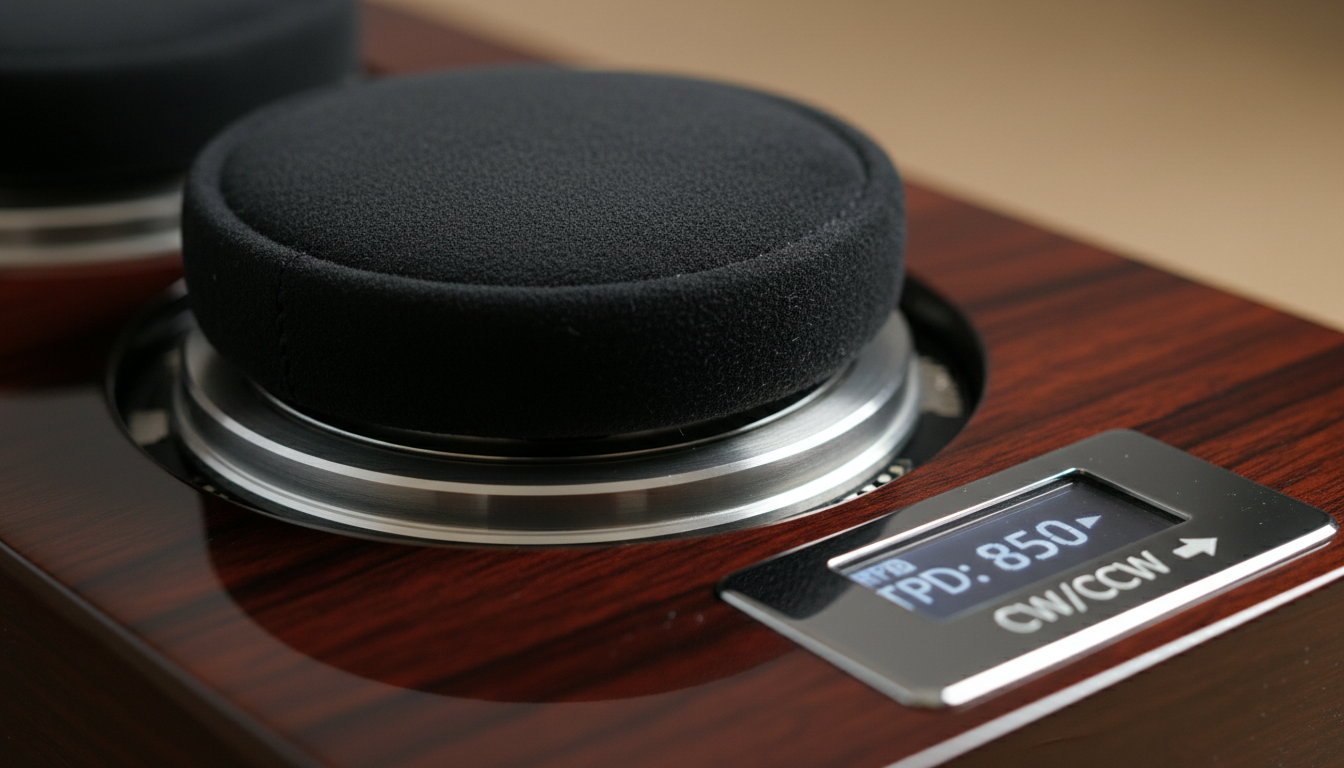
Large divers and precious-metal pieces weigh more and extend farther from the pillow. The right winder uses compressible holders with positive clasp channels and balanced cradles that center mass near the rotor axis. This reduces strain on the holder and the movement’s winding gear.
| Fit Factor | Target Spec for Ten‑Seat Units |
|---|---|
| Max case diameter | 55–60 mm including crown guards |
| Internal clearance depth | clearance depth ≥ 70–80 mm from pillow face to lid/glass |
| Pillow circumference range | Approx. 160–220 mm (compressible foam core) |
Test-fit your largest watch first. Rotate slowly by hand with the unit off to ensure the clasp clears the window and surrounding bezels before enabling the program.
If ten active rotors feel excessive and you prefer a leaner layout, consider the eight-watch format here: the 8‑watch alternative.
A 10 watch winder with secure locks and a key slot also provides access control—useful when the unit sits in a shared space.

Narrowing options is easier when you translate movement and room constraints into concrete specs. Use the list below to assign values before you compare models on this page.
| Power Option | Benefit | Trade‑off |
|---|---|---|
| AC adapter (100–240V) | Continuous power, stable speed control | Needs nearby outlet; visible cable |
| Battery-powered pack | No wires in cabinetry or safes | Finite runtime; monitor charge |
| Dual (AC + battery) | Flexibility and backup during outages | Slightly higher cost/weight |
For a concrete reference, consider a 10‑unit in warm brown finish with independent rotors, dual power, and LED lighting to check how these criteria translate into real dimensions and weight.
It’s a powered cabinet or box with ten programmable rotors that keep automatic watches running. By applying controlled TPD and rotation direction, it maintains power reserve, preserves calendar settings, and reduces manual winding. Look for quiet motors, safe holders, and directional control matching each movement.
If you cycle through many pieces, ten seats reduce downtime and eliminate constant reprogramming. Independent channels let you set a diver, a GMT, and a calendar differently while everything stays synchronized. See also a nine-piece alternative in dark wood if you want similar flexibility with a smaller footprint.
A storage box protects from dust and scratches but doesn’t move the rotor—calendars stop and power drains. A winder provides motion on schedule, so watches are ready to wear. For a display-forward approach, explore a display-forward chest that combines presentation with active winding.
Consult the movement’s guidance. As a starting point, try 700–800 TPD bi-directional, then verify reserve stability. Chronographs often need a bit more; perpetual calendars benefit from conservative cycles and rest intervals. A compact nine-slot option in ebony tone can illustrate granular programming on each channel.
Place it on a level surface away from direct sun and high humidity, anchor heavy cabinets if needed, and use motor stop when placing/removing watches. Dust seals, hinges, and pillows with a soft cloth; avoid harsh cleaners. Battery packs should be inspected periodically for charge and condition.
Quality units use low-heat LED with a separate switch, so you can display without warming crystals or straps. Blue, neutral, or warm whites are common; choose a tone that complements black leather, carbon trims, or high-gloss wood without glare on polished bezels.
A 10 watch winder differs from ordinary cases by delivering movement-specific motion, day after day, across ten independent rotors. Define your TPD, fit, and format, then assess noise, power, and safety to finalize a choice that keeps every piece ready to wear.
For a finishing reference with dual power and controlled lighting, take a look at a nine-rotor layout in a forest-toned veneer to compare footprint, weight, and access before you commit.


