


Watch Box

Loose watches rattling in a drawer scratch, collect dust, and lose their set order. A dedicated watch box solves all three issues at once. By enclosing each timepiece in a defined slot with a cushioned mount and a protective lid, a box delivers structured storage and controlled display that a bare shelf or open tray cannot replicate.
Engineered around a rigid shell, a watch box pairs impact resistance with a clear viewing panel or a fully opaque lid. That means you can scan your lineup in seconds, then reach for the right piece without shifting others. Expect tangible gains: fewer micro-scratches, dust reduction, and a stable home for both large sports cases and slim dress models.
Below, explore how the right box enhances protection, organization, and aesthetics—plus practical advice to size your cushions, compare slot counts, and choose a layout with or without a drawer. Ready to build a setup that works as smoothly as it looks? Start with the pillars that matter most to you.
Unlike open stands or loose valets, a watch box creates a controlled micro-environment around each timepiece. The rigid lid and body resist knocks; interior linings diffuse shock; and the slot-and-cushion system keeps lugs, bezels, and crystals from touching neighboring pieces. The result is predictable protection you can quantify by fewer polishing sessions and cleaner loupe checks.
Fit matters. Most cushions and slots in quality storage are dimensioned to accommodate case widths up to approximately 52 mm and heights common to diver and pilot styles, while slimmer dress pieces still seat securely. Look for strap relief channels so buckles don’t press into casebacks.
| Criterion | How a box addresses it |
|---|---|
| Impact and shock | Rigid panels and lined slots distribute force; watches don’t collide during movement. |
| Dust ingress | Lid sealing and tight tolerances reduce airborne particles compared to open displays. |
| Scratch risk | Soft linings and isolated slots prevent watch-to-watch contact, limiting hairlines on polished surfaces. |
| Quick selection | Glass window models let you identify pieces without opening the lid. |
Measure case diameter including crown guards and lug-to-lug length. Choose a cushion circumference that compresses slightly—too tight strains spring bars; too loose invites wobble inside the slot.
Planning a compact setup? Consider two-watch cases for a focused daily rotation without wasted space. Explore a concise take with two-watch cases.
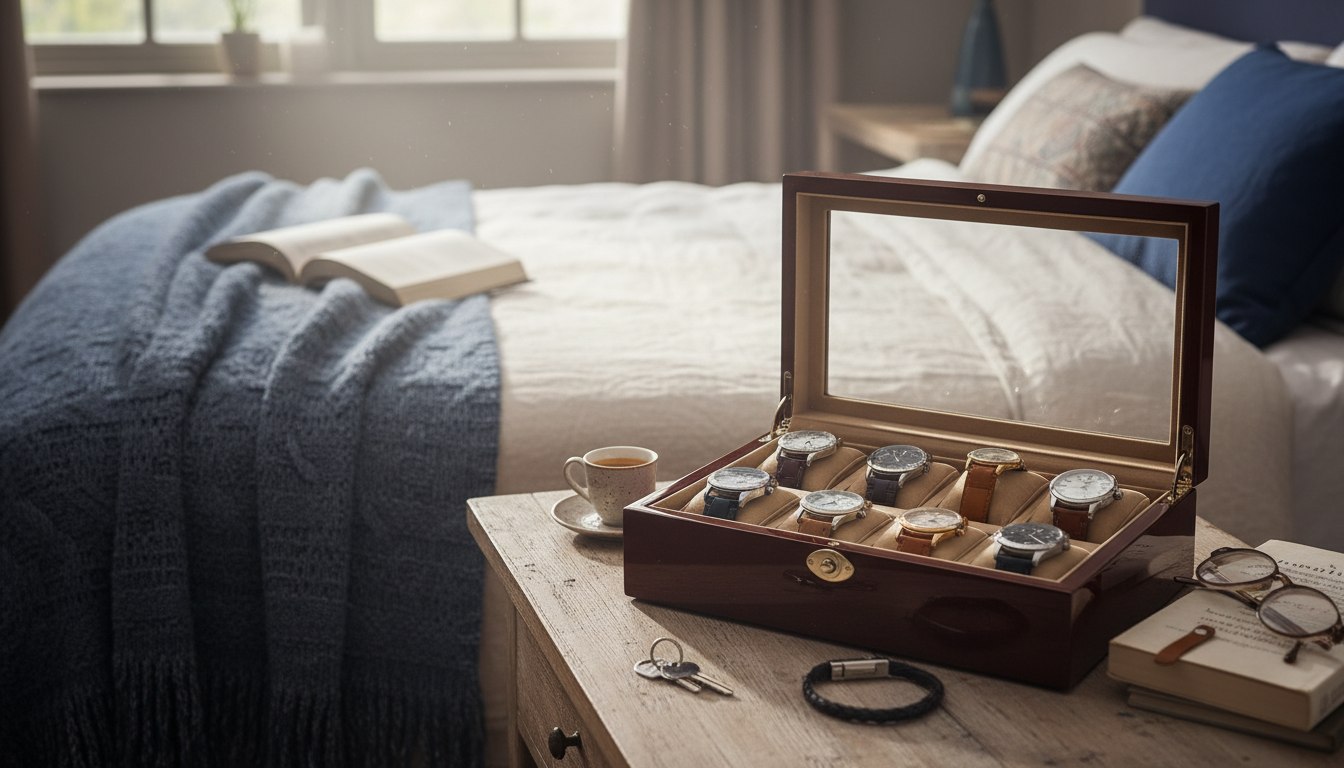
A box isn’t just a lid over slots. It’s a system designed to manage variety: metal bracelets, leather straps, NATOs, and chunky clasps each demand room. The right layout uses standardized rows, optional drawer space, and removable cushions so changes in your lineup never break the flow.
| Capacity option | Best use inside a box |
|---|---|
| 6-slot | Core lineup; compact footprint for desks or narrow shelves at Home or office. |
| 8-piece | Weekly rotation plus straps; pairs well with a box with drawer for accessories. |
| 12-slot | Balanced capacity; ideal when mixing large divers with dress pieces. |
| 20-slot | Deeper collections; maintain series order and separate bracelets by metal or color. |
Acrylic windows are lighter and safer around kids; tempered glass offers clearer viewing and better scratch resistance. Choose based on your placement and handling habits.
Need tighter organization in a smaller footprint? Compare compact four-watch formats that keep everything aligned without overtaking your dresser.
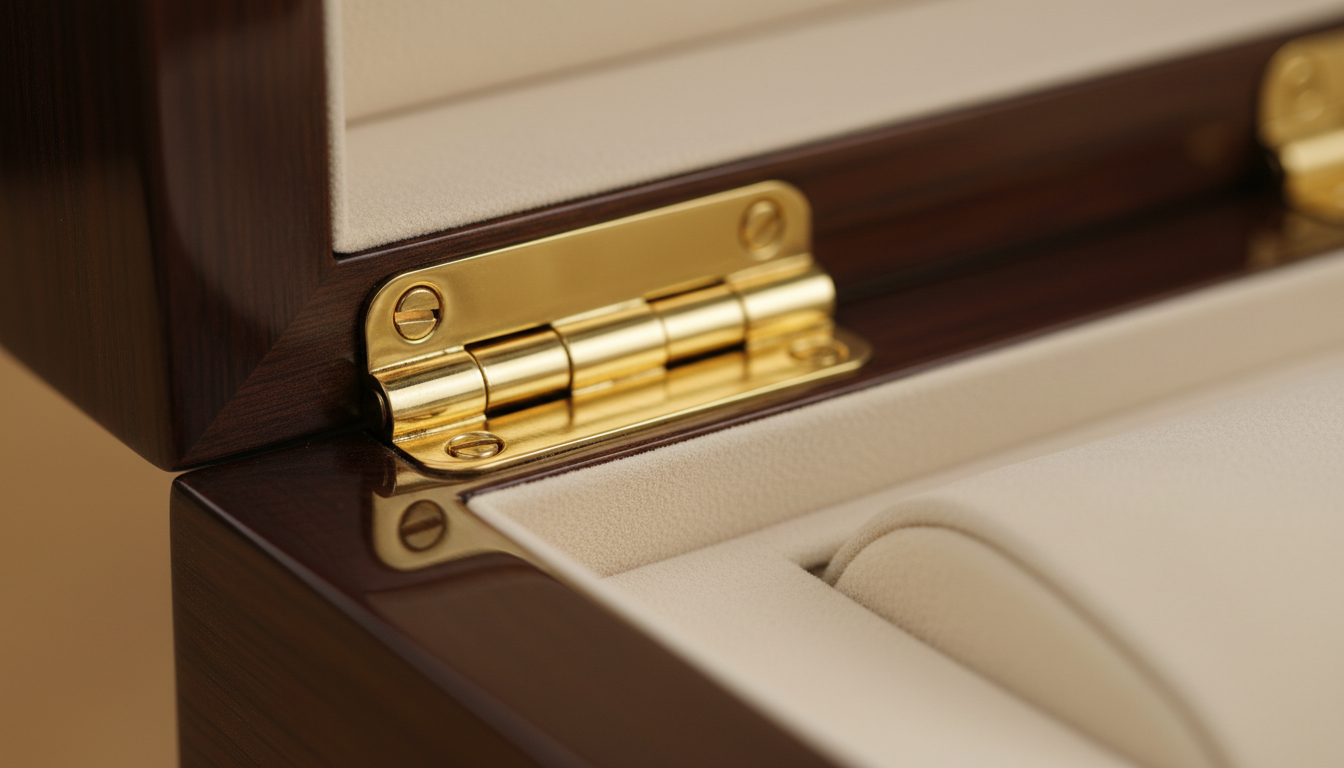
Materials change how a box feels, performs, and ages. Leather-wrapped lids in black or deep brown project a formal tone; natural wood—bamboo, mahogany, or other hardwoods—adds warmth; cork lightens the silhouette. Interiors lined in microfiber or velvet cradle watches and mute noise when you set them down.
| Material choice | Traits in a watch box |
|---|---|
| Leather (black/brown) | Formal look; wipe-clean; pairs with velvet lining for higher contrast and display clarity. |
| Wood (bamboo/mahogany) | Solid feel; natural grain; heavier weight stabilizes the box when opening/closing. |
| Cork | Lightweight; resilient to minor dings; pairs well with a top display window and steel accents. |
| Composite/carbon pattern | Sporty texture; resists fingerprints; convenient for travel-ready shells. |
Cork keeps weight low while maintaining structural integrity for a windowed lid. Cedar valets can add aroma but may not pair with delicate leather straps inside enclosed boxes—line contact areas with microfiber.
Balancing a modest footprint and fuller rotation? Review six-watch edits that hold a weekly lineup without overwhelming a nightstand.
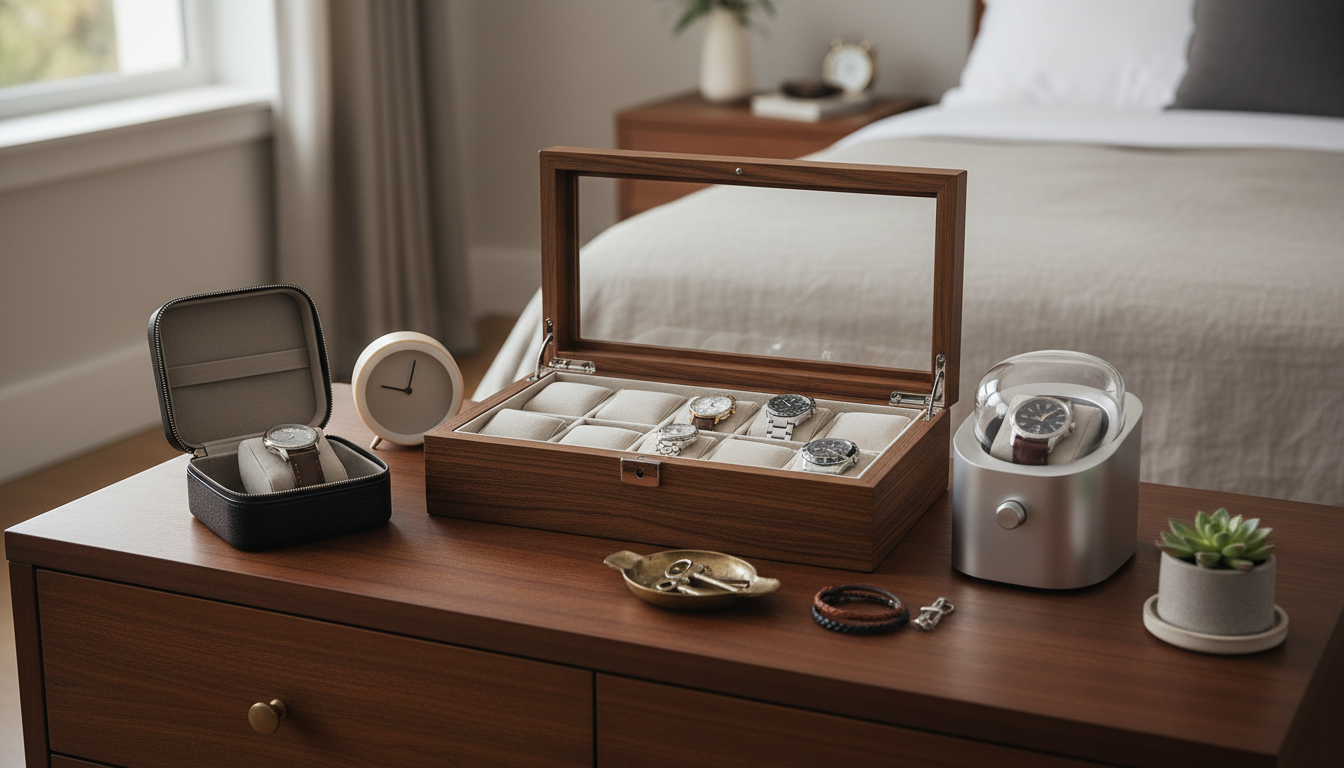
Choosing a box is about fit, layout, and finish. Use the checklist below to match your watches and accessories to a structure that serves daily routine and long-term care.
| Sizing guide | Recommendation for a box |
|---|---|
| Case ≤ 40 mm, slim profile | Standard pillows; velvet lining; tighter slot spacing acceptable. |
| Case 41–45 mm, moderate height | Medium pillows; microfiber lining to minimize lint; confirm lid clearance. |
| Case 46–52 mm, tall bezel | Wider slots; firmer pillows; avoid shallow boxes with tight windows. |
If you rotate daily, choose a 6–8 slot layout with a clear window so you can scan quickly each morning. For weekend wear only, consider opaque lids to minimize light exposure over time.
For a compact setup or gift, explore a single-watch oak chest that prioritizes protection and simplicity without occupying a full shelf.
Stepping up to a weekly rotation with accessories? Consider an eight-piece resinous-wood box featuring a windowed lid and structured interior to keep tools and straps separate.
A box encloses every watch in a lined compartment, preventing contact and dust while a rigid lid blocks incidental knocks. Compared to a roll or open stand, you get stable slots, quicker visual selection, and lockable hardware—practical advantages that translate to fewer scratches and faster morning routines.
Rolls are compact for travel, and drawer inserts hide clutter, but a dedicated box delivers a defined grid with a protective lid and optional drawer. If you want a tidy six-piece rotation with rapid access, look at this six-slot Pinson model for a clear sense of spacing and fit.
Expect fewer hairline scratches from watch-to-watch contact, reduced dust on dials and hands, and better consistency in bracelet sizing thanks to stable pillows. The windowed lid also speeds selection—especially useful with multiple black dials or similar bezels in a men’s collection.
Yes, when you own tools and extra straps. A lower tray keeps spring bars, screwdrivers, and links separate from watch heads. It supports a cleaner top deck and faster strap changes without rummaging, maintaining the organized workflow a box is designed to deliver.
Vacuum gently with a soft brush to lift lint from velvet or microfiber. Wipe windows with a non-ammonia cleaner. If you scale up your collection, consider a twenty-watch amaranth option to maintain order instead of adding mismatched storage.
Absolutely. Mixed lineups benefit from consistent slot spacing and uniform cushions. Choose darker interiors to frame steel sports pieces; lighter linings spotlight gold or enamel dials. The structure stays the same—what changes is the finish and window style you prefer.
A watch box excels where other formats hesitate: rigid protection, defined slots, and a lid that balances visibility with security. From slim dress references to oversized divers, the right build keeps everything aligned, dust-free, and ready at a glance. For a refined six-piece layout with daily convenience, consider the Rosaline six-watch variant.
Prefer a different count? You can fine-tune capacity and finishes across the range above—each box is engineered for structured care, measured protection, and display that respects every timepiece.


