


Leather Watch Winder

A Leather Watch Winder keeps automatic calibers alive when your wrist is off duty. Choosing a Leather Watch Winder means your date, moonphase, and GMT stay on time without daily resets. Beyond convenience, the rotating program maintains consistent amplitude, protects threads on screw‑down crowns, and reduces wear from frequent manual setting.
What sets a winder apart is its controlled rotation: tuned TPD (turns per day), CW/CCW/bi‑directional modes, rest intervals, and ultra‑quiet drive. The leather housing adds functional gains—better vibration damping, a softer touch for cases and straps, and lower perceived noise in home or office. Explore the sections below to match motor specs, capacity, and lining to your timepieces, then configure the cycle that keeps your watches ready to wear.
Automatic watches stop when the mainspring drains. A precisely programmed winder solves this with measured TPD matched to the movement. Good practice is to start at 650–900 TPD, then fine‑tune. Bi‑directional cycles mimic natural wrist motion, while rest periods prevent unnecessary torque and heat build‑up.
| Movement profile | Starting TPD & direction |
|---|---|
| Time‑only, bidirectional rotor | 650–900 TPD, alternating |
| Day‑date or GMT, bidirectional | 800–1000 TPD, alternating |
| Chronograph or high‑drag rotor | 950–1250 TPD, CW or CCW per spec |
| Perpetual calendar or complex modules | 1100–1500 TPD, alternating, longer rests |
For multi‑watch setups, use independent rotors so each timepiece gets the exact TPD and direction it needs, not a one‑size‑fits‑all program.
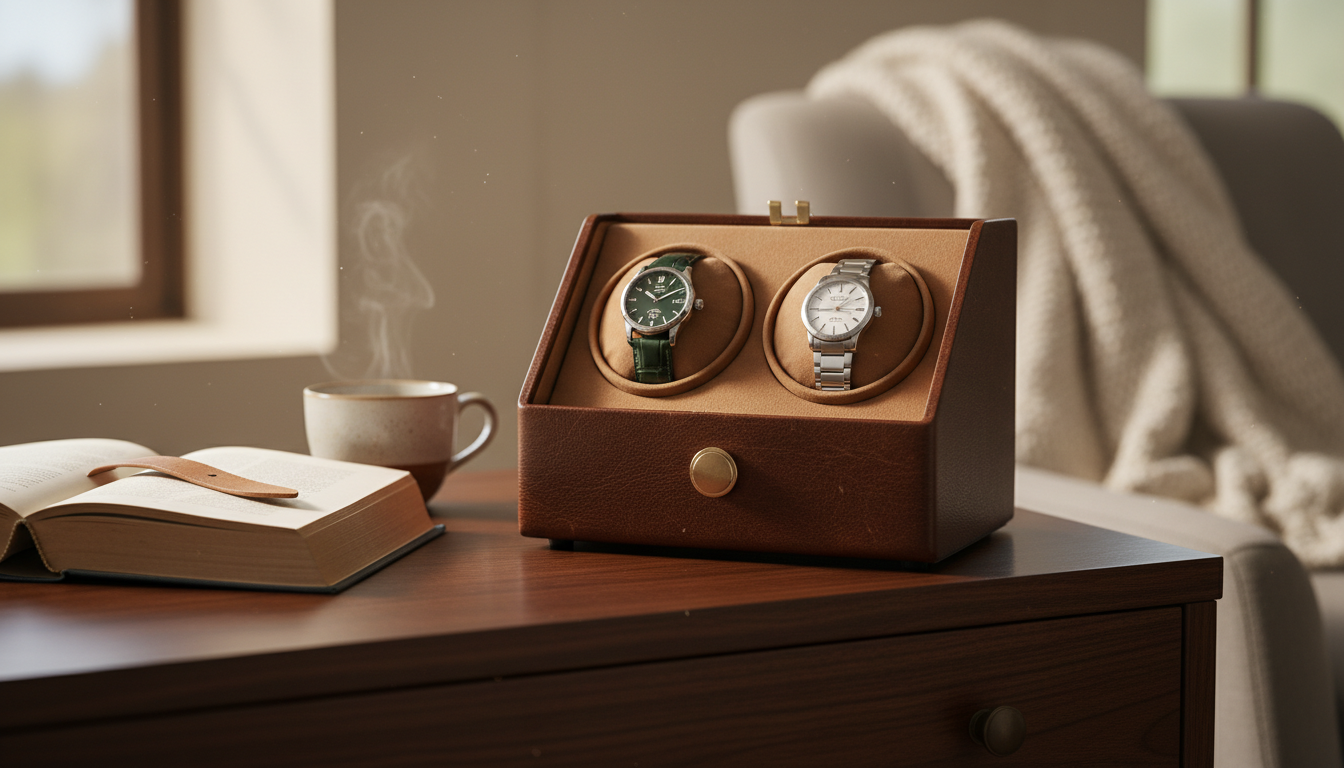
Capacity isn’t just about how many watches you own. It’s about how many automatics you rotate in a typical week, and whether you pair them with dress or sports pieces. A single unit is compact and travel‑ready. A double or quad helps split weekday and weekend wear. Larger trunks and safes consolidate a growing collection under quiet rotation.
| Configuration | Best use & notes |
|---|---|
| Single winder | Daily wearer support; easiest noise control; great for travel or office desks. |
| Double winder | Weekday/weekend rotation; independent TPD; saves time across two automatics. |
| Quad winder | Covers a small collection; requires solid anti‑vibration feet to keep ultra‑quiet. |
| Winder cabinet/safe | Security plus winding; cable routing; consider dedicated power and ventilation. |
If you’re comparing finishes and formats beyond leather housings, consider browsing the complete range of automatic winders to weigh footprint, power, and programmability before deciding.
Match pillow sizing to case diameter. For 38–45 mm watches, choose adjustable holders that compress gently; oversized cases may need wider cradles to avoid bezel contact.
| Typical price band (EUR) | What changes as you move up |
|---|---|
| ~249 | Solid basics: CW/CCW/Alt, fixed TPD steps, quiet motor, mineral glass. |
| ~474 (avg.) | Finer leather, independent rotors, wider TPD range, sleep mode, better cushioning. |
| ~699 | Tighter tolerances, LCD control, anti‑magnetic shielding, enhanced noise isolation. |
Leather contributes to more than aesthetics. Its layered structure damps micro‑vibrations and reduces cabinet resonance, lowering perceived noise versus harder shells. In bedrooms, look for sub‑20 dB operation, rubberized feet, and decoupled rotors. In offices, a glass window and soft interior lining showcase your watches while keeping dust at bay.
| Placement | Recommended spec |
|---|---|
| Bedroom nightstand | Ultra‑quiet motor, sleep mode, battery option, rubber feet, alternating cycle with longer rests. |
| Office shelf | Mineral or acrylic glass window, AC adapter, LED indicator dimmable, dust‑tight seams. |
| Safe or cabinet | Low‑heat LEDs, cable grommet, anti‑magnetic lining, independent rotors for mixed calibers. |
If your use case is a single daily wearer—especially for bedside placement—browse the single‑unit options to prioritize silence, battery runtime, and compact dimensions.
Alternating cycles (e.g., 2 minutes CW, 6 rest, 2 CCW, 6 rest) keep rotor bearings cooler and more consistent than continuous motion, extending service intervals.
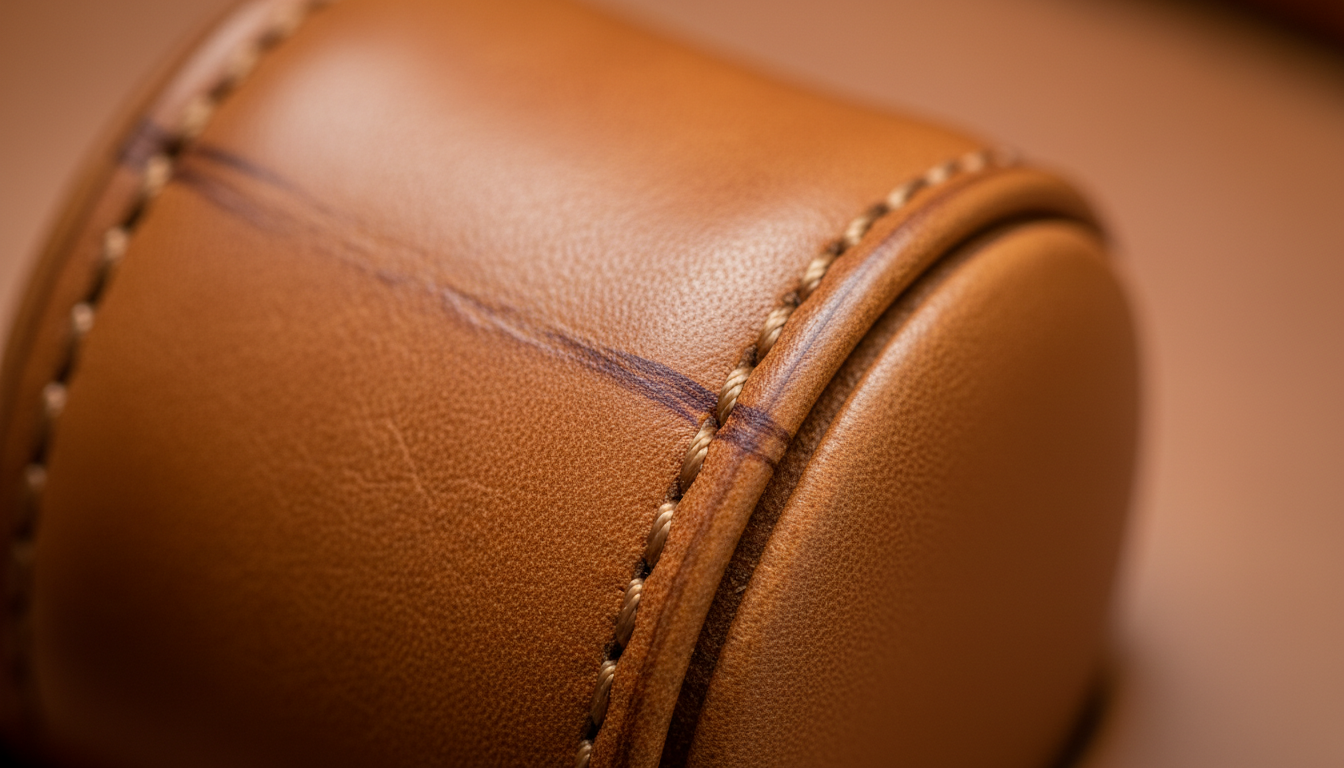
Not all winders are equal. The following components determine accuracy, longevity, and user comfort—especially in leather‑clad housings designed for display.
| Criterion | Why it matters for winding |
|---|---|
| Noise isolation | Leather panels and soft mounts reduce resonance, keeping cycles near whisper‑quiet levels. |
| Cycle stability | Accurate TPD ensures the mainspring sits in its optimal range, preserving timing. |
| Holder ergonomics | Proper clamp avoids bracelet stress and clasp rub, protecting finishing. |
Considering finish alternatives for the same winding mechanics? Compare these leather models to their wood‑clad counterparts if you prefer a different texture while retaining the same rotation logic and safety features.

Use these criteria to match a winder to your watches and your space. Keep the focus on rotation accuracy, silence, and material choices that complement your environment.
| Use case | Recommendation (capacity & cycle) |
|---|---|
| One daily automatic | Single unit, 700–900 TPD, alternating, sleep at night. |
| Two watches in weekly rotation | Double unit, independent rotors at 800–1100 TPD, different directions if needed. |
| Four+ automatics, mixed calibers | Quad or cabinet, per‑head programming, anti‑magnetic lining, AC power. |
For users balancing two go‑to automatics, consider a dual‑watch configuration to keep weekday and weekend pieces programmed independently with minimal footprint.
If bedside silence and minimal size top your list, a compact single module with battery support and soft interior lining provides a simple, dedicated rotation cycle.
It’s a motorized case that rotates an automatic watch to maintain the mainspring’s charge. A leather exterior improves noise damping and tactile appeal, while programmable TPD and CW/CCW/bi‑directional cycles simulate daily wrist movement. Soft pillows, dust‑tight glass, and over‑wind safeguards protect your timepieces.
A passive box stores; a winder actively maintains time and complications. Benefits include fewer crown manipulations, preserved calendar settings, and ready‑to‑wear convenience. Leather housings further cut resonance and frame the display elegantly, making them suited to nightstands and office shelves.
Manual winding works but can stress threads and pushers if repeated daily. A winder delivers controlled, low‑torque motion over set intervals. For multiple automatics, a six‑head setup keeps varied calibers on specification without constant handling.
As a rule of thumb, start around 800 TPD, alternating. If your caliber is unidirectional, switch to CW or CCW accordingly. Increase TPD in small steps if the reserve shortens off the winder. Use the 12‑o’clock stop and rest periods to avoid unnecessary wear and heat.
Yes—choose sub‑20 dB designs with decoupled rotors and rubber feet. Leather cladding helps further minimize hum. For bedside use, a bedroom‑friendly single with sleep mode and battery operation avoids cable noise and light spill.
Dust with a dry microfiber cloth; condition leather sparingly with a neutral balm. Keep away from strong sunlight and moisture. For the mechanism, avoid continuous 24/7 high‑TPD operation; periodic rest and correct TPD settings will maximize motor longevity and reduce bearing wear.
A Leather Watch Winder is about precision, protection, and quiet confidence. With calibrated TPD, direction control, and leather’s natural damping, your automatic watches remain wound, accurate, and ready without daily resets. If capacity is on your mind, explore a multi‑watch cabinet that keeps each rotor programmed independently.
Prefer to compare formats first? See related categories for broader context, then return to the leather‑clad units that best fit your space and rotation goals. Configure your cycle, set your TPD, and enjoy on‑wrist readiness every day.


