


Carbon Fiber Watch Box

If your watches lie scattered in drawers or on a shelf, micro-scratches, dust, and accidental knocks are silently chipping away at their value. A dedicated carbon fiber watch box solves that specific problem: it keeps cases separated, cushioned, and visible under a protective lid. The rigid composite shell resists impact, while the soft-lined slots prevent abrasion at the lugs and bracelet.
Beyond protection, a box structures your routine. You see every piece at a glance, select in seconds, and return each watch to a defined slot. In the guide below, learn how to choose the right box capacity, materials, and layout—plus practical tips drawn from collectors—so your timepieces stay pristine and ready to wear.
A watch box is more than a container; it’s a controlled micro‑environment. Carbon fiber’s tight weave and resin matrix create a high stiffness‑to‑weight shell that resists deformation under everyday pressure. Pair that rigid outer skin with a plush interior and you get two complementary layers: impact resistance outside and abrasion control inside.
Choose a box with rounded pillow edges. Sharper foams can imprint straps; contoured cushions better distribute pressure under the clasp.
Unlike open trays or stands, a display box encloses air, so dust falls on the lid instead of your crystals. Static solutions don’t rotate watches; that’s the point. The watch stays still, crown protected, and bracelets won’t chafe from motion. A well‑built carbon fibre finish over wood adds warmth inside while the patterned exterior resists scratches better than glossy lacquer alone.
| Risk without a box | Box-specific countermeasure |
|---|---|
| Bracelets rubbing in a drawer | Individual slots with dividers keep watches separate. |
| Dust on open stands | Clear-top lid acts as a shield while displaying. |
| Impacts during tidying | Rigid carbon shell disperses shock across the case. |
“This luxurious carbon fiber wood storage box boasts an interior lined with soft fabric—purpose-built to keep polished chamfers and crystals mark-free.”
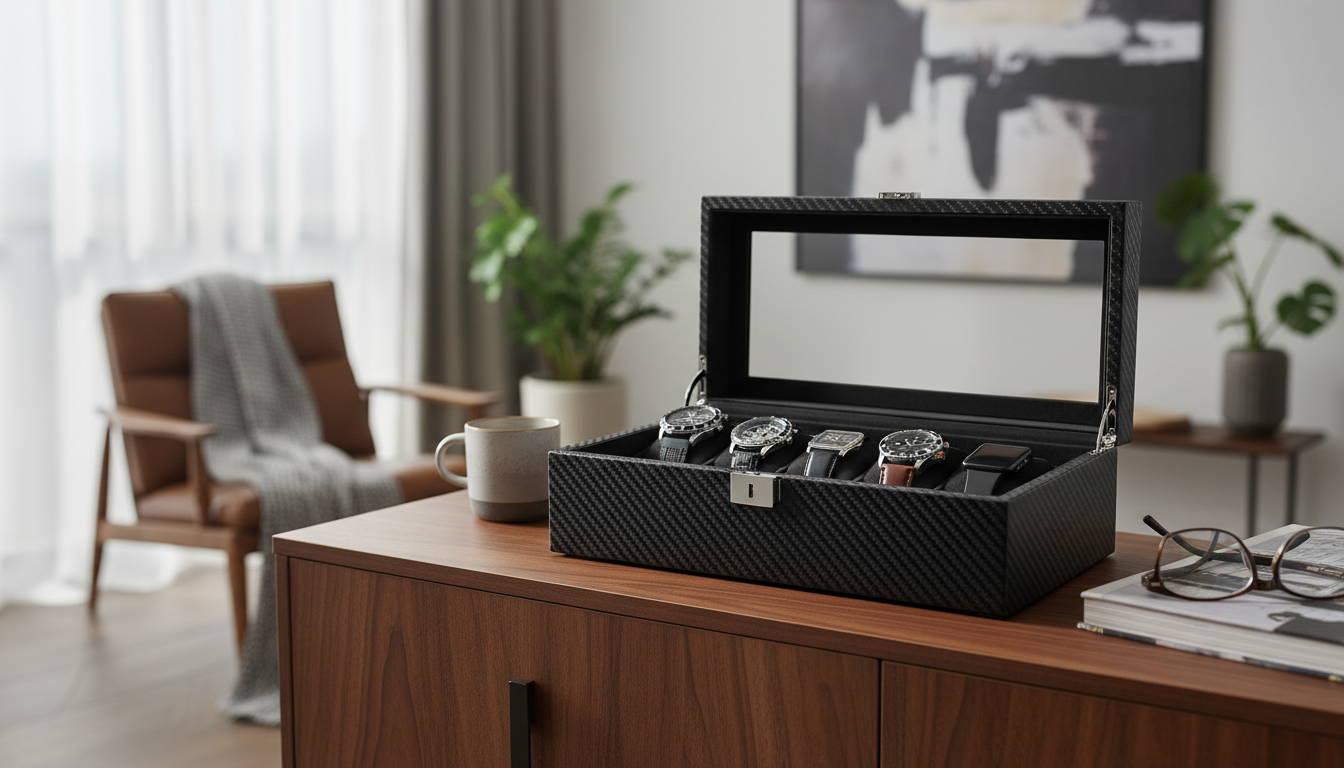
A box creates order you can see. Typical capacities range from 5 to 12 watches, with compact footprints that slide into a shelf or wardrobe. A 6‑slot layout keeps a weekly rotation together; 8 or 12 accommodate growth without scattering watches across multiple cases.
| Capacity | Typical exterior (W × D × H) | Common features | Observed price |
|---|---|---|---|
| 5–6 watches | 30–35 × 12–15 × 9–10 cm | Glass lid, soft lining, compact footprint | From 199 EUR |
| 8–10 watches | 35–40 × 18–20 × 10–12 cm | Valet tray, lock, stitched edges | Mid-tier pricing |
| 12 watches | 40 × 23 × 10 cm (approx.) | Lockable clasp, larger windows, upgraded lining | Upper mid-tier |
Measure your largest lug‑to‑lug distance. Choose a box with slot width and pillow spacing that exceed that size to avoid crown or clasp abrasion at the dividers.
Planning beyond a single enclosure? See the broader watch‑box range to coordinate capacities across rooms while keeping a consistent carbon fibre aesthetic.
A box with a clear-top panel acts like a display case that you can close. You enjoy a full view—lume plots, beveled indices, guilloché—yet dials are shielded from daily dust and the accidental sleeve swipe. High‑gloss carbon fibre finishes reflect ambient light; matte weaves quiet reflections for a subtler look.
Compared with a watch winder, a box is silent and static. If you favor hand‑wound or quartz pieces—or rotate automatics frequently—you don’t need motors or rotation settings. For those who want motion to maintain power reserve, explore carbon‑fiber winders and pair one unit with a static box for the rest of the collection.
Many display boxes include removable trays. Lift the tray to clean the glass and corners without touching the watches themselves.

For home and short trips, a carbon fiber watch box strikes a rare balance: lightweight yet tough. The weave‑and‑resin shell absorbs compressive loads better than many veneered woods, while felted linings stop bracelets from rattling in transit. Hinges, latches, and frames keep geometry square after many openings.
If you want a consistent footprint across rooms or bags, consider the curated six‑watch formats. They’re a sweet spot for weight, clarity of layout, and quick selection on busy mornings.
| Use case | Recommended box spec |
|---|---|
| Daily rotation at home | 6‑slot layout, glass lid, soft pillows, low profile |
| Growing collection | 10–12 slots, lock, removable tray for straps and tools |
| Occasional travel | 8‑slot compact shell, secure latch, cushioned dividers |

Selecting the right enclosure hinges on capacity, interior geometry, and where you’ll place it. Use the checklist below to match the box to your watches and space.
| Scenario | Suggested box |
|---|---|
| Six daily wearers | 6‑slot glass‑top, soft lining, compact width |
| Divers and thick chronographs | Wide slots, deeper pillows, robust latch |
| Dress collection for display | High‑gloss fibre finish, clear lid, light interior |
For a small footprint, consider a compact six‑slot chest that keeps a weekly lineup visible and protected on a dresser.
If you value plush interiors and careful case separation, this lined six‑piece holder balances soft contact surfaces with a rigid shell for light handling and storage.
Prefer a clear lid and contemporary weave? a glass‑top six‑slot organizer gives you instant visibility while keeping dust off bezels and bracelets.
It delivers a rare mix of impact resistance and low weight, plus soft‑lined separation and a viewing window. Unlike trays, the lid blocks dust; unlike stands, watches don’t touch each other; unlike winders, there’s no motor noise or maintenance. A box is the quiet, protective default for static storage.
A winder rotates and keeps power reserve; a box protects without motion. A roll saves space in luggage but compresses bracelets more. If you split duties, park most pieces in a box and keep one automatic on a winder. For bright interiors, a five‑watch carbon fibre case with red accents also displays neatly under glass.
You gain faster selection, cleaner dials, and safer storage. The clear‑top lid saves time each morning; individual pillows keep bracelets shaped; the lock deters casual handling. Over months, reduced dusting and fewer accidental knocks add up to better long‑term condition and resale potential.
Yes—choose wider slots and deeper cushions. Carbon shells resist flex when you press a thick diver into place, and soft linings avoid imprinting rubber straps. Leave a gap between oversized watches for extra clearance if your box layout is tight.
Dust the glass lid with a microfiber cloth, then wipe the carbon fibre exterior using a slightly damp cloth—no solvents. Vacuum the lining gently with a soft brush. If security is a concern in shared spaces, consider an eight‑piece safe‑style enclosure combining padded slots with reinforced walls.
Either match today’s count with a 6‑slot or step up to 8–10 for growth. Many collectors prefer six because the layout mirrors a weekly rotation, while extra slots can invite clutter. If in doubt, choose a space‑efficient footprint first, then add a second box if the collection expands.
A carbon fiber watch box brings order, protection, and quiet presentation to your collection. The rigid shell, soft compartments, and clear lid work together to safeguard finishes while keeping every piece visible. Review capacities, lining options, and hardware, then select the enclosure that fits your space and your watches with confidence.


