


8 Watch Winder

An 8 Watch Winder solves a specific problem: automatic watches pause when they sit. An 8 Watch Winder rotates each timepiece at measured intervals so calendars stay set, lubricants circulate, and your display remains alive. If you split wear time across several watches, manual resets steal minutes and invite errors. With individually programmable rotors, quiet drive systems, and protective cabinetry, a dedicated eight-slot unit keeps premium movements ready at a moment’s notice—no guessing TPD, no overwinding, no noise on a nightstand.
Below, discover how rotation logic protects complex calibers, which materials and interiors best complement your collection, how to dial in turns per day and bi-directional rotation, and what matters for noise, magnetism, and security. Use the checklists, tables, and FAQs to refine your choice and move confidently from curiosity to precise specification.
A winder’s purpose is not generic storage; it’s controlled motion. A well‑designed unit is designed to keep up to eight automatic watches fully wound and ready to wear by simulating wrist movement with measured pauses. The benefit is tangible for annual calendars, moon‑phases, or GMT modules, where resetting can be tedious or risky. Instead of drifting to a stop, each movement receives calibrated momentum, keeping the mainspring within its intended torque window.
Set TPD at the low end that reliably maintains power. If a model stays running at 700 TPD bi‑directional, there’s no advantage in 1,000+. Lower values reduce wear, heat, and energy use.
| Complication/Concern | Why a winder matters |
|---|---|
| Moon‑phase / annual calendar | Avoids multi‑step resets; maintains date roll‑over logic through controlled cycles. |
| Power‑reserve drift | TPD maintains mainspring in effective torque band for stable amplitude. |
| Lubricant distribution | Gentle rotation keeps oils from pooling during inactivity. |
“For diverse movements in one cabinet, independent programming per rotor is the hallmark of a true eight‑slot instrument, not just a display box.”
Unlike passive cases, the 8 Watch Winder introduces measured motion. That’s the distinction: precise actuation, not mere storage. When fitted with spring‑loaded pillows that adapt to wrist size, even large or petite cases seat securely and rotate on axis, minimizing lateral stress on lugs and straps.
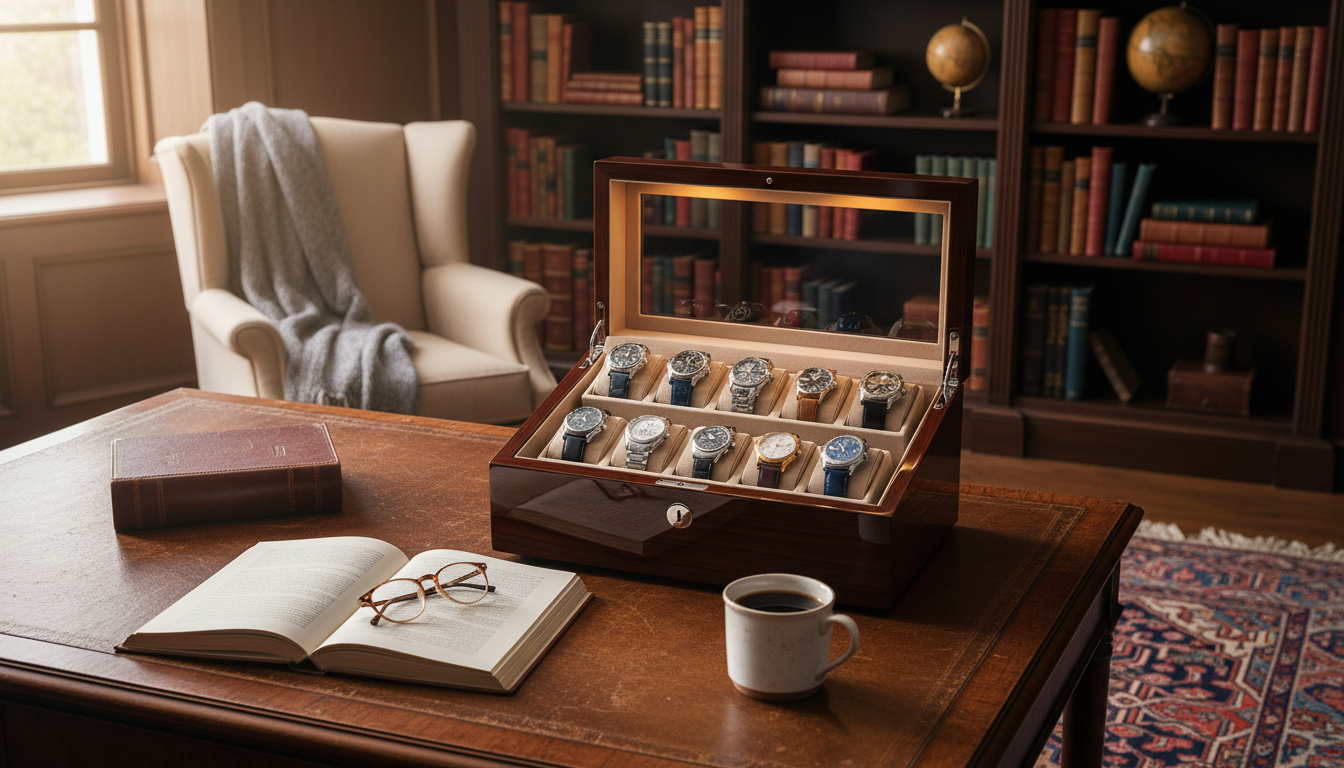
A winder’s exterior is more than décor; surfaces influence scratch resistance, reflection, and how lighting frames the dials. High‑gloss piano lacquer amplifies reflections and pairs well with polished steel watches. Carbon fiber weaves damp vibration and reads as technical. Matte leather softens glare and hides fingerprints.
| Finish | Key traits for winders |
|---|---|
| High‑gloss wood (piano lacquer) | Lux sheen, crisp reflections; pair with glass door and chrome hardware. |
| Carbon fiber pattern | Tech aesthetic; complements modern sports watches; resists minor scuffs. |
| Matte leather wrap | Low‑glare, hides prints; tactile; best under softer ambient light. |
If you’re surveying multiple winding formats (single, dual, six, or more), compare materials across the entire range to keep your display language coherent—see the broader selection in our range of automatic winders.
Gloss amplifies light. If your winder sits opposite a window, specify dimmable LEDs and consider matte interiors to reduce dial glare when programming at night.
Programming is the heart of a winder. Look for an interface—LCD, TFT, or tactile toggles—that lets you set each of the eight rotors independently. That granularity respects mixed collections and avoids applying one TPD to every movement.
| Setting | Recommended use case |
|---|---|
| 650–850 TPD, bi‑directional | General automatic movements; balanced loading of the winding train. |
| 900–1200 TPD, clockwise | Movements with higher winding thresholds requiring single‑direction input. |
| >1200 TPD with rest windows | Less efficient rotors; ensure ample pause to avoid heat and wear. |
Cabinetry material can subtly affect vibration and acoustic damping. If you prefer natural textures and softer acoustics around the eight modules, explore the wooden-winder references to match programming finesse with warm finishes.
Many eight‑slot units offset rotor start times by milliseconds. This spreads current draw, improves long‑term reliability, and reduces the chance of cabinet resonance.
When the eight heads are individually programmable, an 8 Watch Winder can host everything from dress pieces to robust divers simultaneously—each on its correct TPD and direction.
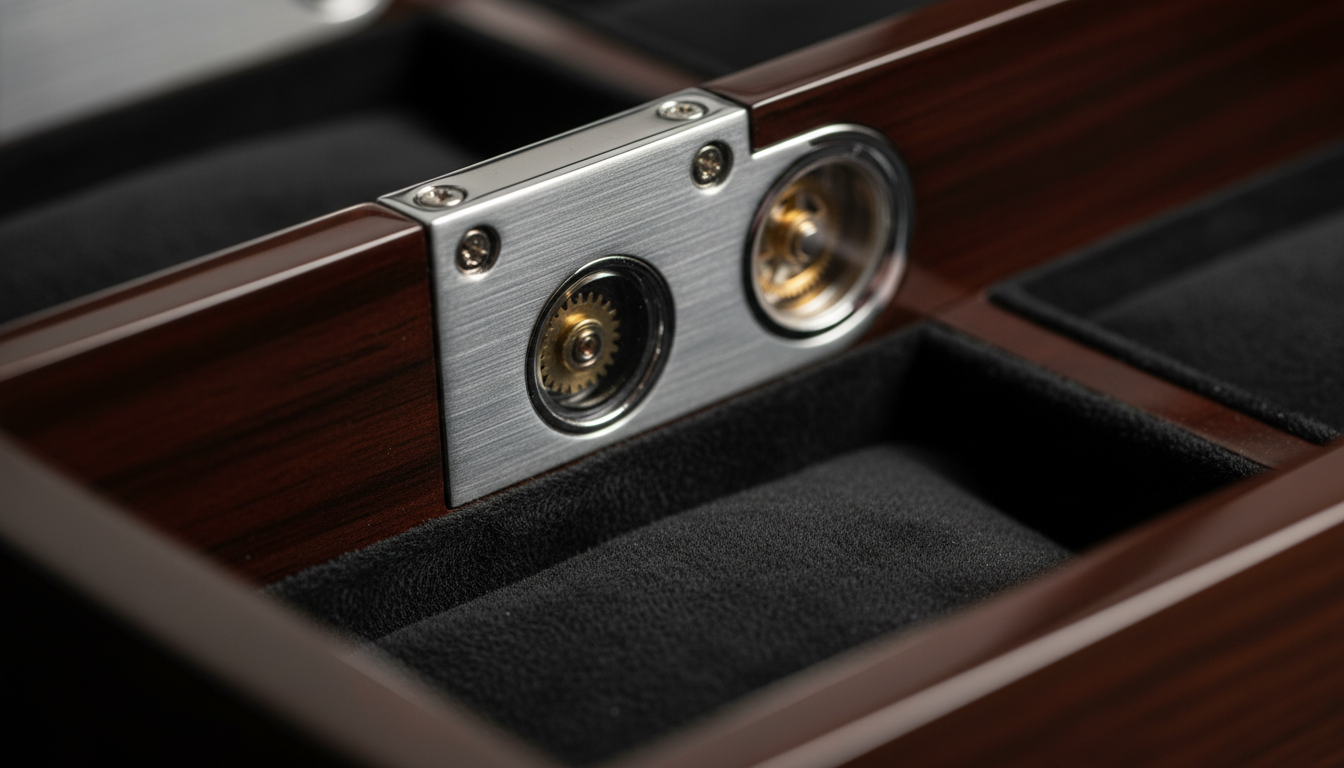
A high‑capacity winder earns its place in quiet rooms. Look for sub‑30 dB operation and decoupled drive mounts. Magnetic shielding around motors and wiring prevents inadvertent interference with balances. For security, options range from keyed locks to digital code lock pads or fingerprint access integrated into a safe‑grade body.
| Aspect | Specification to look for |
|---|---|
| Acoustics | < 30 dB at 1 m; asynchronous motor control; soft start/stop ramps. |
| Magnetic exposure | Shielded housings; motor placements away from watch heads. |
| Security | Keyed or code locks; optional safe bodies with bolt‑work and hidden hinges. |
If you occasionally rotate watches out of motion and into passive storage, consider pairing your cabinet with static solutions in the eight‑watch box category so straps can rest while others stay wound.
Dimensions help with placement inside wardrobes or safes. Typical figures for eight‑slot units: Width 43 cm × Height 36 cm × Depth 20.5 cm, around 10.3 kg; or Width 24 cm × Height 35 cm × Depth 48 cm, around 12.1 kg. Always check ventilation clearances for motor longevity and LED heat management.
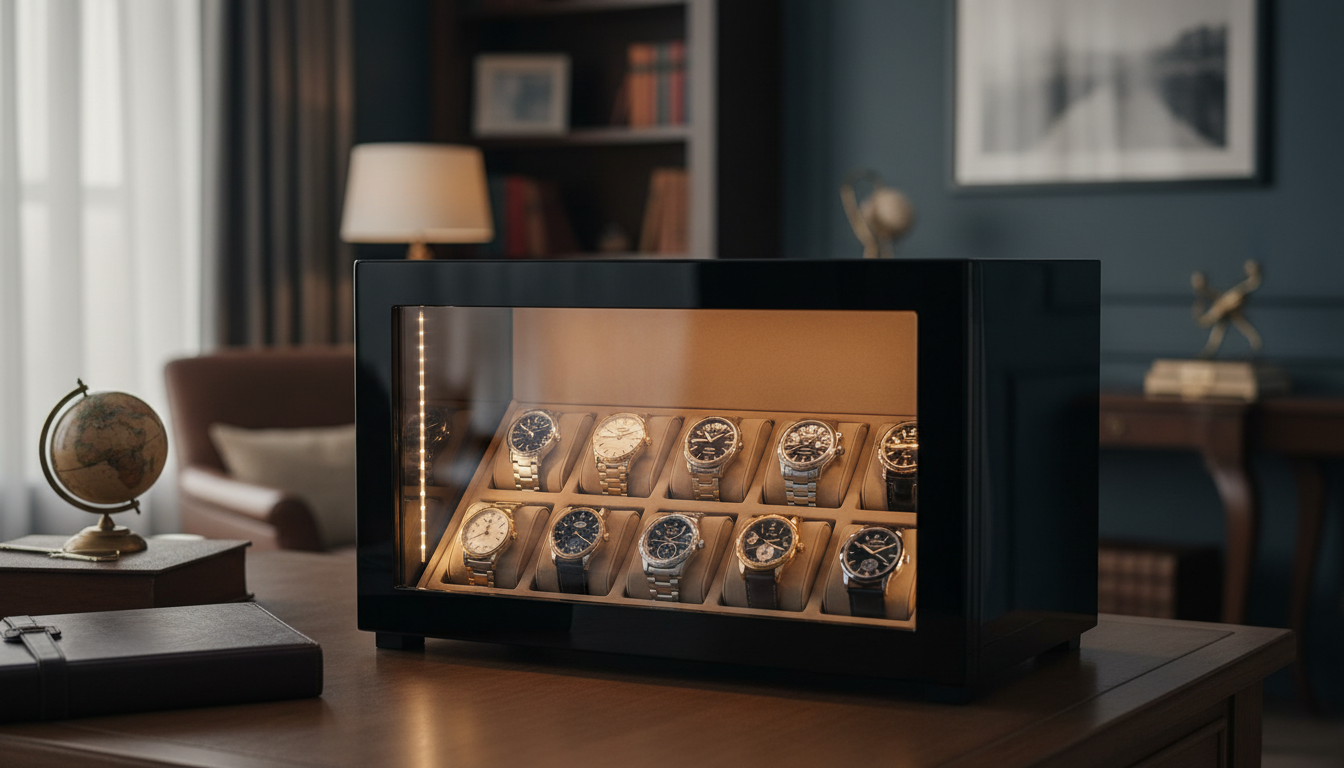
Use this condensed list to translate your collection’s needs into a precise specification for an 8 Watch Winder.
| Configuration | When to choose it |
|---|---|
| 8 modules, display cabinet | Focused on motion and visibility; minimal extra storage for accessories. |
| 8 modules + drawers | Add space for straps and tools; keeps desk surfaces uncluttered. |
| 8‑module winder safe | Security priority; integrates rotation with steel construction and code/biometric entry. |
Prefer a clean, architectural cabinet with prominent glass and gloss? See a refined eight‑module arrangement such as this streamlined winding cabinet as a reference point for proportions and layout.
If you want mixed finishes—carbon weave outside, leather inside—with adjustable LEDs and expanded storage, benchmark an eight‑slot layout like this dual‑purpose winder to understand how drawers and rotors balance visually.
For a more tonal, textured look with softer reflections, compare an eight‑position unit clad in nuanced materials such as this subtly finished model to gauge how matte elements frame luminous dials at night.
It’s a motion cabinet with eight independent rotors that gently rotates automatic watches to sustain power reserve. By setting TPD and direction per slot, it keeps calendars aligned, distributes lubricants, and presents your collection under controlled light—ready to wear without manual resets.
Capacity matches rotation habits. If you cycle through several timepieces weekly, an eight‑slot unit keeps all of them synchronized. It consolidates power, lighting, and controls in one cabinet, avoids multiple plugs, and offers consistent acoustics versus scattered single winders.
A passive box protects from dust and knocks but cannot sustain motion. A winder adds calibrated rotation—TPD, direction, and rest windows—so complex functions remain set. Many collectors pair both: wind what you’ll wear next; rest straps in a non‑moving box like this eight‑slot storage reference.
Most automatics maintain charge between 650–950 TPD in bi‑directional mode. Some require single direction at 900–1200. Start low and verify reserve after 48 hours. Always consult the movement’s guidance to avoid unnecessary motion and heat build‑up.
Used correctly, no. The purpose is to mimic daily wrist movement with pauses. Choose a cabinet with motor‑stop on door‑open, adaptive pillows that avoid clamping, and soft starts. These features limit shock, protect bracelets, and maintain intended winding loads.
Yes. Winder‑safe hybrids integrate steel bodies, bolt work, and digital code lock keypads—some add biometrics. If you want the simplicity of a single locked unit that both protects and rotates eight watches, consider a safe‑integrated layout similar to this fortified configuration.
An 8 Watch Winder is a precision tool: eight rotors, exact TPD, controlled direction, quiet motors, and lighting that lets you verify status at a glance. Choose materials that suit your space, program each slot for its movement, and add security where needed. For a locked, rotation‑ready setup, review a safe‑grade option akin to this integrated winder safe. Specify deliberately today and keep every dial on time tomorrow.


