


4 Watch Winder

A 4 watch winder solves a precise problem: automatic watches stop when they rest. With a 4 watch winder, four different movements stay correctly wound, set, and protected, so your calendar, GMT, or moon‑phase is always ready. Instead of resetting complications or risking oil stagnation, you benefit from independent rotors, tailored TPD cycles, and bi‑directional mode that mimics wrist motion.
This page focuses solely on winding performance: how a quad unit preserves accuracy, what settings safeguard calibers, and which build details (from cushioned mounts to lockable glass) improve daily use. Scan the guides, compare specs, and choose confidently; your automatics will remain wound, displayed, and secure—without over‑winding or noise on the nightstand.
Contrary to static watch boxes, a quad winding unit actively rotates each timepiece to maintain the mainspring’s tension. The result is measurable: complications remain aligned and the movement’s lubricants are less prone to coagulate. A well‑specified 4 watch winder offers per‑rotor control, allowing you to match each watch’s required turns‑per‑day (TPD) and direction without compromise.
| Feature | Benefit for winding |
|---|---|
| Independent rotors | Different TPD and direction per watch—vital for mixed collections |
| Alternate (bi‑directional) cycles | Balances wear on the winding train and suits most calibers |
| TPD range 650‑1950 | Covers common factory recommendations without over‑rotation |
| Motor‑stop on door open | Prevents inserting/removing watches while the rotor turns |
“Switching between a calendar diver and a travel GMT is effortless when the quad unit keeps both fully wound and set—no more re‑syncing date wheels on busy mornings.”
Start with the movement’s recommended TPD (commonly 700‑900). If the watch gains reserve, hold steady; if it loses time overnight off‑wrist, add 100‑150 TPD and retest over 48 hours.
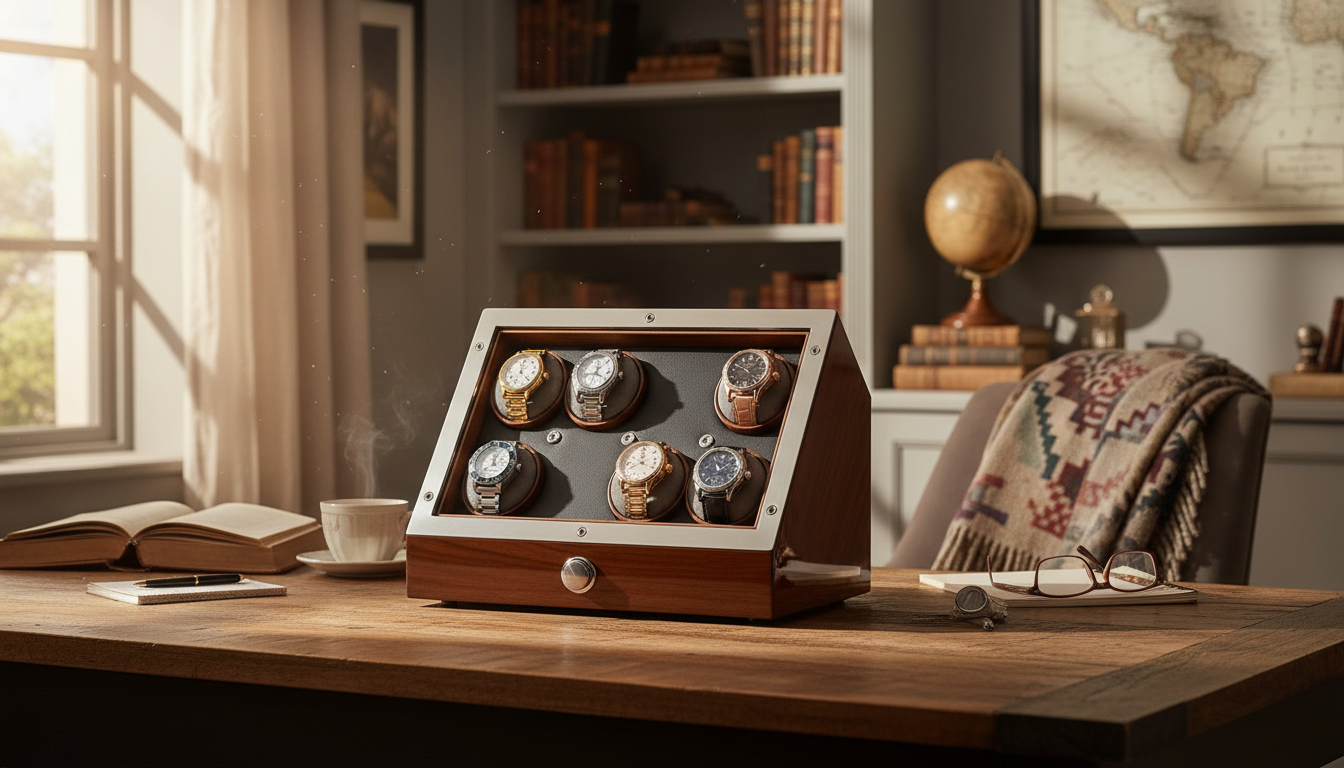
A quad winder shines when each rotor runs a unique recipe. Some calibers prefer clockwise with 700‑800 TPD, others need bi‑directional at 900‑1200. The right program prevents under‑ or over‑rotation while maintaining the power reserve your complications require.
| Use case | Suggested setting |
|---|---|
| Daily wear on one piece, weekend wear on three | Daily piece at lower TPD (650‑750); others bi‑directional 800‑1000 |
| Complication‑heavy calendar watch | Higher TPD band (900‑1200), bi‑directional, longer rest at night |
| Vintage movement with delicate train | Clockwise only, conservative TPD; monitor accuracy over 72 hours |
If you need options beyond a 4 watch winder—single, dual, or larger capacities—consider a broader family of automatic winders to scale winding across home and office.
Over‑winding myths persist. Modern units use rest cycles and capped TPD to avoid constant motion. The risk is not “too much winding” but incorrect direction or TPD below what your caliber needs—verify specs, then fine‑tune.
Build quality affects winding as much as programming. Materials, dampening, and access features all shape daily use—especially when a quad unit lives on a dresser or in a study. Here’s what to evaluate before choosing your 4 watch winder.
| Dimension (typical quad) | Reference value |
|---|---|
| Width × Height × Depth | 31.5 × 38.5 × 23.5 cm |
| Weight | ≈ 9 kg (dense cabinetry improves stability) |
Love natural textures? Explore wood-cased winders with walnut, ebony tones, or stained veneers, often lined in micro‑suede for gentle support.
Dark interiors reduce LED glare, making dial checks easier at night and limiting UV exposure that can fade certain straps over time.
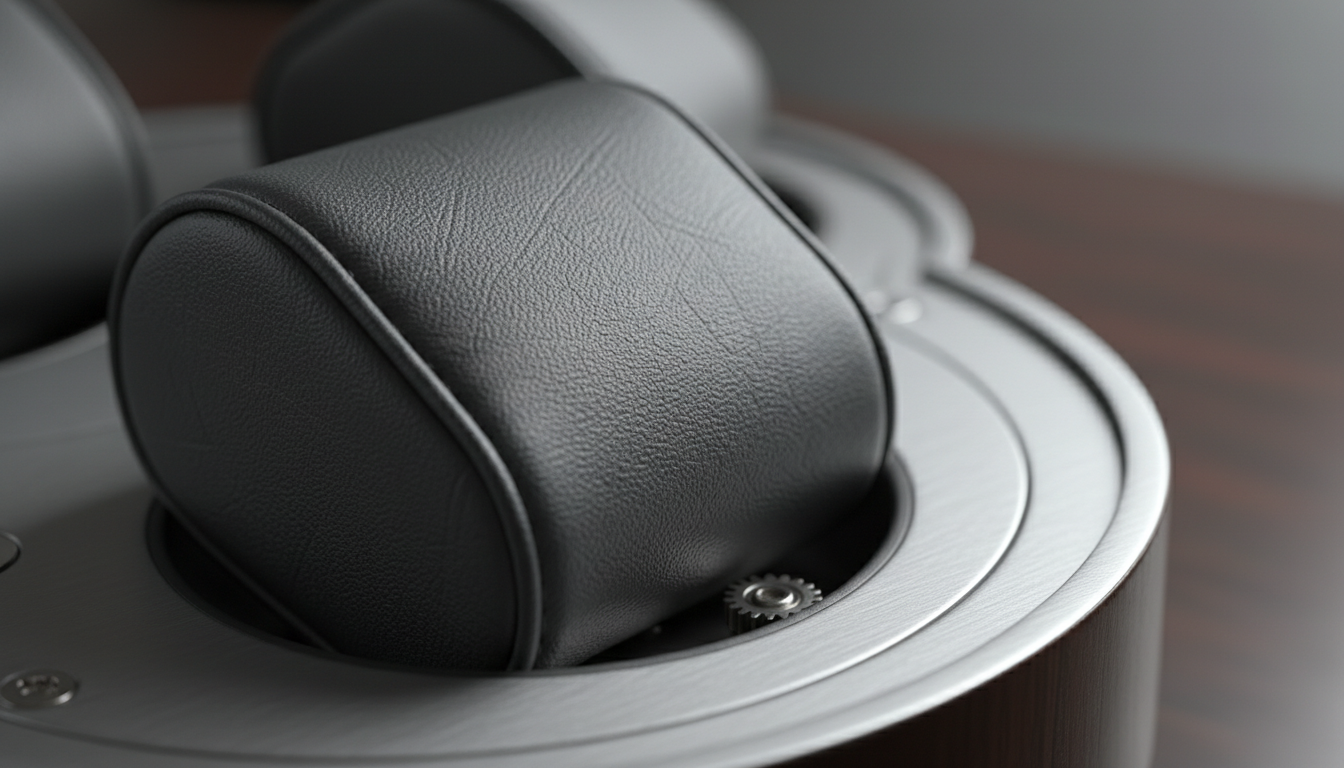
A winder that hums spoils bedside use. Look for noise levels under ~10 dB, rubberized feet, and decoupled rotor mounts that isolate resonance. Proper rest schedules prevent late‑night spins; a timed dark phase ensures your 4 watch winder won’t disrupt sleep cycles.
If your collection is growing beyond four pieces, consider larger 8-slot units that replicate the same quiet engineering with doubled capacity.
“Set to a night pause, the winder stays inaudible on the dresser. In the morning, the GMT is already at full reserve—no fiddling with date wheels before coffee.”
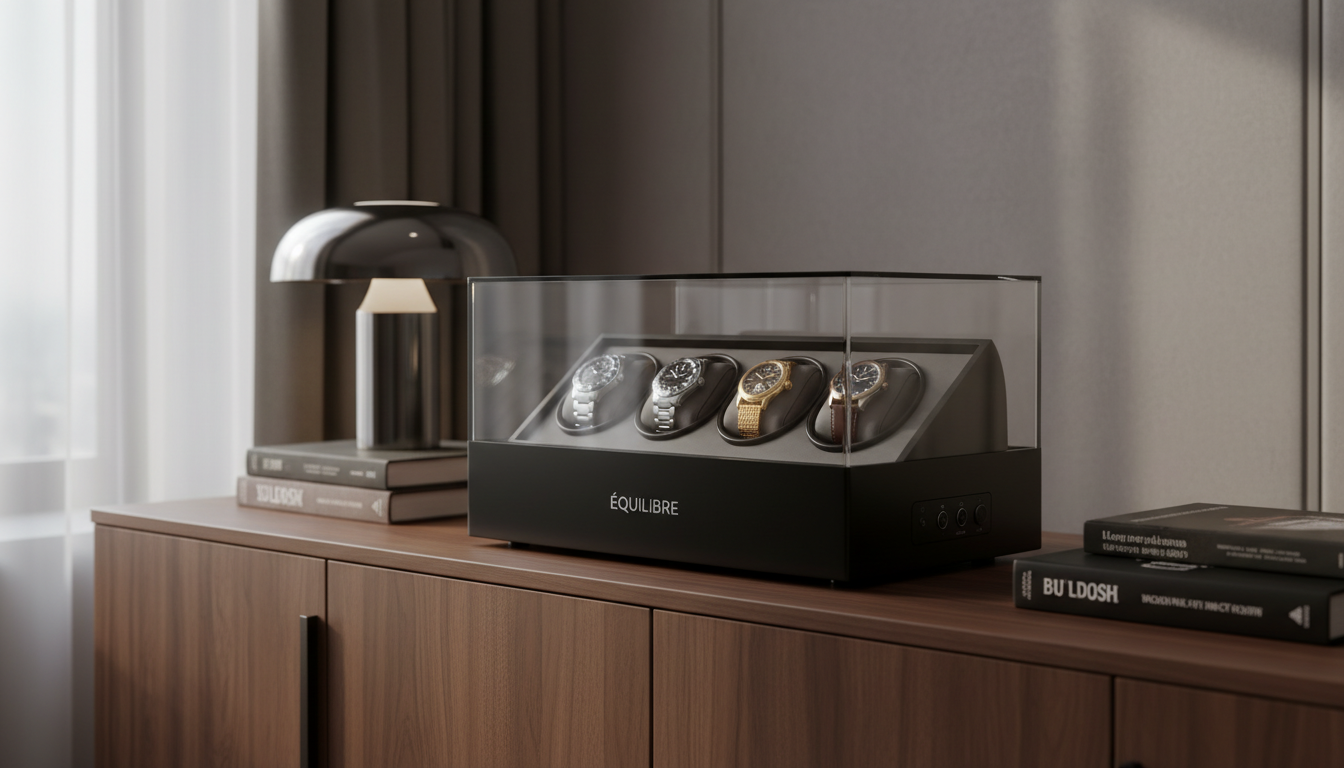
Prefer a statement look? A carbon‑weave cabinet with LED backlight showcases dials while offering per‑rotor control; see this approach in a carbon‑toned four‑rotor cabinet with programmable modes.
Seeking a compact footprint? Consider a discreet four‑watch console with night pause, subtle lighting, and low‑profile hinges to blend into a minimalist setup.
| Selector | What to prioritize |
|---|---|
| Mixed calibers (4 watches) | Independent programs, bi‑directional default, quick TPD adjustment |
| Bedroom placement | Sub‑10 dB, night pause, dimmable LEDs, anti‑vibration feet |
| Showcase display | High‑gloss or carbon finish, lockable glass, interior lighting |
Program one watch at a time, starting with the lowest TPD that sustains reserve. Log results for 48‑72 hours per rotor before finalizing all four profiles.
It’s a powered cabinet with four independent rotors that rotate automatic watches on schedules. By delivering specific TPD and direction, it maintains power reserve, preserves calendar settings, and reduces daily set‑up time. Compared with static storage, the winder actively keeps movements wound and ready to wear.
If you rotate among four automatics, a quad avoids juggling multiple single winders and standardizes profiles in one enclosure. You get synchronized rest cycles, one power source, and matched protection—lockable door, cushioned holders, and bi‑directional programming across all rotors. For a refined showcase, see this four‑slot display format.
Weekly wear may let reserves lapse, forcing calendar resets and risking oil gumming in long rests. A quad maintains minimum reserve with rest phases, so the movement runs periodically without constant motion. That balance supports accuracy while minimizing unnecessary rotations.
Key gains include:
For a rugged, cabinet‑grade build with subdued lighting, consider a nature‑toned quad enclosure tailored for everyday winding and viewing.
Follow three steps:
Want a low‑profile option for a shelf or safe? Review this compact quad layout featuring quiet drive and a restrained matte finish.
A 4 watch winder concentrates what matters for automatics: calibrated TPD, correct direction, and stable, lockable housing. With independent programs and night‑friendly silence, four movements stay ready without repetitive resets. Compare finishes, verify settings, and choose the configuration that fits your space. For broader capacity needs, revisit the pillar links above.


