


12 Watch Winder and +

If you’ve been weighing options for a 12 Watch Winder and +, you’re likely balancing more than rotation. A 12 Watch Winder and + is built around the conjunction itself: winding and something more—secure storage, integrated display, a drawer, a wall safe, or a digital lock. That “and” transforms a winder into a multi‑role hub that keeps automatic watches running while solving adjacent needs.
This page clarifies those pairings so you can choose with precision: tempered‑glass doors and lockable safes for protection, brushless motors and LCD controls for programming, LED lighting and drawers for presentation and access. Expect concrete comparisons, quick selection criteria, and real‑world setups that show how “and” reduces clutter, safeguards valuables, and streamlines daily wear. Explore the sections below to match the right pairing to your routine.
“And” is not decoration—it is a functional bridge. A 12 Watch Winder and + merges a 12‑head array with a second capability so your watches are perfectly wound and controlled, and your space or security needs are addressed at the same time. Compared to single‑function cabinets, this design reduces duplication, cables, and footprint while adding purpose‑built features.
With a 12 Watch Winder and +, the extras are not afterthoughts. The cabinet is designed to carry the extra mass of drawers and the rigidity required by a safe door, while motors remain quiet (often near library noise levels) and individually programmable to match different movements and power reserves.
| Criterion | Single‑function 12‑slot | 12 Watch Winder and + |
|---|---|---|
| Primary goal | Winding only | winding and safe/display/drawer integration |
| Security | Basic key/door latch | Digital lock, fingerprint reader, reinforced door, 8–10 mm tempered glass |
| Organization | 12 winders, minimal storage | 12 winders and drawers for straps, tools, documents |
| Display | Plain glass, random stop | LED backlight, 12 o’clock stop, smoked or clear glass |
If you rotate between 4–6 daily wearers but keep all 12 mounted, choose a model with independent motor control so unused rotors can pause and reduce wear and power consumption.
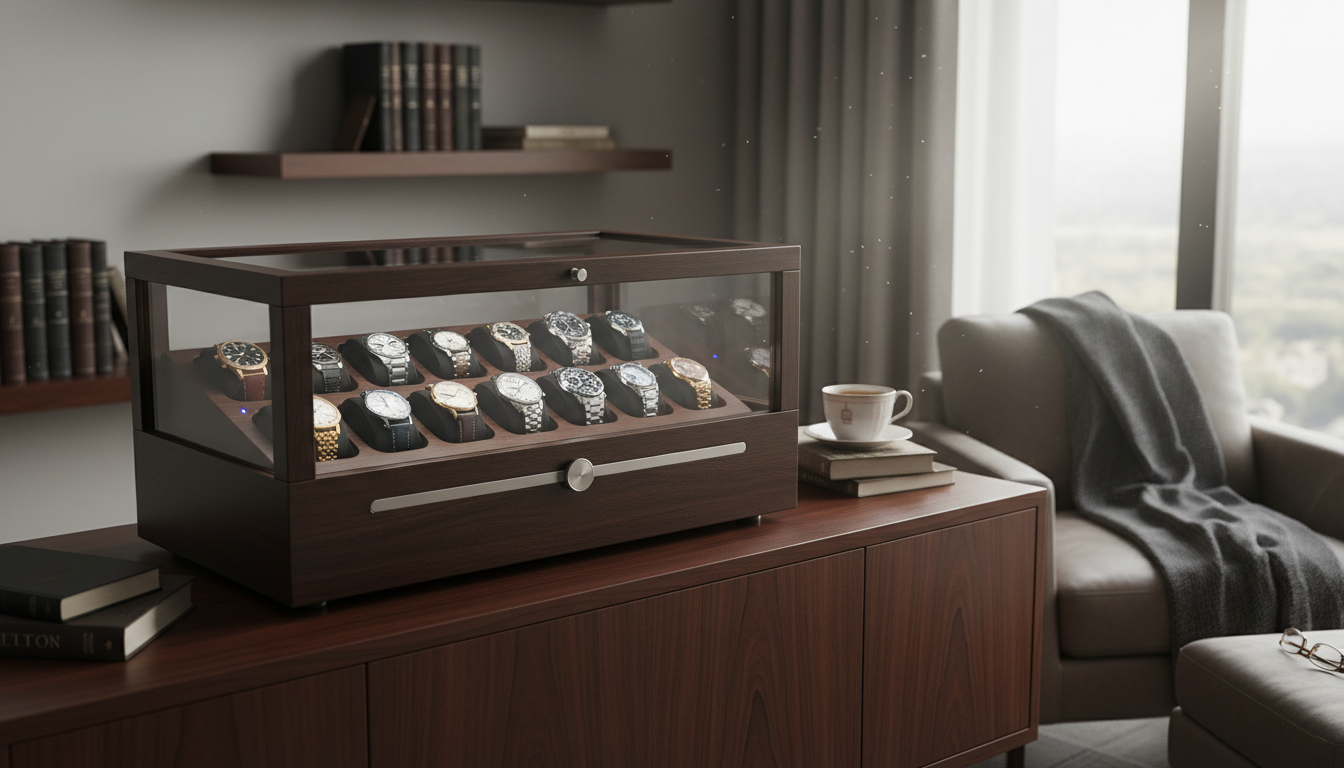
The “and” you select should mirror how you use your watches at home. Below are three common pairings and when they excel—each contrasting standard alternatives that lack these combined functions.
| Use case | Best “and” pairing | Key spec to verify |
|---|---|---|
| Nightly access in a shared space | winder and safe | Fingerprint + PIN, tempered glass ≥ 8 mm, bolt‑down points |
| Frequent strap changes | winder and drawer | Soft compartments, spare tool trays, gentle runners |
| Gallery‑style presentation | winder and display | LED dimming, 12 o’clock stop, low‑reflection glass |
If you want broader context before committing to an “and” path, compare with the wider automatic winders range to see how single‑purpose models differ in footprint and control layout.
For wall‑mounted or in‑wall installs, confirm overall width (often near 15–16 in) and depth clearance for door swing. Leave space for ventilation around motors and the LED driver.
Beyond the pairing, the configuration determines how well your 12 Watch Winder and + works day to day. Treat programming and materials as equal priorities so the “and” complements winding instead of complicating it.
| Add‑on | Technical checkpoints |
|---|---|
| Safe integration | digital lock or fingerprint, alarm wiring, bolt‑down kit, 8–10 mm tempered glass viewing panel |
| Drawer module | Full‑extension runners, soft dividers, clearance for large cases (up to 60–65 mm) |
| Display lighting | Dimmable LED, even spread, low heat near rotors; optional RGB for showcase projects |
Prefer wood finishes for furniture‑grade installs? Compare against wood‑clad winders to align veneers and gloss levels with your décor.
Many 12‑position units offer a coordinated stop so each watch faces forward at the end of a cycle—ideal when pairing display lighting with a glass door.
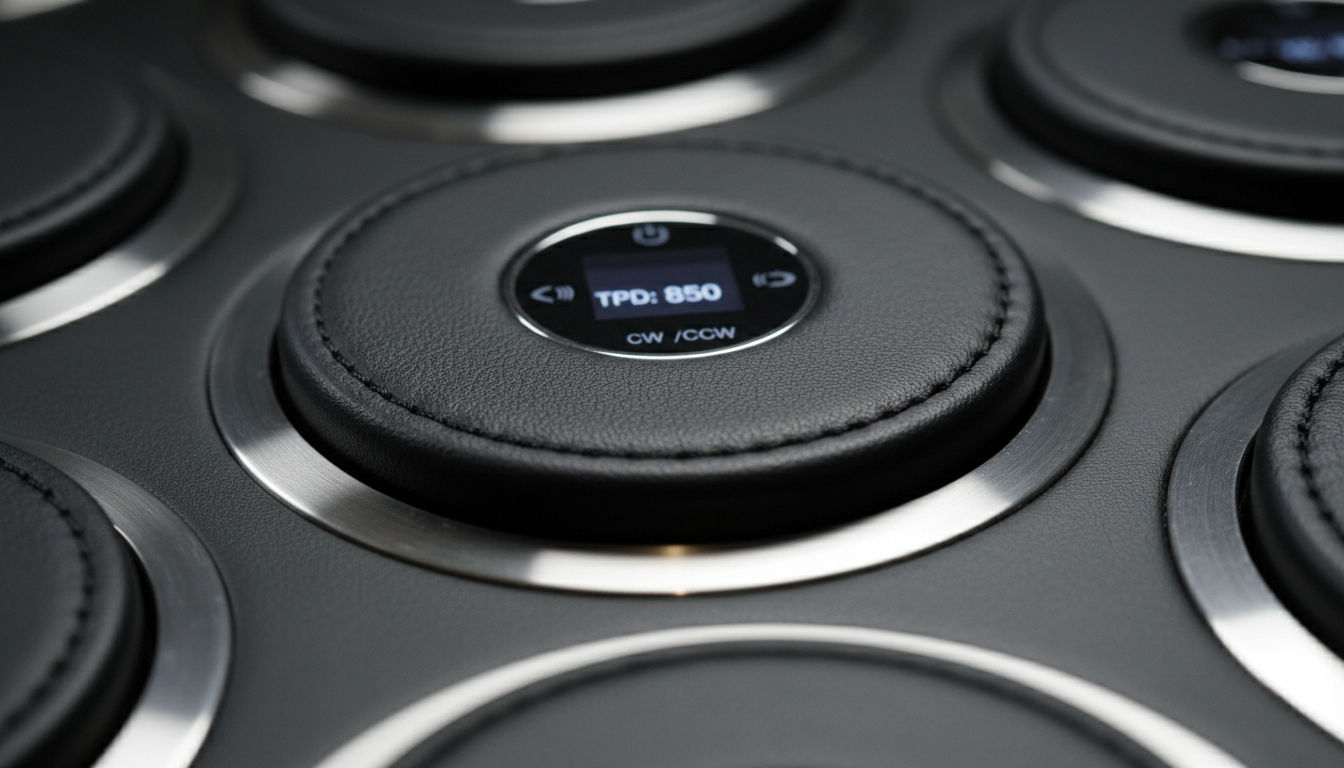
Context dictates which “and” pays off. In a home office, a cabinet with drawers and LED may be the best balance. In a dressing room, a lockable winder safe with a silent motor and tempered glass achieves both readiness and discretion. For tight spaces, an in‑wall winder and safe frees up floor area.
| Setting | Recommended “and” | Why it fits |
|---|---|---|
| Home office desk‑side | winder and drawer + LED | Access tools, see dials clearly, keep noise minimal |
| Bedroom or dressing room | winder and safe | Protection plus readiness; tempered glass maintains view |
| In‑wall closet bay | winder and wall mounting | Saves floor space, centralizes power and cabling |
Considering fewer positions for a secondary room? See an 8‑slot alternative set to replicate the same pairing logic at a smaller scale.

Match the “and” to your habits. Think programming first (TPD, direction, independent zones), then the second function (safe, drawer, display), and finally the finish (tempered glass, leather interior, wood veneer) to harmonize with your room.
| Pairing | Priority spec | Best for |
|---|---|---|
| And safe | digital lock, tempered glass, reinforced hinges, alarm contacts | Shared spaces and valuable pieces |
| And drawer | Dividers, soft lining, tool trays, smooth runners | Collectors who swap straps often |
| And display lighting | Dimming, even light spread, smoked glass | Showcase presentation at home |
Need a concrete benchmark? See a 12‑slot example from our catalog to calibrate dimensions, lighting, and control ergonomics before deciding on your preferred “and”.
It’s a 12‑position watch winder combined with a second function—the “plus.” Common pairings include winder and safe, winder and drawer, or winder and display lighting. You get synchronized winding (per‑rotor programming, TPD ranges) and integrated benefits like security, storage, or illuminated presentation.
Because the conjunction solves two jobs at once: keep automatic watches running and manage security or organization. A safe module adds a digital lock and tempered glass; a drawer module streamlines straps and tools; display lighting elevates readability. For a refined reference build, consider this 12‑unit model with thoughtful detailing.
“And safe” emphasizes controlled access (PIN or fingerprint, reinforced door, bolt‑down), ideal for shared spaces or high‑value pieces. “And drawer” emphasizes workflow—strap changes, tool storage, and quick swaps. If you lean toward clean presentation, a high‑gloss variant pairs neatly with dimmable LED and 12 o’clock stop.
For safes: verify digital lock reliability, glass thickness, and anchor points. For drawers: soft linings and full‑extension runners. For displays: even LED and low‑glare glass. Across all, aim for independent motor control, quiet operation, and an LCD or touchscreen for straightforward programming.
Yes—confirm holder fit to ~60–65 mm case diameters and 130–220 mm bands. Independent TPD (e.g., 600–2100) and directional control accommodate mixed calibers. For extra security without losing ergonomics, review a secure 12‑head cabinet that balances access and protection.
Dust seals and glass with a microfiber cloth, check lock batteries or backup power annually, and keep vents clear to cool LEDs and drivers. For motors, follow the maker’s service intervals and occasionally re‑validate each rotor’s programmed TPD after firmware updates or major programming changes in your schedule.
The strength of a 12 Watch Winder and + is the conjunction itself: winding plus the exact benefit you need—security, organization, or display. Specify independent controls, tempered glass, quiet motors, and the right “and” to align with your space and routine. If your collection is expanding, explore a 24‑position solution built on the same combined‑function logic.


