


When rain hits or dust swirls, does your gear stay safe without slowing you down? In 2026, access must never compromise device protection—especially for phones, cameras, and essentials you reach for often.
This mobile-first guide compares waterproof zip pouches vs clip-on cases: access and protection under real-world stress. You’ll learn how each shields gear from water ingress, impacts, abrasion, loss, and how to choose the right setup for your use.
Weather defense: seals that work
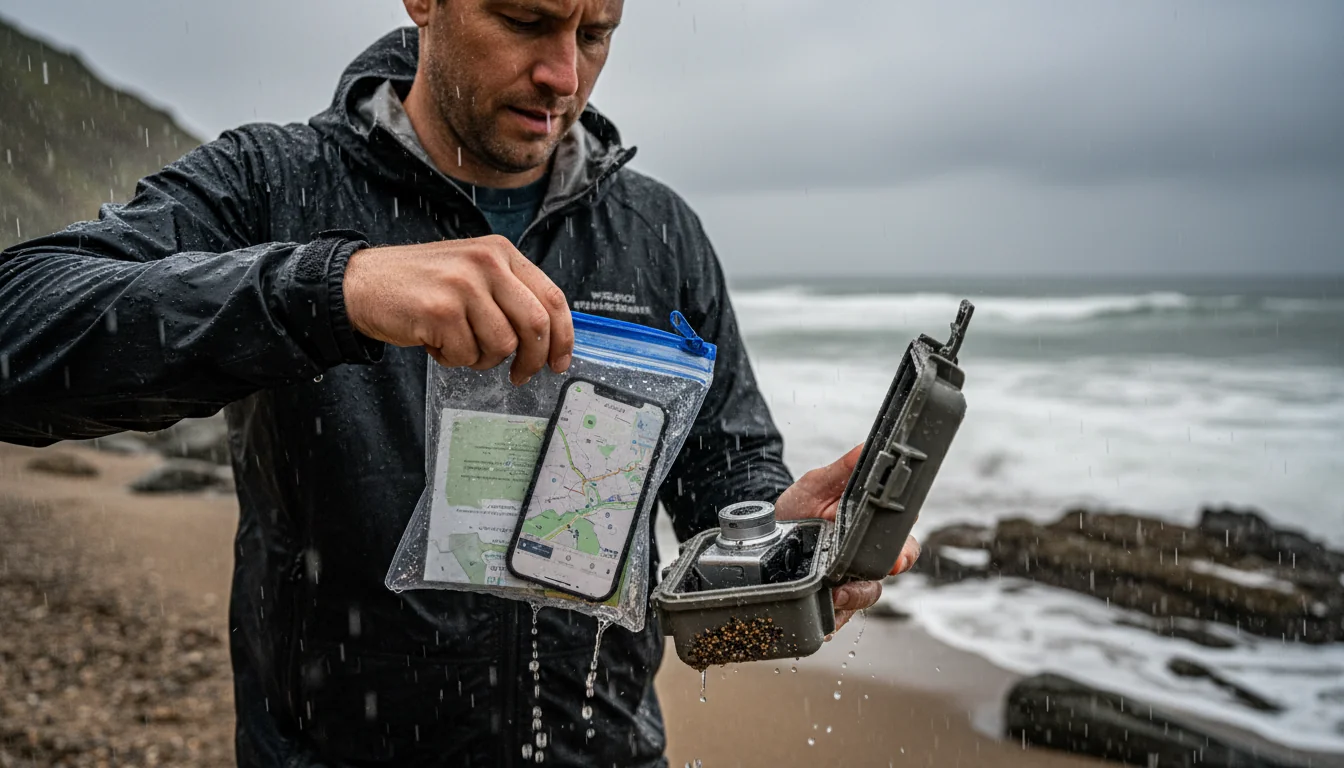
Waterproof zip pouches use sealed fabrics and specialized zippers to block rain, spray, and short submersion. Clip-on cases prioritize quick draw, but their open seams leave gear more exposed.
- Ingress barrier: coated fabrics (e.g., TPU film) with welded seams resist leaks better than stitched holsters.
- Zipper tech: water-resistant or self-sealing tracks reduce entry points along the closure line.
- Zipper placement: side-angled openings shed runoff more reliably than top-facing slots.
- Windows: a clear window aids visibility or touch-screen use, but it’s a potential weak point if poorly sealed.
- Submersion rating: “submersible” pouches maintain pressure resistance; most clips aren’t designed for dunking.
If weather is unpredictable, pick a pouch with an angled, watertight zipper and welded seams. It preserves fast access while keeping a firm moisture barrier.
Bottom line: for reliable rain and splash defense, the fully sealed architecture of a pouch wins. Holsters can stay dry under light mist, but show gaps in heavy weather.
Impact safety: padding vs exposure
Drops and scrapes are as common as rain. Zip pouches can add foam, soft liners, or stiff panels; clip-on cases rely on shells and raised edges while leaving screens more exposed.
- Padded sleeves diffuse shock across a wider surface, reducing point impacts to cameras or phones.
- Soft liners (microfiber/neoprene) cut abrasion, preventing lens and screen micro-scratches.
- Rigid clip-on shells resist crush, but open tops can invite grit and edge scuffs over time.
- Inside-the-bag carry: a pouch can ride inside a backpack, adding a second layer of drop protection.
- Holster snag risk: exposed corners may catch on straps or doorframes during movement.
If you often brush past brush, tools, or concrete, exposed holsters accelerate cosmetic wear. A lined pouch slows damage and preserves resale value.
For impact resilience, layered carry (pouch inside a pack) is the most forgiving system. Clip-ons are convenient, but they trade some scratch resistance for speed.
Speed vs seal: access trade-offs
Access speed matters for photos, calls, or maps. But quicker draw points can open entry paths for water or dust. Balance is key.
- One-hand zips: short, low-friction tracks give fast entry while keeping a sealed resting state.
- Touch-through panels: operate a touch screen inside the pouch; you avoid opening during light rain.
- Quick-draw clips: true pocket-speed, but need a rain cover workaround in storms.
- Orientation: top-facing openings pool water; side entries shed it.
- Glove use: large zipper pulls and oversized tabs reduce fumbles in cold or rescue settings.
A short, angled zipper often beats a long straight run: fewer teeth to seal, less pooling, faster open–close cycles.
If your priority is “open once, use inside,” a clear-window pouch is ideal. If you must draw constantly, pair a clip with a small rain cover to bolster weather defense.

Carry security: attachment that holds
Losing a device is the ultimate failure. Evaluate how each solution attaches and stays put under motion, sweat, and jolts.
- Belt clip: great access; verify bite strength and anti-rotation features to prevent slip-offs.
- Carabiner loop: a secure secondary tether for pouches on packs and daisy chains.
- Leash point: add a short cord inside a pouch to catch drops during opening.
- Holster depth: a higher side wall reduces bounce-outs when running or cycling.
- Test pull: simulate snag forces; if it pops free too easily, upgrade or add retention.
Use a small carabiner plus a short tether for high-consequence days. Redundant attachment is simple insurance against loss.
For commuters and hikers, a pouch anchored to a strap loop with a backup leash offers superior retention safety over a single belt clip.
Materials care: keep defense strong
Good materials deliver good shielding—if you maintain them. Fabric coatings and zippers need light care to keep water out and grit away.
- TPU films and laminated weaves offer long-term water resistance with welded seams.
- Neoprene softens blows but is usually water-repellent, not submersible—check specs.
- Zipper hygiene: rinse after salt exposure; dry fully; apply approved zipper care sparingly.
- Dust control: wipe clear windows to preserve visibility and seal integrity.
- Storage: keep pouches uncompressed to protect seal geometry; don’t hang heavy holsters by the clip for long periods.
“100% waterproof” claims vary. If you need true submersion protection, confirm depth/time ratings and zipper type, and do your own sink test first.
Routine rinsing and occasional zipper care extend service life and preserve weather barrier performance well into heavy use.

Use cases: match risk to gear
Context decides. Map how you move and what threatens your gear: water, dust, jolts, or loss. Then pick the format that mitigates the dominant risk.
| Scenario | Better choice (why) |
|---|---|
| Wet commutes / hiking in storms | Waterproof zip pouch: superior rain and splash shielding; can operate through a window. |
| Kayaking / coastal spray | Submersible pouch: pressurized seal and angled zipper resist brief dunking. |
| Dry, fast draw (EDC, training) | Clip-on holster: instant access; add rain cover if forecast changes. |
| Tools / dusty sites | Pouch with liner: better dust sealing, fewer grit scratches on screens or lenses. |
- Phone-first workflows: consider touch-through pouches to reduce open cycles in drizzle.
- Camera carry: a padded pouch protects finish when you set bags down.
- Cycling: minimize snag points; use secondary tethers to avoid bounce-outs.
- Travel: layered carry (pouch inside bag) maximizes overall safety with minimal hassle.
Prioritize the main threat you face. Waterproof pouches shine against moisture and dust; clips excel in dry-speed contexts.
Choose once for the worst conditions you expect, then fine-tune with tethers and liners for extra resilience.
Guide 2026: set up for safety
- Define threats: water, grit, drops, or loss. Rank them.
- Pick format: pouch for moisture sealing; clip-on for maximum speed.
- Add redundancy: leash points and carabiners for high-motion days.
- Glove test: ensure one-hand opening and closing under load.
- Home sink test: seal a tissue inside; submerge shallowly for 2 minutes to verify.
Label pouches by use (phone, camera, first aid). Color-coding speeds access and reduces handling in rain.
For delicate accessories, a compact, rigid sleeve can add impact buffering in transit—consider a single-slot charcoal case to protect small valuables alongside your tech.
Don’t overstuff. Distorted zippers and stretched seams weaken water defense and snag during opening.
Why choose a sealed pouch for storms?
Because it encloses every edge. A waterproof zip, coated fabric, and welded seams create a continuous barrier. You gain weather shielding without stuffing gear deep in your backpack.
How do pouches compare to holsters in daily use?
Holsters are faster, pouches are safer. Many users pair both: a holster for dry days, a pouch when rain or dust rises. For home storage, a three-slot travel vault protects delicate items off-duty.
Are “submersible” claims realistic?
Usually for shallow, short immersions. Check depth/time limits, inspect zipper tracks, then perform a quick sink test at home. Trust your test before trusting a river crossing.
What about screen use inside a pouch?
Touch-through windows let you navigate maps or answer calls without opening. Keep the panel clean to preserve responsiveness. For valuables, a two-watch zip sleeve is a good analogue for scratch-safe storage.
How should I maintain zippers and seals?
Rinse after salt or mud, air-dry fully, then apply approved zipper care. Avoid petroleum products unless your maker recommends them. Store uncompressed to protect seal shape.
Can one setup cover travel and home?
Yes—use a pouch outdoors, then transfer items to a five-slot presentation case at home. You’ll limit wear on seals while keeping gear organized and cushioned.
For all-weather carry, waterproof zip pouches deliver the most consistent shielding; for dry-speed tasks, clips shine—layer both, and organize with a triple-slot organizer to preserve finish and order.
- Seal first: welded seams and angled zips beat open tops in rain.
- Layer wisely: pouch + tether reduces loss and impact risk.
- Maintain: clean, dry, and care for zippers to keep barriers strong.
Choose the format that neutralizes your biggest threat, and your gear will stay ready, dry, and safe—whatever 2026 throws at it.
0 comments