


Notice your watch running slow after a long break? You’re not alone. When a timepiece sits for days or weeks, small things change inside that can drag the rate down.
In this 2026 guide, you’ll learn five things to check—fast, practical diagnostics you can run at home before booking service. Each check is clear, safe, and designed to pinpoint the cause with minimal tools.
Goal: restore healthy timekeeping by verifying the power source, hunting magnetism, assessing lubrication, testing positions, and ruling out calendar drag. Let’s get to the checks.
Power first: restore full drive
Most slow watches after rest simply lack drive. Before any deep dive, run a basic power check: top up energy, then observe if the rate stabilizes over the next 24 hours.
- manual wind (mechanical): 30–40 full turns until firm resistance, then set and start.
- automatic: give 60–90 seconds of gentle swinging, then add 20–30 crown turns.
- quartz: check battery age; if unknown, replace and clean contacts.
- solar/hybrid: expose to bright light for 2–3 hours, then re-test rate.
After a full wind, wear the watch for a normal day. If it keeps time on-wrist but slows overnight, the check suggests low reserve or inefficient winding.
If your schedule is irregular, a compact winder helps maintain reserve during idle days. Consider using a single-watch winder in an indigo finish to keep the mainspring within a healthy window when you’re not wearing the watch.
| Symptom | Quick power check |
|---|---|
| Loses minutes overnight | Fully wind at night; place dial-up; compare at 12 hours |
| Runs fine on-wrist only | Check rotor efficiency; consider controlled TPD on a winder |
Don’t crown-wind indefinitely. Stop once resistance is clear to avoid mainspring stress. That simple check prevents a costly repair.
If this first check restores accuracy, the slowdown was likely underpowered torque—not a deeper fault.

Magnetism: the stealth rate killer
After prolonged rest near speakers, bags with magnetic clasps, or laptops, a hairspring can stick. That increases the oscillation period and makes the watch run slow or erratic.
- Run a compass test: bring the watch near a compass; if the needle deflects, suspect magnetism.
- Use a demagnetizer (few seconds, dial and back facing the coil).
- Re-check rate after demagnetizing; compare across two positions.
- Avoid magnetic storage spots in the future (speaker shelves, bag clasps).
Magnetized hairsprings often show large daily swings, not just steady lateness. This single check resolves many “sudden slow” complaints.
If a simple compass check is inconclusive, log daily deviation versus a reliable reference for 48 hours. Erratic drift favors magnetism; consistent lag points to low torque or lubrication.
Lubrication: friction rises in storage
Oils can migrate or thicken when a movement sits idle. Friction climbs, balance amplitude falls, and the watch runs slow—especially right after start-up.
- Listen check: gentle tick should be even; a weak, uneven sound hints low amplitude.
- Warmth test: after wearing for a day, accuracy may improve as oils redistribute.
- Service history: if the last full service is unknown, plan inspection.
- Preventive exercise: a few hours of motion weekly keeps lubricants mobile.
Rotate idle pieces briefly every week. That small habit reduces start-up drag after long rests.
A gentle winder can help keep oils distributed if you regularly rotate watches. For a natural wood vibe, look at this forest-toned single winder as a quiet way to maintain minimal motion between wears.
If the watch still loses more than 30 seconds/day after two days of regular wear, the lubrication check likely points to a service need rather than a quick fix.
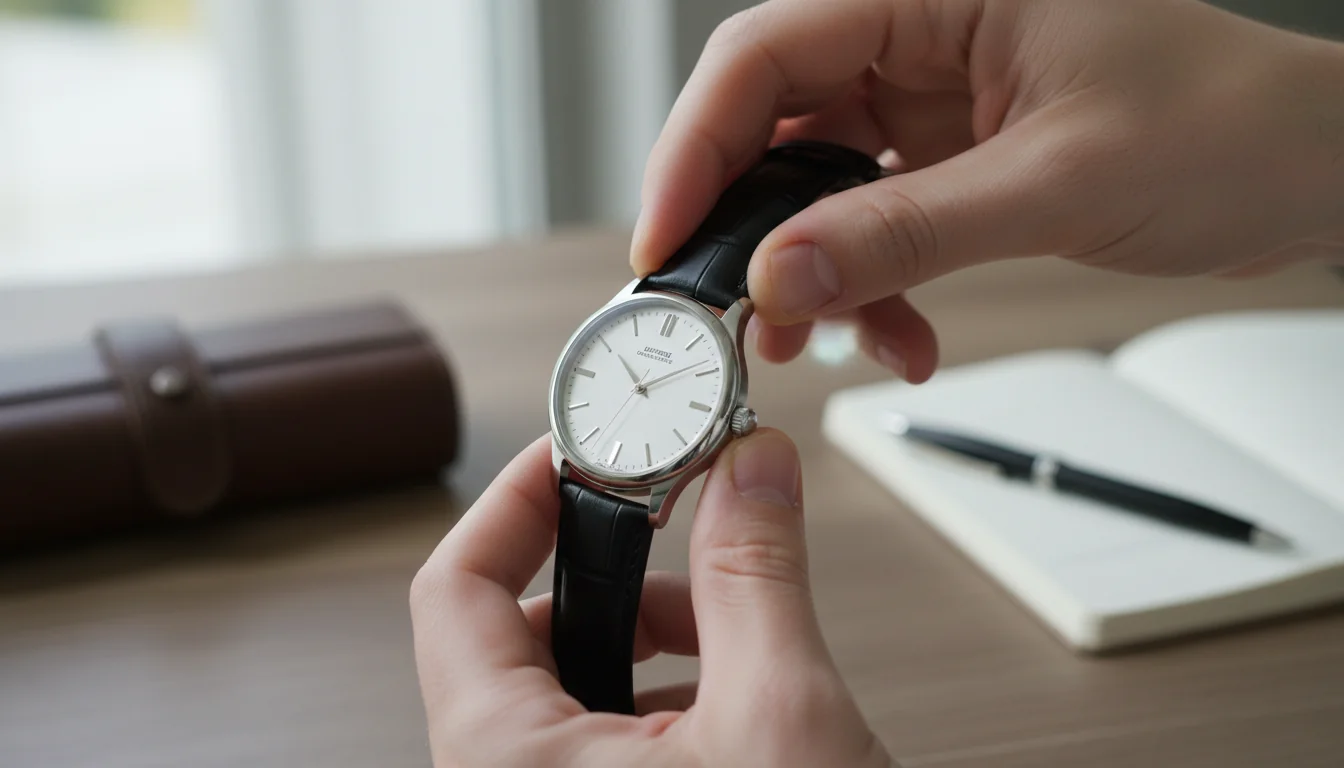
Positions: test how it rests
Rate varies with position. After rest, the balance and pallet friction may favor certain orientations. A positional check tells you if simple night placement can offset a slow trend.
- Log four positions overnight: dial-up, dial-down, crown-up, crown-down.
- Compare deviation for each; note which one runs fastest.
- Use the “fastest” rest position to counter a daytime slow bias.
- If spreads exceed 25 seconds between positions, consider fine regulation.
A simple rate logger app plus a daily photo of the second hand at noon is enough to run a clean positional check.
If you prefer automation over manual rotation, controlled turns-per-day can standardize rest orientation and motion. Positional drift that remains large even with consistent rest supports a regulation or movement health check.
Complications: calendar and drag
When a watch rests for days, calendar gears may sit mid-engagement. On restart, extra load can lower amplitude and make the watch run slow—especially around midnight.
- Check date window: avoid quick-setting between about 9 PM–3 AM.
- Re-set day/date with hands at 6:00 to remove calendar load.
- Make sure the chronograph is stopped and reset; running it adds constant drag.
- Inspect hands clearance; slight rubbing can slow a movement.
Advance the hands past midnight. If the flip is weak or delayed, service attention is likely due.
This check is easy to overlook. Yet it’s common for a just-reactivated watch to lag for one night and then normalize once the calendar cycle is fully engaged.
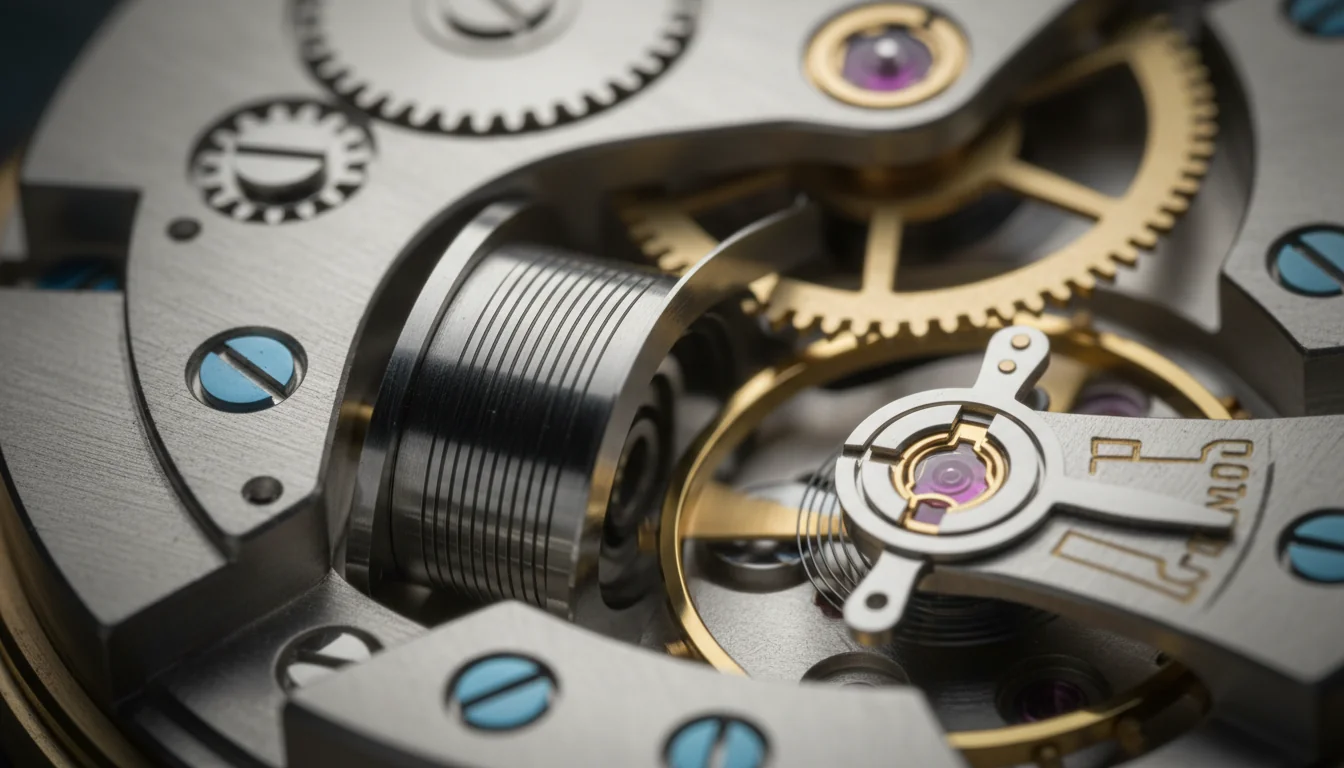
Environment: temperature and moisture
Storage that’s too cold, too hot, or slightly humid affects rate. Cold thickens oils; heat expands parts; moisture invites corrosion—all increasing friction and lateness.
- Check storage: aim for 18–24°C, low humidity.
- Look for condensation: fog under crystal needs immediate drying and inspection.
- Avoid direct sunlight shelves or radiator tops.
- Silica gel packs help keep a drawer microclimate stable.
If you ever see moisture inside, stop wearing the watch. That check saves the dial and hands from stains and the movement from rust.
Once environmental checks are sound, re-test accuracy over 72 hours. Consistent lateness after all checks favors regulation or service rather than a home fix.
Step-by-step: run a clean diagnostic
- Top up energy: full crown wind or thorough light charge.
- Compass check: rule in/out magnetism; demagnetize if needed.
- Position test: log overnight in two positions and compare.
- Calendar reset: set date with hands at 6:00, avoid the danger window.
- Track 72 hours: average daily deviation; decide on regulation or service.
If you routinely rotate timepieces, a low-noise unit like this camphor-toned winder keeps reserve topped and reduces start-up sluggishness.
Don’t regulate blindly. Moving a regulator without confirming amplitude and lubrication can mask the real problem.
Why does a watch slow after sitting?
Idle time lowers torque and lets oils settle. A quick power check plus a magnetism test usually explains most post-rest slowness.
How do I compare mechanical vs. quartz checks?
Mechanical: focus on wind, magnetism, positions, lubrication. Quartz: verify battery and contact cleanliness, then run the same positional and calendar checks.
What daily deviation is acceptable after my checks?
±10–20 s/day is common for many mechanicals. Larger or worsening drift after the five checks suggests regulation or service.
Can a winder replace regular wearing?
No, but it keeps reserve and reduces start-up lag. If you prefer a gold-tone style, an aurum-finish single unit maintains gentle motion between wears.
When should I stop and seek service?
If the watch loses more than a minute per day after power, magnetism, position, calendar, and environment checks, schedule inspection to assess amplitude and oils.
What’s the fastest home check sequence?
Wind fully, compass test, set date safely, log one overnight position, compare next day. This sequence isolates most causes quickly.
A slow watch after a long rest is usually fixable at home with smart, sequential checks. Validate power, rule out magnetism, test positions, relieve calendar load, then decide on service.
- Start with a full wind or charge before any other check.
- Use a simple compass to catch hidden magnetism fast.
- Log 72 hours; let data guide regulation or service.
If you rotate pieces often, a titanium-look single winder can keep reserve steady and make these checks easier the next time your watch takes a break.
0 comments