


Hearing a tiny squeak from your bracelet every time you move your wrist? That faint noise can be surprisingly distracting.
This 2026 guide breaks down the specific root causes behind squeaks and shows you how to confirm each origin in minutes, without guesswork.
By the end, you’ll know the six most common causes, quick diagnostic moves to isolate the source, and when a deeper clean or expert help makes sense.
Root cause clarified: dry link friction
The most frequent trigger is metal-on-metal rubbing inside links and pins. When joints run dry and dirty, micro-movements produce a squeak with every wrist motion.
- Squeak localizes near the middle of the band, not the clasp.
- Noise reduces briefly after washing hands or when the bracelet is damp.
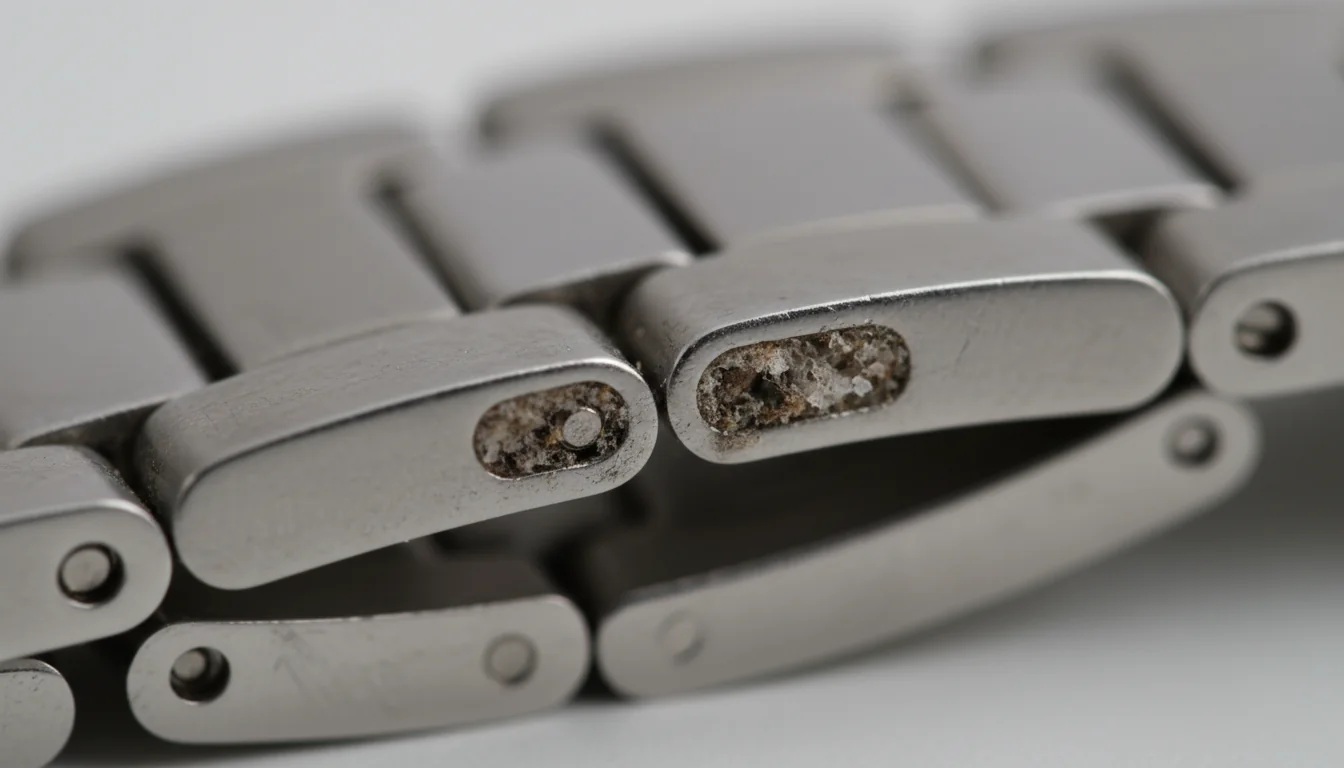
- Fine grit visible between links; hairline “dust” lines along pins.
- Sound changes as you twist links laterally (side-to-side).
Hold the bracelet away from the case and flex a 4–5 link segment. If the squeak is reproducible here, dry joints are the likely cause.
Why this cause matters: accumulated debris and lack of micro-lube increase wear over time. Addressing this origin prevents micro-fretting and prolongs joint life.

Hidden culprit exposed: factory film
Thin protective films or stickers left on the bracelet or tucked under end links can rub and chirp. This is a classic day-one squeak on a new band.
- Noise is loudest where film edges meet sharp transitions (near clasp or first links).
- Squeak appears from the first wear and may vary as film shifts.
- You can feel a slightly tacky edge if you glide a fingernail.
- Removing film reduces noise instantly or within a few wrist rolls.
Even microscopic film remnants around spring-bar shoulders can create a rhythmic chirp. Inspect those shoulders closely.
| Symptom | Likely cause |
|---|---|
| Squeak at edges, varies as you peel | Protective film trapped under links or clasp |
| Squeak returns after sweat dries | Dry, dirty link joints (friction) |
Don’t yank film between tight parts. Lift edges gently to avoid leaving slivers in narrow creases.
Moisture build-up: corrosion micro-bonds
Moisture, sweat salts, and soap residues can form tiny bonds between metal parts. As links break free with movement, they emit a faint squeak or click.
- Sound is worse in humid weather or after a swim/shower.
- White residue or dull film present around link seams.
- Noise fades briefly after rinsing, then returns once dry.
- Clasp interior shows mineral traces or soap film.
Rinse in lukewarm water and dry with compressed air (low pressure). If noise drops and returns the next day, moisture residue is a top suspect.
Treating this origin preserves finish and reduces creaks. Ignoring it invites more residue and persistent low‑level noise with every movement.
Fit and torsion: sizing-induced rub
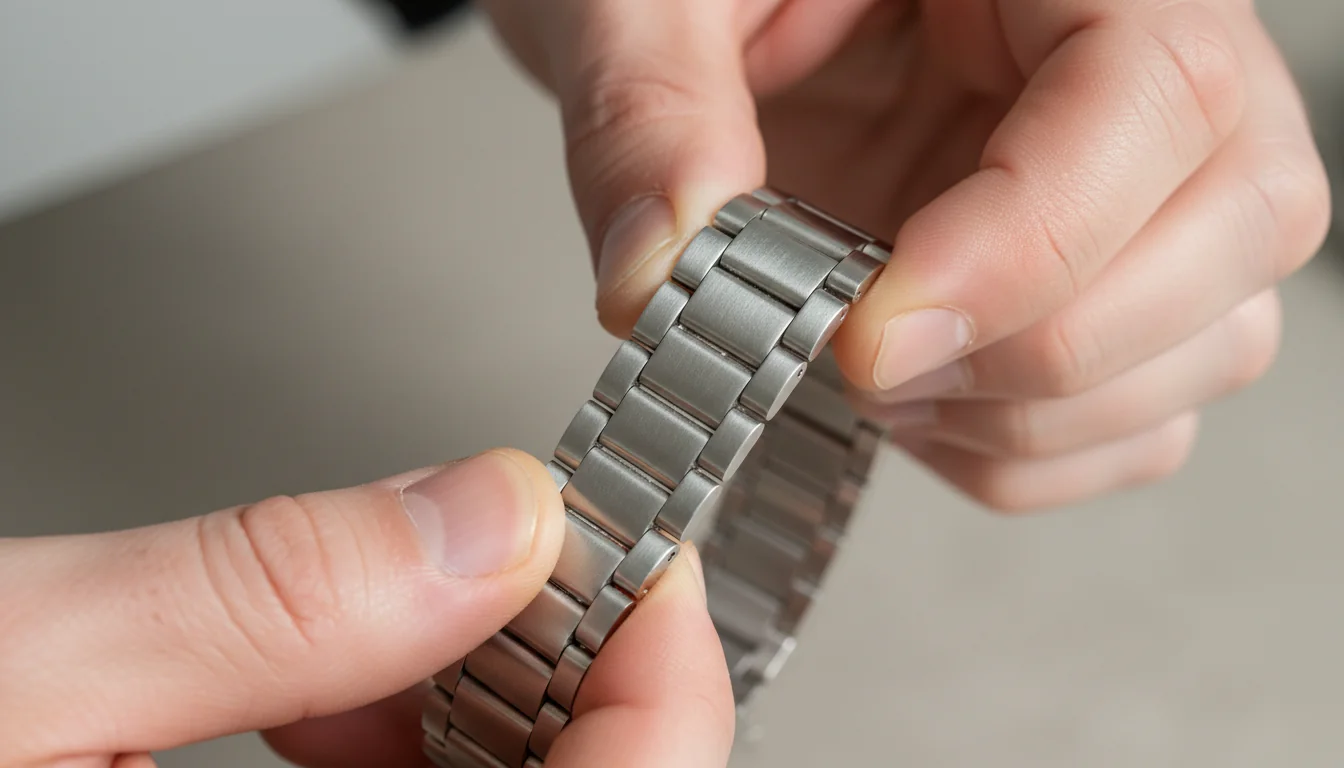
An overly tight or very loose bracelet twists links under load. That torsion makes adjoining faces rub at odd angles and squeak as you bend your wrist.
- Noise peaks during desk flexes or push-up motions.
- Adding/removing a half-link changes the sound profile.
- The band “binds” near the top of the wrist at full bend.
- Squeak drifts location as you rotate the case on the wrist.
Fit is a primary cause you can test fast. Wear the bracelet one notch looser for a day; if the squeak changes character, torsion is involved.
Optimizing fit relieves rubbing stress and often eliminates the movement-triggered squeak without further intervention.
End links and bars: tolerance gaps
End links and spring bars seat against lugs and the first links. If tolerances are off, tiny shifts at that interface can chirp as the case pivots.
- Pressing the end link toward the case silences the noise.
- Squeak localizes at the head or tail end of the bracelet.
- You feel play when you rock the bracelet up and down.
- Swapping spring bars slightly changes the squeak pattern.
Micro-burrs inside end-link channels are a quiet cause of creaks. A thorough clean often removes the debris that’s catching.
Confirming this cause helps you decide between a deeper clean, new bars, or minor adjustment to how the end link seats.
Clasp hardware: edges, springs, rattle
Inside the clasp, leaf springs, micro-adjust sliders, and folding plates can rub. Sharp edges or tight channels become squeak points under pressure.
- Noise triggers when opening/closing or flexing the clasp area.
- You hear a different timbre (more click than chirp).
- Squeak reduces when you hold the clasp plates firmly together.
- Micro-adjust positions affect the sound intensity.
With the bracelet off the wrist, compress the clasp gently and cycle it. If the squeak appears here only, the clasp assembly is the cause.
Identifying this cause keeps you from chasing link friction elsewhere and focuses your attention where the sound truly originates.
How to trace the noise in 5 steps
Use this quick protocol to isolate the origin before you act. It’s built for mobile reading and takes under 10 minutes.
- Clean and dry: Rinse, pat dry, then test. If quieter, moisture residue is a likely reason.
- Segment flex: Hold a 4–5 link span and twist. Persistent squeak = link friction cause.
- Clasp test: Open/close and compress. Noise here points to clasp hardware.
- End-link press: Push end links toward lugs while flexing. Silence implies tolerance gaps.
- Fit swap: Wear one notch looser/tighter for a day. Change in tone suggests torsion fit.
Don’t flood links with heavy oil. It masks symptoms, attracts grit, and can create new causes of grinding noise.
Like bikes with “squeaks and creaks,” the most common origins are dirty or dry bearings—your links act the same way.
Verification cues: match sound to source
Different origins produce different tones. Matching timbre and trigger helps you confirm the right cause before taking action.
- High-pitched chirp as you twist: dry link friction.
- Sticky squeal after shower: moisture and residue build-up.
- Click-chirp near clasp actuation: clasp edges or springs.
- Intermittent tick at case interface: end-link seating/spring-bar play.
Record the sound on your phone near different areas. Comparing clips helps pinpoint the origin objectively.
This sound-matching step often separates overlapping common causes so you address the true source, not a symptom.
Why focus on causes before cleaning?
Because cleaning masks some noises. Confirming the origin first ensures you solve the problem, not just quiet it for a day.
How do these origins compare to strap issues?
Leather or fabric straps rarely chirp. Metal bracelets have more interfaces, so friction-based causes are far more common.
What’s the fastest confirmation step?
Segment flex. If a 4–5 link twist reproduces the squeak, link friction is the likely cause and the best place to start.
Could the case or lugs be the source?
Sometimes. If pressing end links toward the lugs stops the noise, end-link tolerance is your cause, not the center links.
Is a light lubricant ever acceptable?
Use sparingly and only after cleaning. A micro-drop can confirm a friction cause, but residue control is critical on bracelets.
Will it “wear in” on its own?
If film or minor residue is the origin, yes, sometimes. Dry link friction and tolerance issues usually need attention.
Does ultrasonic cleaning address all causes?
It tackles debris-based causes well. It won’t fix clasp edge rub or end-link geometry; those need adjustment or parts.
When should I seek professional help?
If the sound persists after you confirm and treat the likely origin, or if spring bars/end links show visible play or wear.
A bracelet that squeaks with every wrist motion is telling you something. Identify the precise origin, then act with purpose.
- Most noises trace to dry link friction or moisture residue.
- Fit, end-link tolerance, and clasp parts are frequent secondary causes.
- Quick tests isolate the source so you fix the right thing first.
Use the 2026 checklist above, and your bracelet should move in quiet confidence again.
0 comments