


Oak vs Walnut Watch Box: which style really ages better in 2026? If you care about how your storage looks after years of light, touch, and daily use, that single word—better—matters.
In this guide, you’ll learn how each wood shifts in color, how finishes behave, and which choice keeps a crisper look over time. We’ll compare patina, durability, and maintenance so you can decide what “ages better” means for you.
Color shift: what ages better
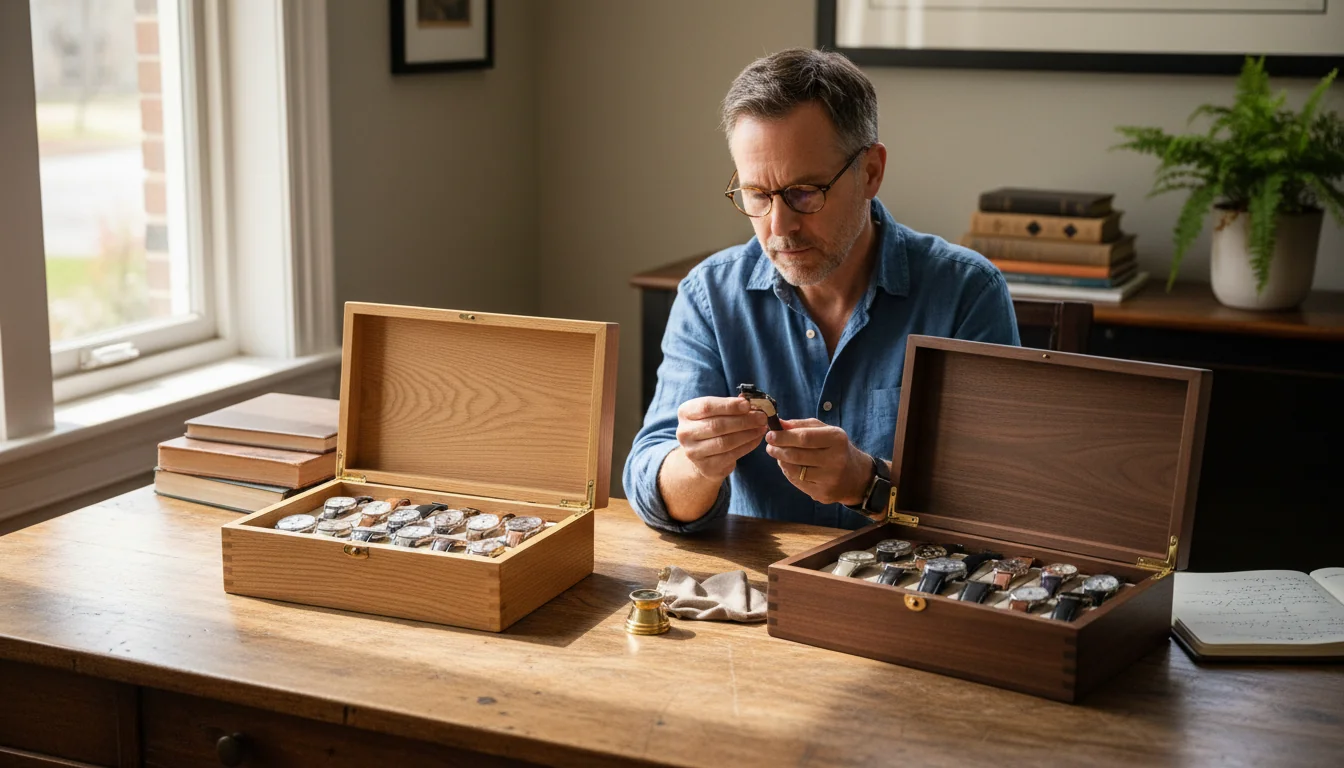
Light changes wood. Oak tends to amber and deepen; walnut often lightens from chocolate to a mellow caramel. If “better” means predictable, understanding these trends avoids surprises on your watch box lid and face frames.
- Oak: warm golden cast increases; quartersawn rays pop under oil.
- Walnut: dark tones soften; contrast between heartwood and sapwood narrows.
- Clear oils amplify ambering; UV-inhibiting lacquer slows shifts.
- Indirect daylight ages more evenly than direct sun.
- Matte finishes mask aging better than high-gloss on dark woods.
| Aspect | Oak vs Walnut trend |
|---|---|
| Baseline tone | Oak starts light; walnut starts dark and rich |
| UV reaction | Oak darkens; walnut lightens over time |
| Finish influence | Oil warms more; lacquer with UV blockers stays closer to original |
Historic wooden objects—furniture, cases, even early camera boxes—show how diffuse sunlight builds a gentle patina. Harsh sun creates uneven panels and obvious outlines.
“If ‘better’ means harmony with time, expect oak to glow and walnut to mellow.”
Bottom line: If you want a box that gets warmer, oak ages better. If you prefer an initial dark contrast that softens gracefully, walnut ages more elegantly in bright rooms.
Rotate your watch box 90° every 3 months if it sits near a window. That evens out light exposure and preserves a more uniform tone.
This sets the tone—literally—for what “ages better” will mean in your space.
Durability: which finish wears better
Daily use adds micro-scratches on lids and edges. Hardness, pore structure, and finish film all decide which surface looks better after thousands of opens and closes.
- Oak (white/red): higher Janka hardness; resists dents slightly better.
- Walnut: modestly softer but hides wear with darker base tones.
- Open pores telegraph scratches less under satin sheens.
- Thick lacquer protects edges; hardwax oil is easier to refresh.
- Matte 5–10 gloss reads scuffs far less than 70+ gloss.
| Property | Oak vs Walnut |
|---|---|
| Janka hardness | Oak ~1290–1360 lbf; Walnut ~1010 lbf |
| Pore visibility | Oak more pronounced grain; Walnut finer, masks light scuffs |
| Edge durability | Oak edges chip less; Walnut needs gentler handling at corners |
Oak’s high tannins can react with steel wool dust and moisture, causing black specks. Tape off hardware and vacuum after sanding.
Prefer zero patina and near-static color? Consider a transparent alternative. Acrylic doesn’t patinate like wood and stays optically clear when kept clean.
If a glossy walnut lid shows swirls, burnish gently with a non-abrasive pad and apply a thin wax. A soft sheen hides micro-marks better.
On finishes, “wears better” usually means satin film on oak, satin-to-matte on walnut.
Moisture control: what survives better
Watch boxes live in bedrooms and closets with daily humidity swings. The wood that handles movement better keeps lids flush and joints tight.
- White oak’s tyloses slow vapor transfer; lids tend to stay flatter.
- Walnut has similar movement but benefits from quartersawn panels.
- Dovetails and splines age better than butt joints with brads.
- A felt or suede lining buffers microclimate inside the box.
- Silica sachets keep RH near 45–55% to protect leather straps.
| Movement | Typical behavior |
|---|---|
| Tangential shrink | Oak ~7%; Walnut ~7–8% (moderate, manageable) |
| Best cut for lids | Quartersawn to reduce cupping and read “straighter” with age |
Oak’s medullary rays, visible when quartersawn, are not just pretty; they stabilize the panel and look better as the figure gently highlights over time.
If your home is dry in winter and humid in summer, oak lids often keep alignment slightly better, provided the finish seals all faces evenly.
Patina: where character is better
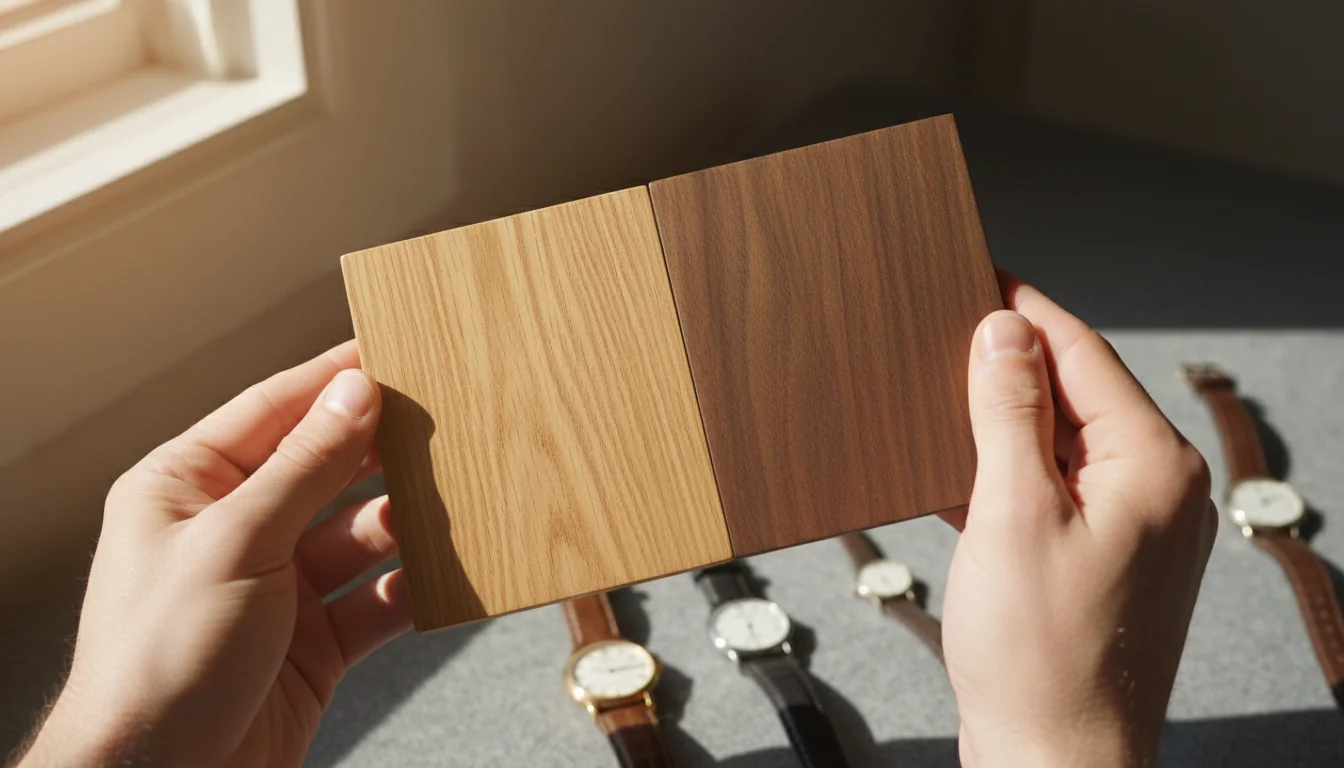
Patina is the soft sheen, the rounded edges, and the micro-contrast that says “well kept.” Which wood turns that story into something better on your shelf?
- Oak: grain tracks grow richer, especially with oil-wax care.
- Walnut: subtle chatoyance gives a velvety surface over years.
- Brushed brass or matte black hardware pairs well with both.
- Soft buffing every 6–12 months deepens the glow.
- Avoid silicone sprays; they complicate future repairs.
On oak, iron plus moisture equals black stains. Keep damp cloths and steel fragments away from raw edges or screw holes.
If “better” for you means tactile charm that grows, walnut’s softening tones and oak’s glowing rays are both winners—choose by the light in your room and the finish sheen you prefer.
A thin coat of hardwax oil once a year maintains a dry, non-sticky feel that ages more gracefully than thick, glossy layers.
Design fit: which looks better
Context matters. The wood that ages better is the one that complements your watches, furniture, and light level—so the inevitable change reads intentional.
- Bright, cool rooms: walnut’s softening prevents stark contrast.
- Warm interiors: oak’s amber glow harmonizes with brass and leather.
- Silver dials, steel bracelets: oak keeps things crisp; walnut adds depth.
- Gold accents and warm straps: both woods sing; pick by grain drama.
- Minimalist spaces: satin finishes read better than glossy ones.
| Typical size | Use case |
|---|---|
| Width 31 cm, Height 9 cm, Depth 12 cm, Weight 1.2 kg | Compact 5-slot shelves; low profile displays age more discreetly |
| Width 31 cm, Height 14 cm, Depth 21 cm, Weight 2.9 kg | 10+ slots; heavier lid benefits from quartersawn panels |
Dark woods seem slimmer on shelves. That perception helps larger walnut boxes feel visually lighter as they age.
Match wood to your palette and strap metals; that alignment makes subtle aging look better, not “off.”
Value proof: holding up better
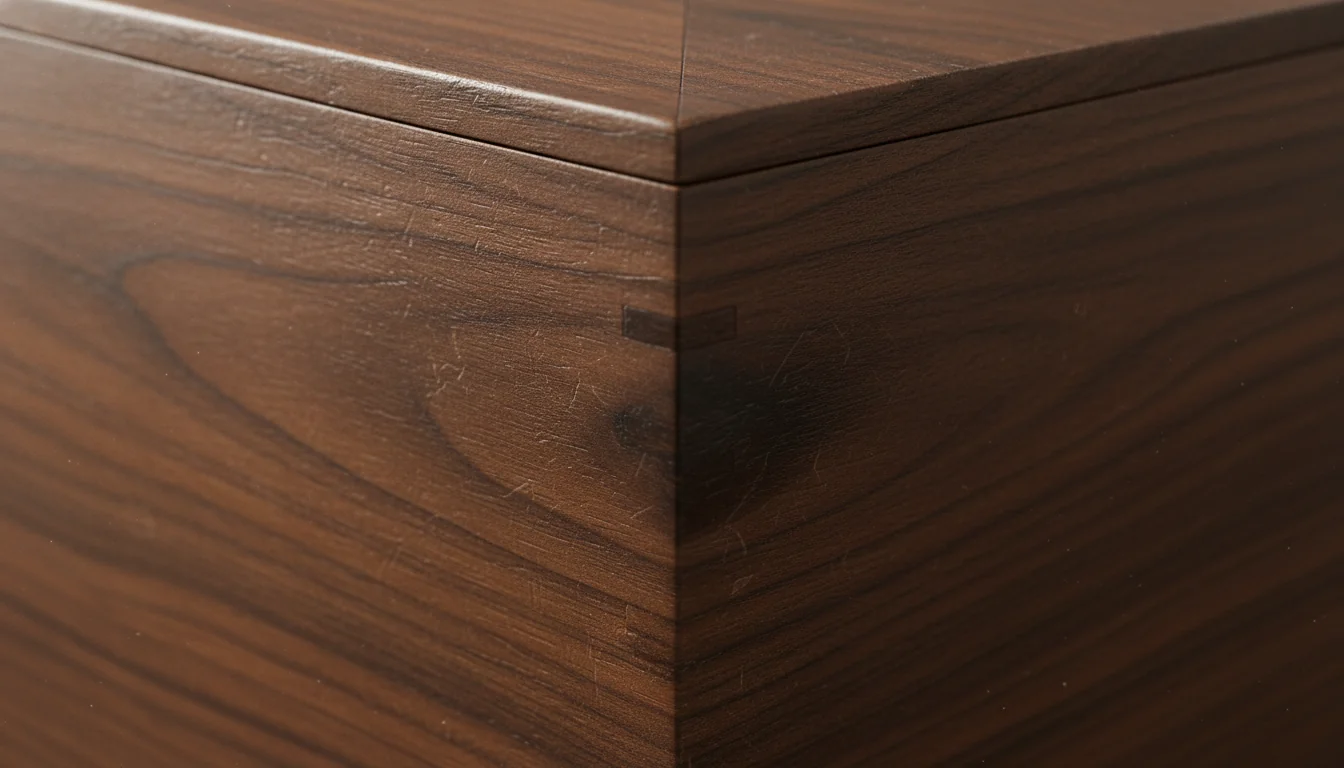
“Better” also means staying straight, smooth, and handsome after years. Think hinges, lids, and the feel of the opening action.
- Oak’s hardness favors crisp edges that resist rounding.
- Walnut’s darker surface conceals minor touch wear elegantly.
- Hidden hinges read cleaner over time than surface mounts.
- Velvet or suede pillows prevent bracelet scuff transfer.
- Non-slip feet protect the base from micro-scratches.
If the lid action is part of your daily ritual, a slightly heavier oak top can feel sturdier and age better under frequent use.
In sum, oak often wins on structural resilience; walnut often wins on graceful concealment of gentle wear. Decide which kind of “better” you value more.
Guide 2026: decide in 5 steps
- Check your light: bright sun favors walnut’s mellowing; shade favors oak’s warming.
- Pick a sheen: satin-to-matte reads better over time than gloss.
- Weigh hardness vs concealment: oak resists dents; walnut hides scuffs.
- Specify quartersawn lids for flatness and calmer grain.
- Seal all faces evenly to keep movement balanced.
Don’t judge wood under store lighting only. View a sample near your window for 72 hours before deciding.
For tiny collections, a compact single-slot case keeps aging simple and controlled, for example a compact single-slot option.
Why choose the wood that ages “better”?
Because patina, color drift, and wear patterns shape how your watch box reads in a room. A choice that matures well preserves coherence and feels intentional every time you open it.
How does oak compare to walnut long-term?
Oak tends to darken and holds edges firmly; walnut lightens gently and hides light scuffs better. Pick the behavior that suits your light and use patterns.
What are the main advantages of each?
Oak: higher hardness, lively rays, strong classic vibe. Walnut: rich starting tone, elegant softening, discreet wear. Both can be finished to age more gracefully with satin films.
Does “better” differ for small watch sets?
Yes. With only one or two pieces, a darker base can frame dials beautifully over time. Consider a two-watch format if you want balanced proportions.
Is walnut suitable as a gift if I want lasting appeal?
Absolutely. Walnut’s mellowing reads refined with age. For a warm single presentation, see a warm-toned single case.
Which finish keeps looking better with handling?
Satin and matte. High-gloss can show swirls, especially on dark lids. If you love gloss, choose a deep-polished piece like a glossy lacquered look and maintain with non-abrasive cloths.
How do I maintain “ages-better” results?
Dust weekly with a dry microfiber, keep RH near 45–55%, re-wax annually, and avoid direct sun. Seal touch-ups promptly to prevent water rings.
Oak vs Walnut Watch Box—if “better” means structure-first, oak often prevails; if it means a soft, refined patina, walnut frequently wins.
- Oak darkens and keeps edges crisp; walnut lightens and hides wear.
- Satin finishes age more evenly than high-gloss on both woods.
- Quartersawn panels and balanced sealing improve long-term results.
Prefer a neutral, modern vibe to let aging stay subtle? Consider a minimalist grey variant. Choose with your light, touch, and daily rhythm in mind—and let time do the rest.
0 comments