


New Baby at home means delightful chaos—and fast, curious hands. Those tiny fingers reach, tug, twist, and taste anything shiny. Wondering how to keep jewelry and watches safe, away from little hands without turning your home into a vault?
In this 2026 guide, you’ll learn where to place valuables, how to lock them down, which pieces to wear (or skip), and the quick routines that keep small hands out—day after day.
Placement strategy: out of sight
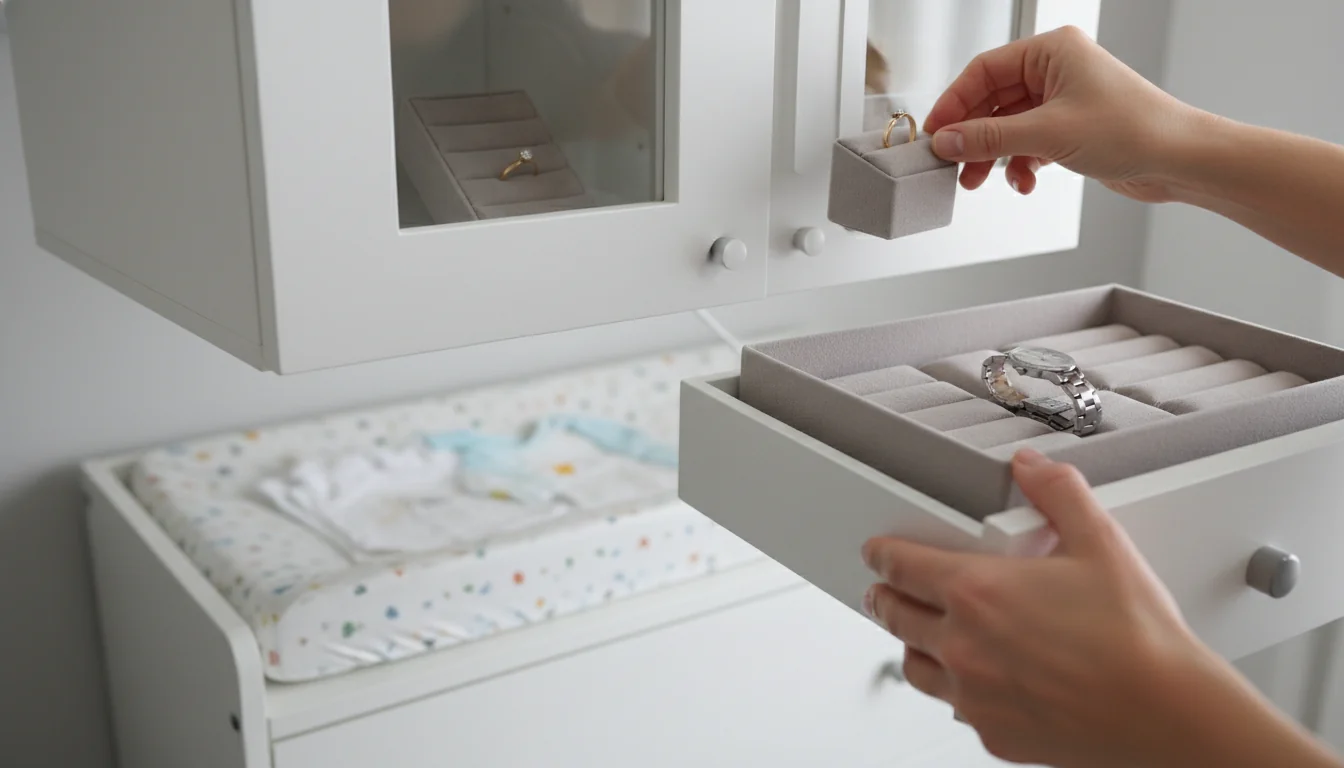
Visibility invites grabbing. If a ring dish gleams on a dresser, expect tiny palms to explore. The fastest win is simple: move valuables above reach and sightlines, so small hands never spot a target to pursue.
- Aim high: store items at or above shoulder height for adults (about 60 inches / 150 cm).
- Use closed furniture: opaque doors beat glass; curtains count as visual barriers.
- Create “no-gleam zones”: avoid glossy trays on low tables or bedside stands.
- Keep entries tidy: a bowl by the door attracts little hands—relocate it.
- Out of reach and sight: away and out of reach and sight of little hands beats “high but visible.”
Pick one anchor spot per floor (closet top shelf, office cabinet). Consistency builds a habit that outsmarts small, searching fingers.
For kids under two—and for those who simply can’t keep their hands off anything shiny—gating a decorated area works. If a tree, vanity, or console becomes a magnet, gate it off during peak curiosity phases.

Storage upgrades: lock and latch
Distance helps, but closures are decisive. A child-resistant latch or lockable box turns a tempting object into a sealed puzzle little hands cannot solve.
| Option | What it changes for little hands |
|---|---|
| Lockable watch/jewelry case | Adds child-safe closure; keeps small parts contained if dropped. |
| Drawer with magnetic latch | Prevents quick access; slows exploration during busy moments. |
| High cabinet + key hook above | Keeps both box and key away from reach and sightlines. |
- Choose rigid lids: tight closure beats soft pouches that spill if tugged.
- Prefer foam compartments: isolate pieces so tiny hands can’t scatter parts.
- Label shelves inside doors to reduce fumbles during nap transfers.
- Anchor light boxes on a non-slip mat to resist sudden pulls.
Test every latch weekly. Little hands learn fast; your closures must stay one move ahead.
A lock buys time. Combined with “out of sight,” it practically eliminates opportunistic grabs during busy diaper changes or bath runs.
Wearing choices: grab-safe styling
On-body risks are real. Babies often reach for what you’re wearing while feeding, cuddling, or dozing on your chest. Think “smooth, short, and secure” around small, exploring hands.
- Skip long chains and hoops; choose short, breakaway cords or no necklace at all.
- Pick smooth rings with low-set stones and snag-free settings.
- Opt for flush bezels on watches; fabric or mesh straps can irritate tiny skin.
- Avoid charms, beads, and dangles—prime targets for tiny pinch grips.
- During babywearing, go jewelry-light; a carrier puts curious fingers within inches.
Health guidance for newborn bathing commonly suggests taking off jewelry and washing your hands first—less snagging, cleaner handling, calmer baby.
If you love a focal piece, treat it as jewelry—not a toy. The necklace remains jewelry; it can give little hands a safe visual point but should never be something they can tug or chew.
Daily rhythms: habit loops that work
In 2026, the most effective safety systems are boringly consistent. You need a repeatable loop that moves valuables out of reach before tiny hands get curious.
- Doorway routine: unlock, store, lock. Do it the moment you step inside.
- Floor-time check: rings off, watch off, into the same high spot—every time.
- Bath prep: remove jewelry, test water, wash hands, then lift baby.
- Sleep cue: last scan of surfaces, 30-second sweep, all closed and latched.
Use verbal cues. Saying “rings up, hands free” out loud creates a hands-off habit you’ll follow even when tired.
New Baby life is busy. A five-second ritual beats a five-minute search. Your routine protects jewelry—and protects your child from tempting small parts.
Hazards decoded: small parts, metals
Not all risks are equal. Some jewelry components are irresistible to little fingers and dangerous if mouthed or swallowed.
- Choking: earring backs, beads, broken clasps, loose watch spring bars.
- Button batteries: found in some watches; seek medical help immediately if ingested.
- Nickel allergy: contact dermatitis can flare on both your skin and baby’s.
- Magnets: double-magnet clasps are strong—dangerous if swallowed.
- Chemical residues: fragrances, cleaners, lotions on your hands transfer to tiny mouths.
Be especially careful with button cells. If a battery goes missing and little hands were nearby, treat it as an emergency.
Do a weekly “small parts audit.” Check clasps, screw-backs, pins, and bracelet threads. A single loose piece is exactly what tiny fingers will find—and mouth.

Zones that tempt: map the reach
Curious hands move fast in certain places. Audit these hotspots and reduce shiny bait at child level.
- Nursing chair: remove long necklaces and bracelets before feedings.
- Changing table: nothing sparkly within arm’s reach—your watch counts.
- Bathroom sink: avoid open dishes; steam loosens adhesives and threads.
- Kitchen counters: small hands can pull drawers and grab shiny metal—latch them.
- Car seat area: rings and watches off before buckling to prevent on-the-go grabs.
In kitchens, safety agencies recommend locks so little hands can’t pull oven doors or access hot zones. Apply the same idea to jewelry storage.
If décor or routine makes a spot irresistible, change the environment. When in doubt, lift items one shelf higher than you think you need.
How to baby-proof jewelry and watches: a quick guide
- Pick one high, closed home base for all valuables.
- Add a lock or child-resistant latch; label the shelf inside.
- Establish a doorway routine: store-on-arrival, hands free after.
- Before floor time or bathing, remove and stow rings and watches.
- Audit weekly for loose parts; fix or retire fragile pieces.
Keep a soft pouch near the entry as a “transfer pocket,” then empty it into the locked box upstairs.
If you prefer dedicated slots and a closed lid, consider a compact four-watch case with secure compartments to keep timepieces grouped, cushioned, and out of sight from tiny hands.
Open trays on low dressers. They advertise sparkle at eye-level for crawling explorers.
Why focus on little hands at all?
Because grasping, tugging, and mouthing peak with a New Baby. Shiny items cue exploration. Planning for fast fingers prevents breakage, choking hazards, skin irritation, and stressful last‑minute searches.
Is height enough, or do I need locks?
Height works—until climbing starts. A closed, latched container plus high placement outperforms height alone. Think layers: out of sight, out of reach, and then closed tight.
What should I wear around grabby fingers?
Smooth bands, short chains, and flush watch profiles. Skip hoops, charms, and long pendants during feeds or babywearing. Your skin—and your jewelry—will thank you.
How do I store watches safely but access them fast?
Use a labeled, high shelf and a case with distinct cushions. For tight spaces, a slim organizer helps—see this three-slot travel-friendly option that keeps pieces separated from curious hands.
Any hygiene rules tied to hands and jewelry?
Wash and dry your hands before handling baby; remove rings for bathing and diapering. Lotions and fragrances on metal can transfer to a baby’s mouth and skin.
What about batteries in watches?
Button batteries are hazardous if swallowed. Keep tool kits, spare cells, and watch backs sealed and stored high. If a battery goes missing, seek immediate medical help.
When do hands become less grabby?
Curiosity spikes through crawling and early walking. As coordination improves, grabbing becomes more deliberate. Continue “out of sight and locked” until rules reliably stick.
How often should I audit small parts?
Weekly. Check clasps, screw-backs, jump rings, and spring bars. If anything looks worn, retire the piece until repaired—tiny hands find loose bits first.
Keeping jewelry and watches safe with a New Baby is a hands-first project: remove visual cues, add closures, and run a simple routine you can follow even when tired.
- Hide the shine: out of sight beats out of reach.
- Close it up: locks and latches slow curious fingers.
- Build habits: same spot, same steps, every time.
Do this, and those little hands can explore safely—while your favorite pieces stay pristine.
0 comments