


Choosing between a mains-powered and a battery-powered watch winder looks simple—until you plan to place it in the bedroom. Sleep quality, cable safety, and quiet operation now matter as much as winding accuracy.
This 2026 guide answers the real question: mains-powered vs battery-powered watch winder: which one for the bedroom? You’ll learn how each option behaves beside the bed, what noise levels to target, and how to set rotations for undisturbed nights.
Sleep first: hush the hum
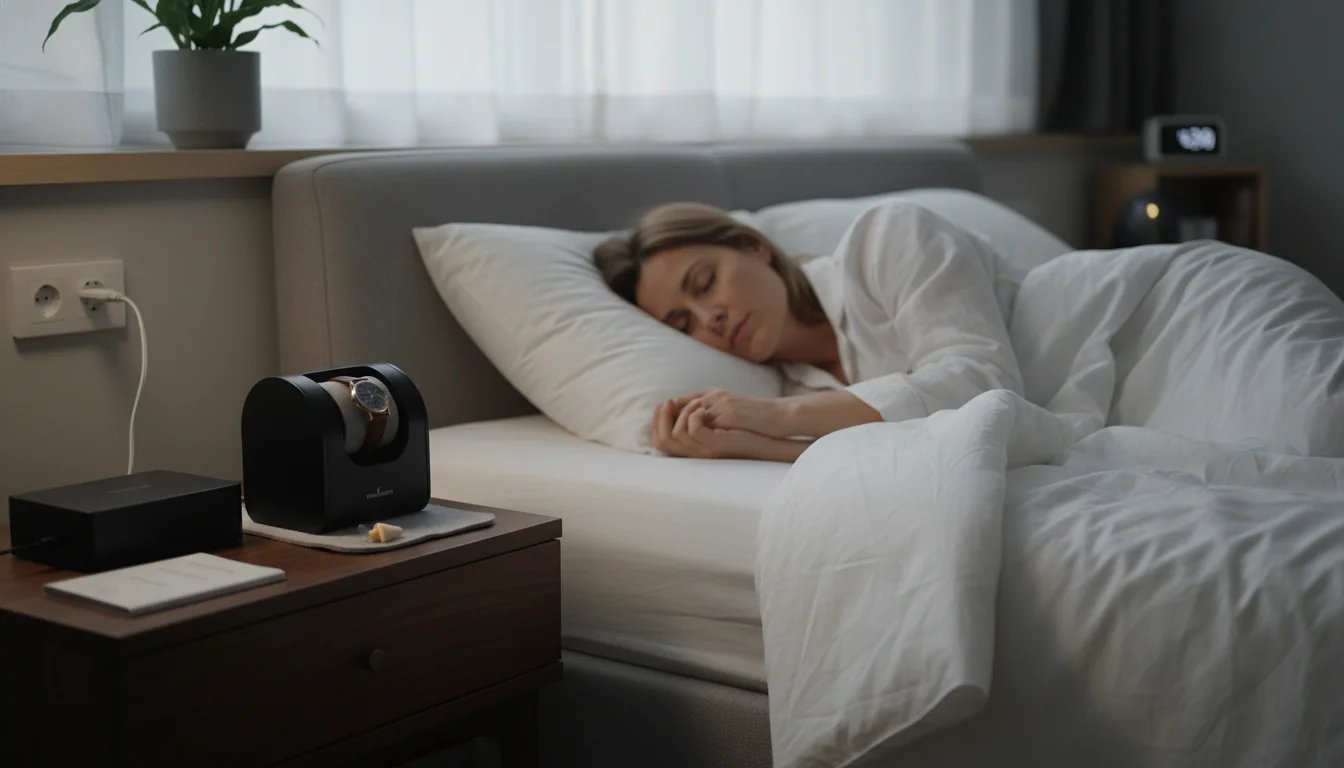
A bedroom-friendly watch winder must be quieter than your nightstand drawer sliding shut. Motor tone, vibration through furniture, and cycle timing all affect how restful your sleep space feels.
- Target below 20 dB; under 10 dB is exceptional on the bedside.
- Prefer models with a programmable sleep mode to pause rotations overnight.
- Look for balanced cups and friction-less bearings to cut resonance.
- Place on a dense surface; hollow nightstands amplify motor noise.
Use a felt pad or cork mat under the winder to decouple it from the nightstand and drop perceived noise.
Mains-powered and battery-powered winders can both be quiet. The difference in the bedroom hinges on how they cycle: short bursts, then pauses. A unit that does one turn and rests for minutes is easier to ignore than frequent micro-movements.
Cable control: safer bedside setup
Beside the bed, cable clutter is more than messy—it’s a trip hazard. Power-strip hum, bright LEDs, and a dangling adapter can spoil a calm corner meant for rest.
- Mains power ensures continuous use but requires outlet access and tidy routing.
- Battery-powered units offer no visible cables, ideal for minimalist nightstands.
- For shared rooms, avoid bright adapter LEDs and choose dimmable indicators.
- Keep cables away from drawers to prevent snagging and vibration.
| Mains-powered beside bed | Battery-powered on nightstand |
|---|---|
| Unlimited runtime; stable power supply | Flexible placement; clean look |
| Needs discreet cable management | Requires periodic cell changes |
Never run an AC adapter and installed batteries at the same time; mixing sources can damage the unit.
If you must plug in by the bed, use a low-profile adapter, secure the cord along the baseboard, and choose a winder with rear or underside cable exit to keep your retreat uncluttered.
Power resilience: night and outages
In sleeping quarters, you want set-and-forget reliability. Consider how each power source behaves if you lose power or forget to replace cells.
- Battery-powered winders running on 2 × 1.5V C (LR14) often last months at moderate TPD.
- Mains-powered units ignore outages if you pair them with a small UPS.
- A “memory” feature preserves TPD and direction after power loss.
- Schedule rotations daytime to reduce dependency on overnight power.
Many automatic movements stay accurate for 40–70 hours off wrist. Smart scheduling keeps them running without overnight spins.
If your bedroom circuits host chargers and lamps, a battery winder avoids sharing outlets. If your home sees occasional outages, mains plus backup power improves continuity while keeping the watch ready by morning.
Aesthetics and calm bedroom integration
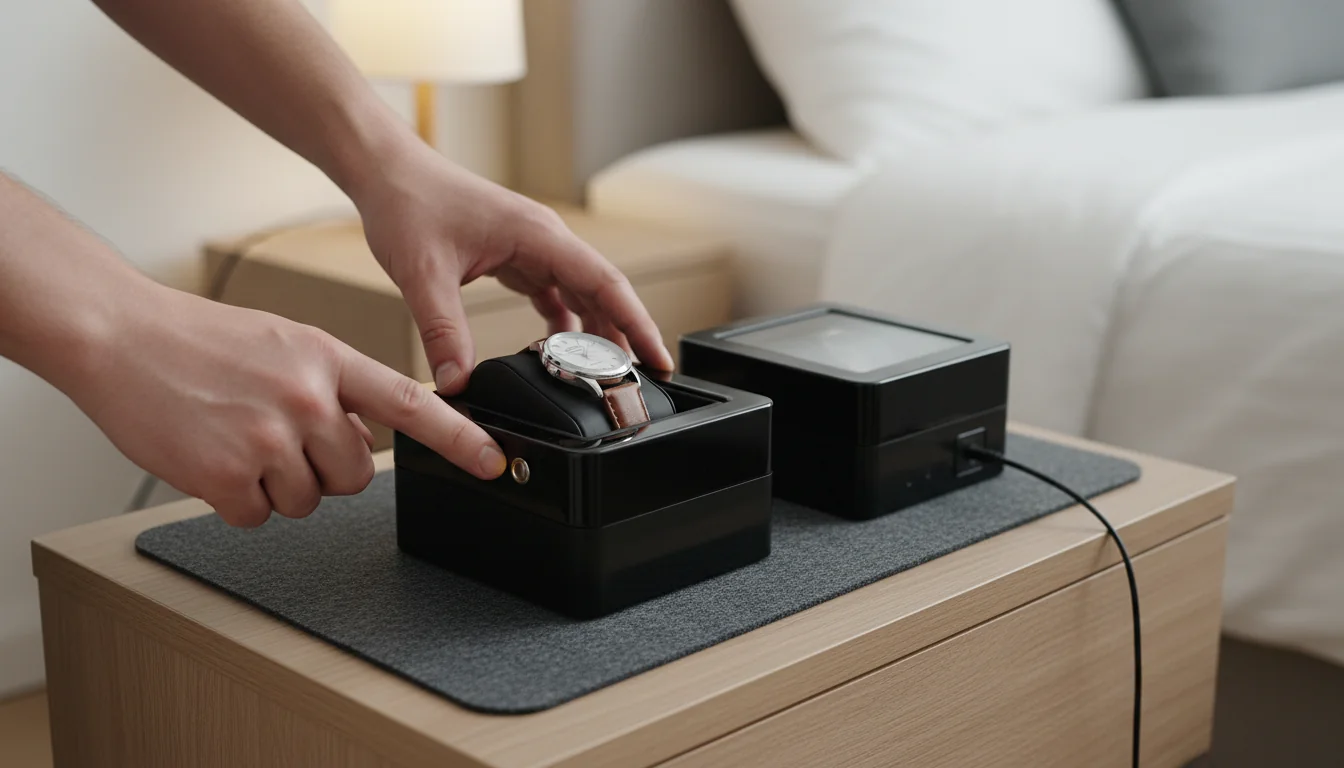
The bedroom is a place for soft light and low visual noise. Your winder should harmonize with textiles, wood tones, and bedside decor without turning into a blinking gadget.
- Choose matte finishes and soft interior lining to avoid glare.
- A single watch winder is discreet on a narrow nightstand.
- Stackable modules suit a wardrobe shelf, not the bedside table.
- Opt for dim or switchable status LEDs for dark rooms.
Place a winder inside a closet cubby or on a dresser tray to keep your sleeping area visually calm while still within easy reach.
Battery-powered units feel especially at home in serene interiors: no cord, no adapter, just a quiet object that blends with bedding and wood accents.
Routine fit: settings that suit
Bedroom use is all about rhythm. Configure cycles so your automatic watch stays wound without interrupting sleep or morning flow.
- Start with 650–800 TPD; works for many automatic movements.
- Use bidirectional unless your caliber needs a single direction.
- Program “turn, then pause” cycles; avoid constant motion at night.
- Match cushion size snugly to prevent wobble and micro-rattles.
A winder should maintain operation—not max out the mainspring for hours. Intermittent cycles are kinder to your movement.
If you rotate two watches during the workweek, a double unit on the dresser keeps both ready. For a single daily wearer by the bed, a compact single winder with a midnight pause is the least intrusive option.
Costs and care: low effort nights
A quiet room benefits from low-maintenance choices. Factor in energy use, cell changes, and basic upkeep tailored to the night space.
- Mains units sip power; annual cost is typically a few dollars at moderate TPD.
- Battery winders: expect cell swaps every few months with alkaline C batteries.
- Dust the cup and pillow regularly to keep the lining clean.
- Check screws and mounts yearly to prevent vibration creep.
Running daytime only can cut energy use by half while keeping watches ready for morning wear.
For shared bedrooms, low-effort means fewer interventions. If you prefer entirely cordless surfaces, batteries win. If you dislike swapping cells, mains wins.
How to place a winder by the bed
Follow this quick, bedroom-focused setup so your automatic stays ready without spoiling sleep.
- Pick location: top drawer, dresser tray, or closet cubby near the sleeping area.
- Decouple: add a felt or cork pad to absorb vibration.
- Set TPD: start at 650–800 with bidirectional rotation.
- Schedule: enable sleep mode or pause rotations 23:00–07:00.
- Test: use a phone dB app to confirm sub-20 dB at pillow height.
A compact single-slot model is easiest to tuck away and keep silent beside the bed. Consider this neat single-slot format if you keep one daily wearer.
For two alternating pieces, a low-profile dual unit on a dresser avoids clutter near the pillow. One option is a slim two-watch layout that still fits a calm, pared-back room.
Why choose a winder for the sleeping area?
It keeps automatics ready without morning resets. With quiet cycles and sleep mode, you protect rest while maintaining calendar complications for hassle-free wear at dawn.
How do mains and batteries compare beside the bed?
Mains offers unlimited runtime but adds a cord. Batteries remove cable clutter and can sit anywhere in the room. For a discreet single, see this compact bedside choice.
What noise level is acceptable in a quiet room?
Under 20 dB is a good target. Many motors are effectively inaudible inside a drawer or closet cubby. Always test at pillow height, not across the room.
Which settings suit a bedroom schedule?
Use 650–800 TPD, bidirectional, and enable a night pause. For two daily wearers on a dresser, try a low-noise dual format with timed cycles.
Are batteries safe to use on the nightstand?
Yes—use quality alkaline C cells and avoid mixing old and new. Replace them proactively. Do not combine AC adapters with installed batteries in the same unit.
Where exactly should I place it in the bedroom?
Try a dresser tray, closet shelf, or a lined nightstand drawer. Add a felt pad to stop resonance. Keep it away from loose cables and bright indicator lights.
Do I need a single or a double near the bed?
If you wear one piece most days, a single is tidier. For alternating pairs kept in the same room, a double unit remains compact and avoids extra cords.
For a restful bedroom, both power types can work—if you control noise, cables, and timing. Batteries win on visual calm; mains wins on never-ending runtime and zero cell swaps.
- Aim sub‑20 dB and use sleep mode for undisturbed nights.
- Pick 650–800 TPD with bidirectional rotation to cover most movements.
- Place the unit where resonance is low and light is dim.
If two alternating automatics live in your sleeping quarters, a restrained twin model keeps things tidy; explore this understated dual arrangement as a calm, bedroom-suited example.
0 comments