


Does your leather bracelet leave dark or green marks on your wrist? Looking for real, long-lasting solutions that work beyond a single wear?
In this 2026 guide, you’ll learn six proven remedies to stop transfer on your skin, prevent rashes, and keep the strap colorfast. Each fix focuses on durable outcomes—not quick bandaids—so you can wear leather confidently again.
Seal excess dye: lasting color lock
Most “rub-off” happens because surplus pigment sits on the grain. The sustainable fix is to clean, then apply a leather-safe topcoat that locks in dye and resists sweat and friction.
- Test first: rub a white, lint-free cloth over the dry strap. Visible color on the cloth means loose dye remains.
- Clean with a pH-balanced cleaner (not soap or detergents). Wipe lightly; do not soak.
- Apply a thin, even acrylic leather topcoat or dye fixative to the exterior and edges.
- Let it cure for 24–72 hours; then buff gently with a soft cloth.
- Repeat the cloth test. No transfer = color locked.
Thin coats beat thick coats. Two whisper-thin layers outlast one heavy layer and keep the leather supple.
This approach goes beyond short-term wipes. It creates a durable barrier that withstands daily wear and humidity.
Avoid bleach, hydrogen peroxide, and abrasive scrubs. They strip finishes and can increase rub-off over time.
Condition right: stabilize fibers
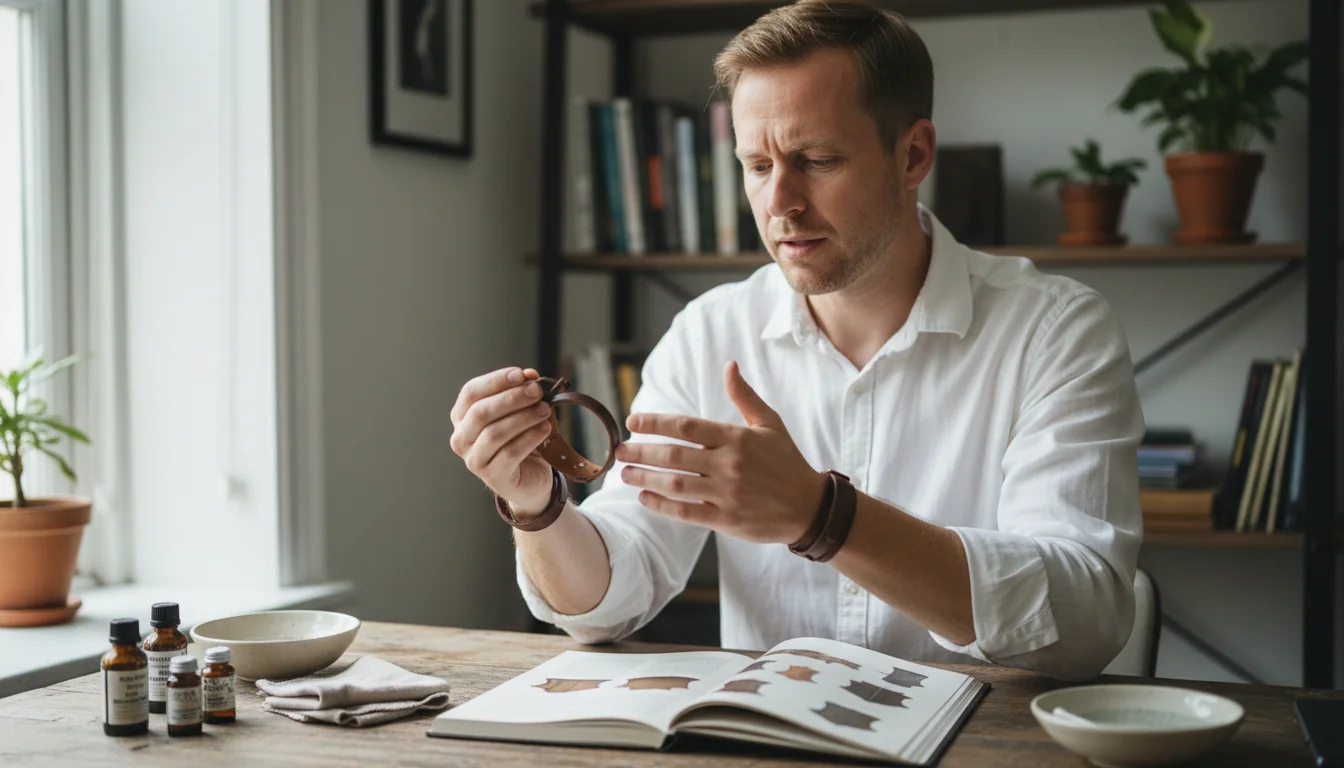
Dry leather sheds pigment more easily. Proper conditioning reduces friction, stabilizes fibers, and limits transfer onto your skin.
- Use a quality conditioner with light waxes; avoid oily products that migrate to your wrist.
- Apply a pea-sized amount per side. Work it in with circular strokes; wipe away excess.
- Let it air-dry fully; do not use heat. Re-test with a white cloth.
- Maintain a monthly routine, or after heavy sweat exposure.
- Finish with a light buff to smooth the surface and cut snagging friction.
Balanced moisture reduces micro-abrasion—one of the quiet culprits behind dye shedding and wrist irritation.
This maintenance-first remedy keeps leather supple and colorfast longer, which is a true long-term answer—not a one-off clean.
Control sweat and fit: stop friction
Moisture and tightness amplify transfer. Optimizing wrist hygiene and strap fit sharply reduces marks and rashes.
- Fit check: snug but breathable. Use the two-finger test between strap and wrist.
- Rotate wrists daily or remove for 20 minutes to let skin recover.
- After workouts, wipe both the back of the strap and your wrist dry.
- Keep lotions, sunscreen, and spray fragrances off the strap; they can mobilize dye.
- Clean weekly: dust, sweat salts, and oils trap pigment against skin.
Contact dermatitis thrives on moisture and friction. A breathable fit lowers that risk dramatically.
This wear-and-care strategy does more than keep skin comfortable—it also preserves finish longevity.
Do not wear leather for swimming, hot showers, or saunas. Repeated wetting breaks down structure and increases staining.
Add a liner: create a skin barrier
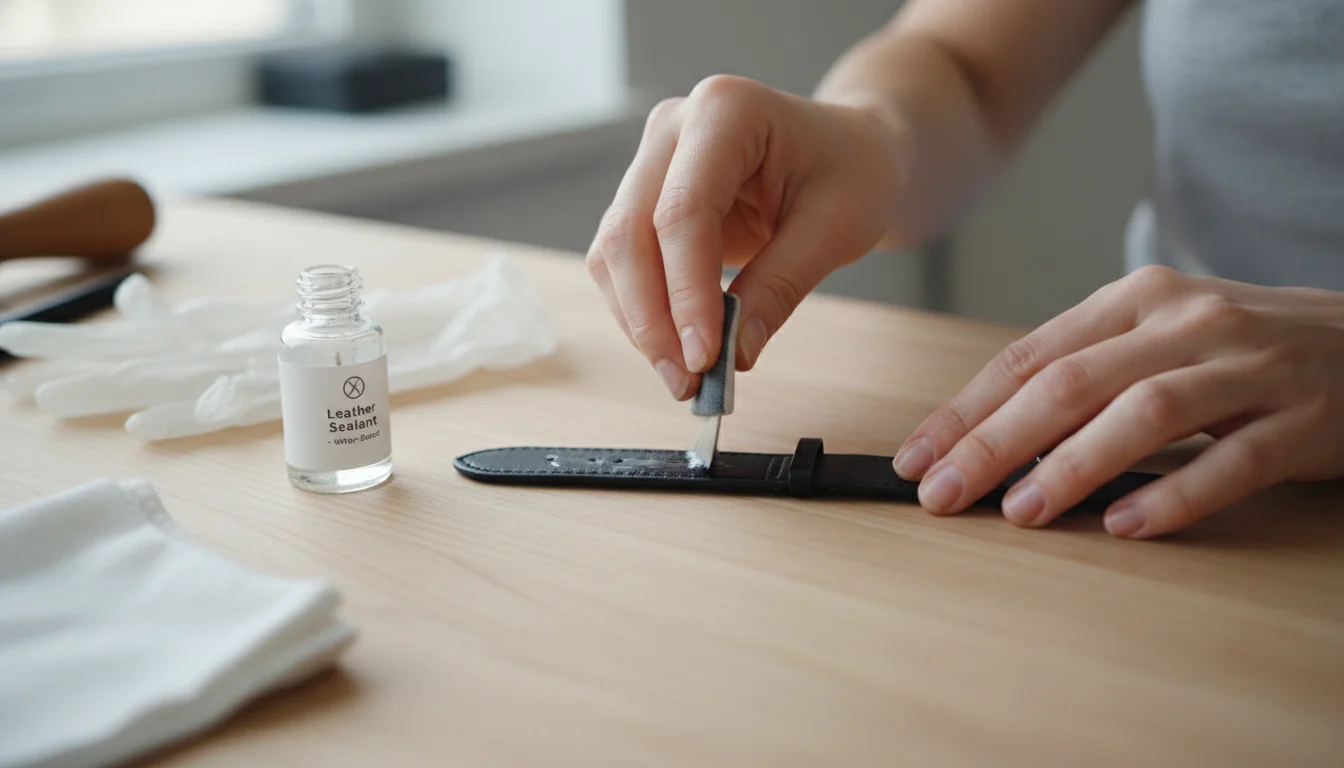
If you love the look but your skin reacts, insert a barrier between the leather and your wrist. This blocks dye and soothes sensitive skin.
- Adhesive microfiber or PU film on the strap’s underside; trim carefully around holes.
- Sewn-in lining (thin calf or suede) for a permanent, comfortable buffer.
- Removable fabric sleeve for exercise days; wash and replace as needed.
- Non-greasy barrier cream on skin, then fully dry before wearing.
A liner absorbs friction first. Less rubbing means less pigment movement and fewer “Rubs Off Your Skin” incidents.
This barrier method is a long-lasting remedy because you can renew the liner without altering the original leather.
Treat the hardware: stop green/black marks
Black streaks or green stains often come from buckles or loops, not the strap itself. Metals like copper alloys or nickel can transfer to your skin.
- Clean metal parts with mild soap and water; dry thoroughly.
- Seal undersides with a thin coat of clear lacquer or nail polish; let dry fully.
- Consider replacing with nickel-free or surgical steel hardware if reactions persist.
- If you see green marks, copper oxidation is likely; a sealed surface stops transfer.
Patch-test any new hardware on a small skin area before daily wear, especially if you suspect a nickel allergy.
Metal polishes can irritate skin. Clean residue completely and let parts dry before reassembly.

Choose stable leather: upgrade wisely
Some materials bleed no matter how you clean. Bonded or poorly finished leathers can flake and shed pigment with normal wear.
- Prefer full-grain or top-grain with evident finishing on the surface and edges.
- Pick lighter colors; dark, highly saturated tones are more prone to transfer.
- Look for sealed edges; raw edges wick sweat and leak dye.
- If a strap still bleeds after sealing, consider a lined or fabric-backed design.
Vegetable-tanned leather often develops a patina but can be sealed to improve colorfastness without losing character.
This selection strategy prevents the problem at its source—an enduring fix rather than perpetual cleanup.
Quick care routine: 5-step weekly guide
- Dust off with a dry, soft cloth.
- Mix 1 tsp soap / 1 cup water (5 mL / 250 mL). Lightly wipe—don’t soak.
- Dry immediately with a clean cloth; air-dry fully.
- Condition sparingly; buff smooth.
- Re-test with a white cloth; reseal if transfer appears.
Store leather away from heat and sunlight. Cool, dry storage slows dye migration and prolongs finish.
Rubbing alcohol and vinegar can strip dyes. If you must use a diluted vinegar wipe for mold, patch-test first and recondition immediately.
Spot the cause: symptom-to-fix map
Match what you see on your skin to the most targeted remedy. This trims trial-and-error time and gets you to the right fix faster.
| What you notice | Targeted long-lasting fix |
|---|---|
| Black or dark smudges on wrist | Seal dye (Section 1) and condition (Section 2); optimize fit and sweat control (Section 3). |
| Green marks | Treat metal hardware (Section 5) and add a liner (Section 4) if skin is sensitive. |
| Itchy red rash | Improve hygiene and dryness (Section 3), add a barrier (Section 4), and consider allergy assessment. |
| Persistent bleeding even after sealing | Upgrade material/finish (Section 6) or choose a lined alternative. |
Identify the source—dye, sweat, or metal—then apply the matching remedy for a durable result.
Why does leather rub off onto my skin?
Surplus pigment, friction, and moisture mobilize dye. Poor finishing and raw edges worsen it. Long-term remedies include sealing, conditioning, and fit control.
Are these fixes truly long-lasting?
Yes—sealing dye, maintaining moisture balance, and adding a liner create durable barriers. Material upgrades are the most permanent solution of all.
Can I clean leather with alcohol or vinegar?
Avoid alcohol; it strips finishes. Very diluted vinegar can spot-treat mold, but patch-test and recondition. Neutral cleaners are safer for routine care.
How do I treat a rash from my bracelet?
Remove the strap, cleanse and dry skin, rest the area, and add a barrier when resuming wear. For persistent symptoms, consult a Medical Encyclopedia or clinician.
Is clear nail polish a good fix?
On metal parts, yes—it forms a temporary shield. It’s not suitable for leather surfaces; use a leather-safe topcoat instead for a lasting result.
Does sweat make transfer worse?
Yes. Sweat and soap residues can dissolve dyes and trap grime. Keep skin and strap dry after workouts and ensure a breathable fit.
How can I test for dye transfer before wearing?
Rub a damp white cloth on the strap’s underside and edges. Any coloration signals a need to seal, condition, or add a liner before daily wear.
When should I replace the strap entirely?
If bleeding persists after sealing and conditioning or if bonded leather is flaking, choose a better-finished, lined, or alternative strap for a definitive fix.
Stopping a leather bracelet that rubs off on your skin is achievable when you treat the true cause—dye, friction, or hardware—and apply the matching remedy.
- Seal and condition to lock color and reduce abrasion.
- Optimize fit and hygiene to prevent rashes and transfer.
- Upgrade hardware and materials for a permanent answer.
Apply the steps today and enjoy colorfast, comfortable wear all year long in 2026.
0 comments