


Sore, red, or itchy skin under a steel bracelet? You’re not alone. The fastest way to end a wrist rash is to match the problem with the right solutions.
In this 2026 guide, you’ll pinpoint the exact cause—fit, metal, moisture, residue, microbes, or design—and apply targeted solutions that actually work on real wrists.
Ready to calm your skin today? Let’s turn trial-and-error into clear answers.
Immediate relief: fit and friction fixes
Physical irritation from a tight or sliding bracelet is the most common trigger. Reduce rubbing and pressure, and you remove a major cause—often within days.
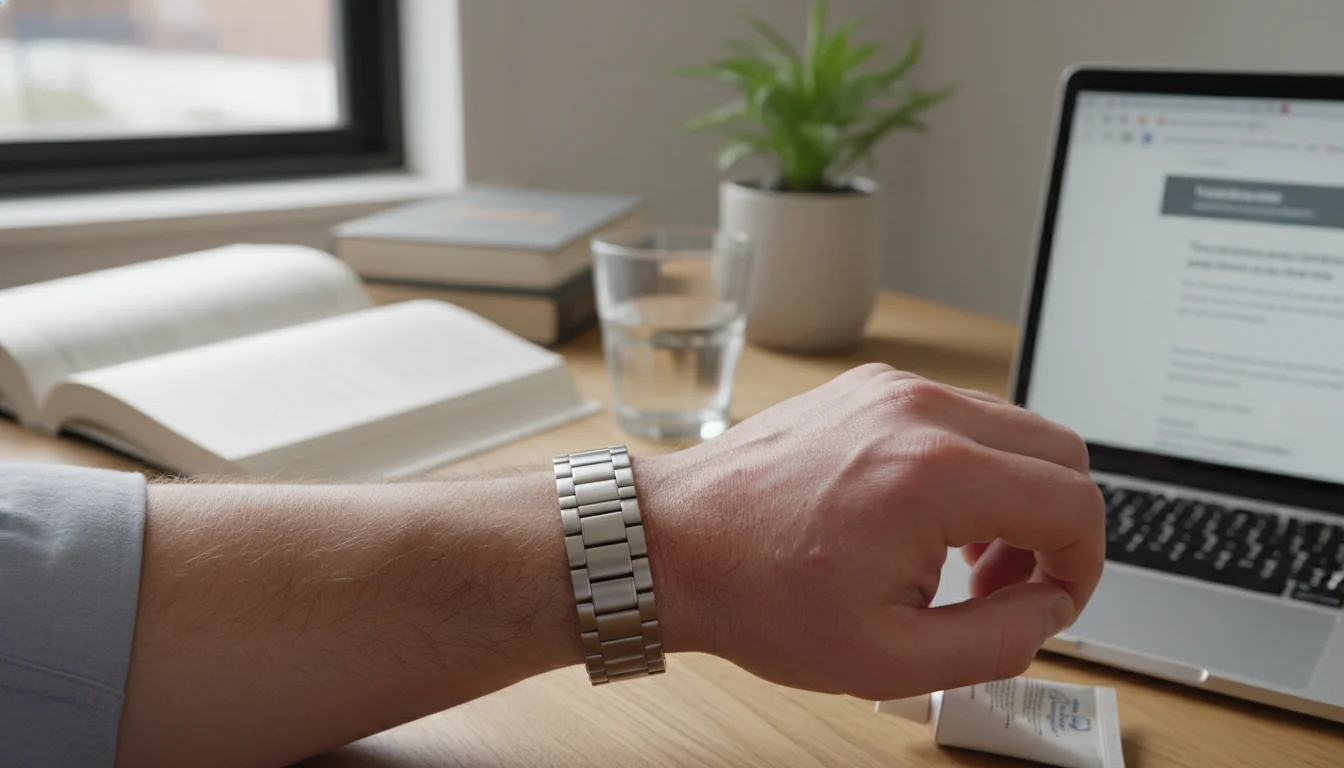
- Snug, breathable fit: Wear it above the wrist bone, firm enough not to slide, loose enough to slip a fingertip under.
- Micro-adjust daily: tighten for workouts, loosen after. Avoid 24/7 compression on the same spot.
- Rest windows: remove the bracelet for 20–30 minutes to let the skin cool and dry.
- Alternate wrists every few days to limit cumulative friction.
Two-finger test: if two fingers can’t slide under the band, it’s too tight; if it spins freely, it’s too loose.
Quick-reference map of likely causes and first-line remedies:
| Cause (under a steel bracelet) | First-line fix |
|---|---|
| Friction from poor fit | Snug repositioning above wrist bone; rest windows |
| Allergic contact dermatitis (nickel/cobalt) | Barrier coat or liner; patch testing; hypoallergenic options |
| Moisture and sweat trapping | Rinse, dry within 60 seconds, and rotate wear |
| Soap, sunscreen, fragrance residue | Remove for washing; gentle cleansers; wipe and dry skin |
| Biofilm/grime on links | Regular band cleaning; soft brush for crevices |
| Clasp/sensor hotspots, sharp edges | Micro-polish edges; use a thin barrier film or pad |
| Underlying eczema/dry skin | Barrier moisturizer twice daily; short course hydrocortisone |
If pain, swelling, warmth, or pus appear, pause wear and seek care—these are signs of infection risk.
These adjustments are the fastest set of solutions when symptoms are driven by rubbing rather than allergy.
Allergy strategy: metals and your skin
Allergic contact dermatitis happens when your immune system reacts to metal ions. Nickel is the classic culprit in jewelry and watch hardware, though cobalt and chromium can contribute.
- Confirm the trigger: ask your clinician about patch testing if rashes recur in the same spot.
- Use a temporary barrier coating (clear, skin-safe sealant) on the clasp or underside links; reapply as directed.
- Place a non-adhesive liner (silky sleeve or fabric strip) under the contact point to block metal-skin touch.
- Consider non-plated, low-allergen materials for long-term wear, or alternate with leather or textile straps for breaks.
Allergic reactions are often delayed by 24–48 hours. Yesterday’s exposure can be today’s rash.
When allergy drives the rash, solutions target exposure reduction and symptom control, not just cleaning. That’s why barriers and fit changes work best in combination.
Moisture control: sweat, soap, and skin
Trapped water, sweat, or soap under a steel bracelet softens the skin (maceration) and primes it for irritant dermatitis and itching.
- After activity or handwashing, rinse the wrist with fresh water and dry within 60 seconds.
- Remove the bracelet before shampooing or applying lotions, sunscreen, or fragrance to avoid residue under the band.
- For heavy sweaters, apply an unscented antiperspirant around (not under) the contact area; leave a clean gap where the bracelet sits.
- Switch to a breathable strap on high-sweat days; rotate wear to let skin recover.
Keep a small lint-free cloth in your bag. A 10-second dry post-wash wards off hours of damp contact.
Moisture management is a core part of your solutions toolkit—especially if your symptoms flare after workouts or frequent handwashing.
Residue avoidance: everyday irritants to skip
Household cleansers, fragranced soaps, hair dyes, and even certain moisturizers can turn a mild rub into a persistent rash when trapped under metal links.
- Choose fragrance-free, gentle cleansers for the wrist area; rinse thoroughly after exposure to shampoo or dye.
- Apply lotions and sunscreen away from the bracelet site; let them fully absorb before re-wearing.
- If you work with chemicals, remove jewelry during tasks; wash, rinse, and dry before putting it back on.
- If a product stings on contact, treat it as an irritant for your wrist zone and avoid during wear.
Never “seal in” fragrance or dye under a bracelet. That mix can trigger contact dermatitis within hours.
Clean contact surfaces, clean skin, and time to dry—this trio forms a dependable prevention solution for residue-driven rashes.
Hygiene routine: band cleaning that works
Grime in tiny crevices holds sweat, salt, and microbes. A quick, gentle clean prevents recurring redness and bumps around the wrist.
- Daily wipe: soft, damp, lint-free cloth; dry thoroughly.
- Weekly deep clean: mild, oil-free soap and a soft brush to reach between links; rinse well; dry with a microfiber cloth.
- Avoid harsh polishes or abrasives; they can roughen surfaces and increase chafing.
- Leather straps: no soaking; wipe, then condition sparingly to prevent dye bleed to the skin.
A smoother surface reduces rubbing hotspots. Gentle care is a long-term rash solution.
A clean band plus dry skin is often enough to stop watch rash when symptoms are mild and localized.
Design tweaks: hotspots, edges, and clasps
Small design choices can create big pressure points: a square clasp corner, a raised link, or a mesh that snags fine hairs.
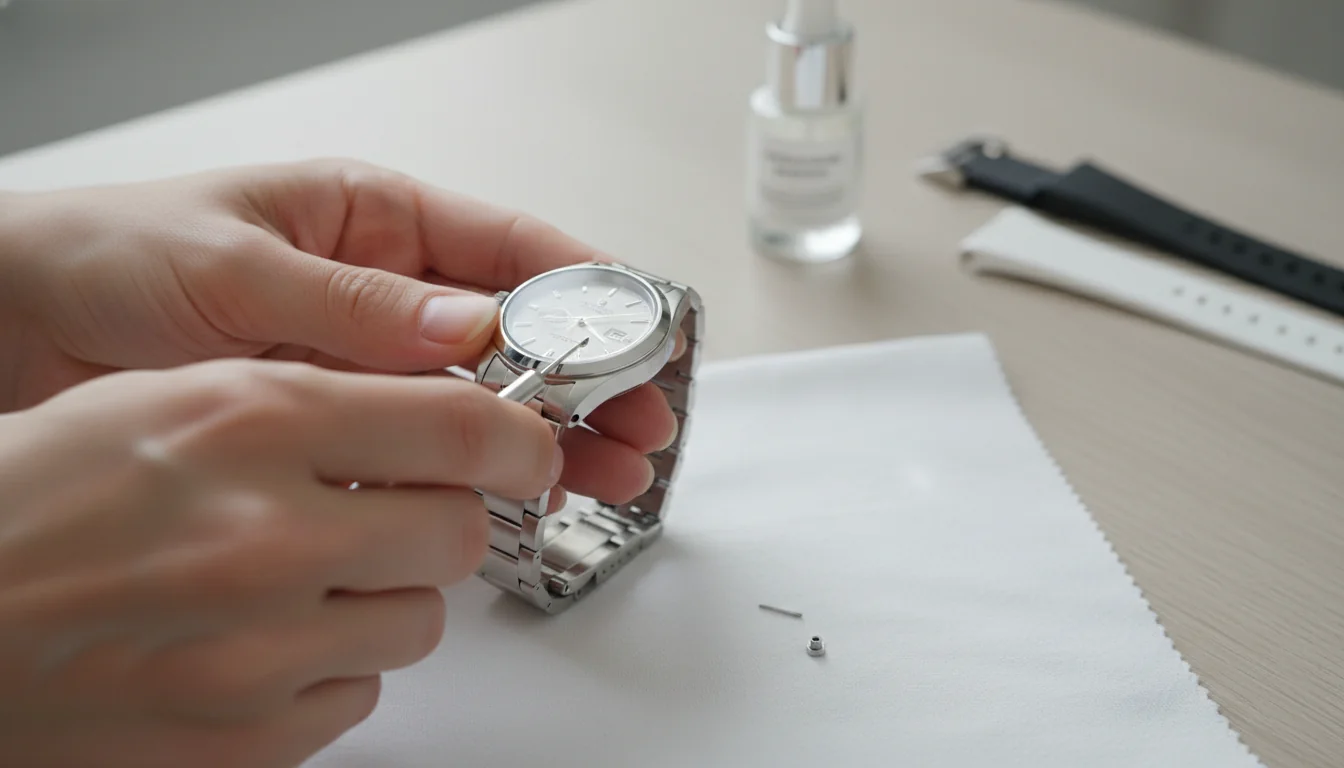
- Smooth the underside of any rough edge with an ultra-fine polishing cloth; clean after.
- Place a thin, breathable barrier film or hydrocolloid pad under focal hotspots to reduce shear.
- If hair pulling is an issue, trim the area gently rather than shaving to avoid micro-cuts.
- Change closure position slightly each day so one spot doesn’t take all the pressure.
A 2–3 mm shift in clasp position can eliminate a persistent rub within days.
These targeted adjustments are simple, low-cost remedies—high-value solutions when one part of the bracelet causes all the trouble.
Skin therapy: calm the rash fast and safely
When red, itchy skin has already flared, pair mechanical fixes with short, skin-safe treatments for speedier recovery.
- Apply a thin layer of hydrocortisone 1% to the rash twice daily for 3–5 days, unless your clinician advises otherwise.
- Use a bland emollient (petrolatum or ceramide cream) twice daily to reinforce the skin barrier.
- For weepy spots, consider a short course of wet dressings or a hydrocolloid to protect and reduce friction.
- Stop wear until tenderness and heat resolve to minimize infection risk.
Seek medical care if you notice spreading redness, fever, warmth, or pus, or if blisters appear.
These measures complement the root-cause solutions above. Treat, then reintroduce the bracelet with better fit, barriers, and a moisture plan.
Guide 2026: a 5‑step action plan
- Pause wear for 48–72 hours; document symptoms and suspected triggers.
- Clean the bracelet thoroughly; rinse and dry the wrist after each wash.
- Re-fit above the wrist bone; add a thin barrier on hotspots.
- If rash returns at the same site, test an allergy strategy (barrier coat, alternate strap).
- No improvement in a week? Consult a clinician for patch testing and prescription options.
Treat “wedding ring rash” and bracelet rash the same way: dry skin, clean metal, smart barriers.
What symptoms suggest contact dermatitis?
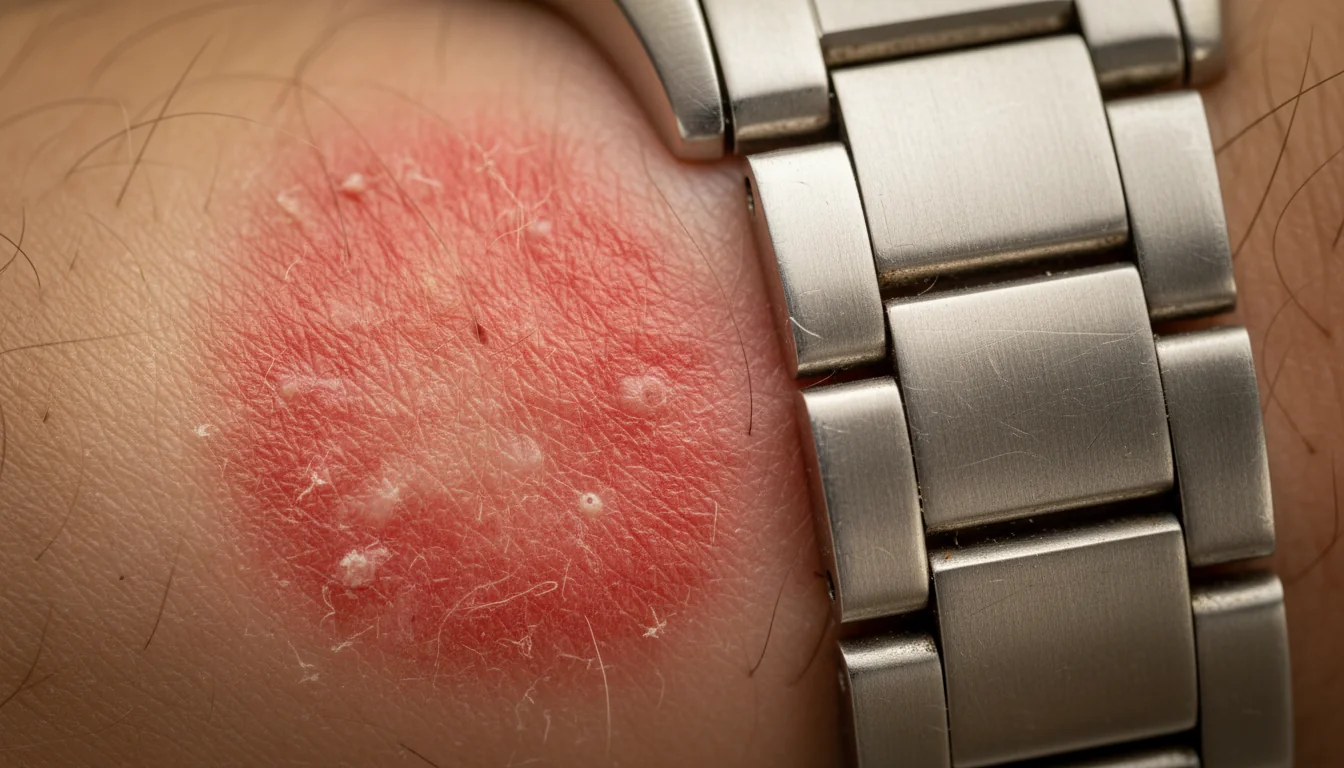
Red, itchy, or scaly patches under the bracelet, sometimes with burning. Allergic flares can appear 24–48 hours after contact, not immediately.
Why choose targeted solutions over “just stop wearing it”?
They fix root causes—fit, moisture, residue, or allergy—so you can wear your bracelet comfortably again instead of giving it up.
How do these remedies compare with common alternatives?
Generic advice says “clean it.” These solutions go further: barrier films, re-fit, material swaps, and medical creams when needed.
Is a steel bracelet always the problem?
Not always. Many rashes are from sweat, soap, or friction. If allergy is proven, use a liner, coat contact points, or rotate materials.
When should I see a clinician?
If symptoms persist beyond a week, spread, blister, or show warmth and pus. Patch testing helps tailor long-term prevention.
What daily habits prevent a repeat rash?
Rinse and dry after washing, micro-adjust fit, clean links weekly, moisturize skin, and avoid trapping fragranced products under the band.
Can clear nail polish help?
A thin, skin-safe coating can act as a temporary barrier on metal contact points. Reapply as it wears; monitor for sensitivity.
Irritated skin under a steel bracelet usually has a simple cause—and an even simpler fix once you match the right approach.
- Fit first: stop friction with a snug, breathable placement.
- Keep it dry: rinse, dry, and clean links regularly.
- Block allergens: deploy barriers and seek testing if rashes recur.
Apply these solutions today and give your wrist a calmer, more comfortable 2026.
0 comments