


Dust creeps in through the smallest gaps, while quick access often invites handling risks. Which side matters more in your space: pristine preservation or fast reach?
This 2026 guide breaks down closed wall-mounted display case vs freestanding display box: dust protection and access. You’ll learn how seals, doors, and materials change cleanliness, how light control preserves color, and how to balance security with day‑to‑day handling without sacrificing protection.
Dust barrier: sealing that works
Dust enters through gaps, sliding tracks, and loose doors. A closed wall-mounted display case excels when its enclosure and door hardware minimize leak paths and keep a clean interior.
- Silicone gaskets or brush seals around a hinged door reduce airborne ingress.
- A continuous frame with tight tolerances limits exposed seams on the case body.
- Magnetic latch or compression locks pull the door tight, improving the seal.
- Fixed panels in glass or acrylic reduce moving joints where dust can creep.
- Archival-style enclosures may include a desiccant compartment to stabilize humidity.
Shine a flashlight around the door gap in a dark room. Any visible light leaks are likely dust paths; improve gasket compression or hinge alignment for better protection.
Freestanding display boxes vary widely: lift-off lids can be tight if they use overlapping lips or rubber seals, but sliding doors often trade dust protection for quick access. If your priority is a dust-free interior for miniatures or a jersey, a truly sealed enclosure beats an open rack or shelf every time.
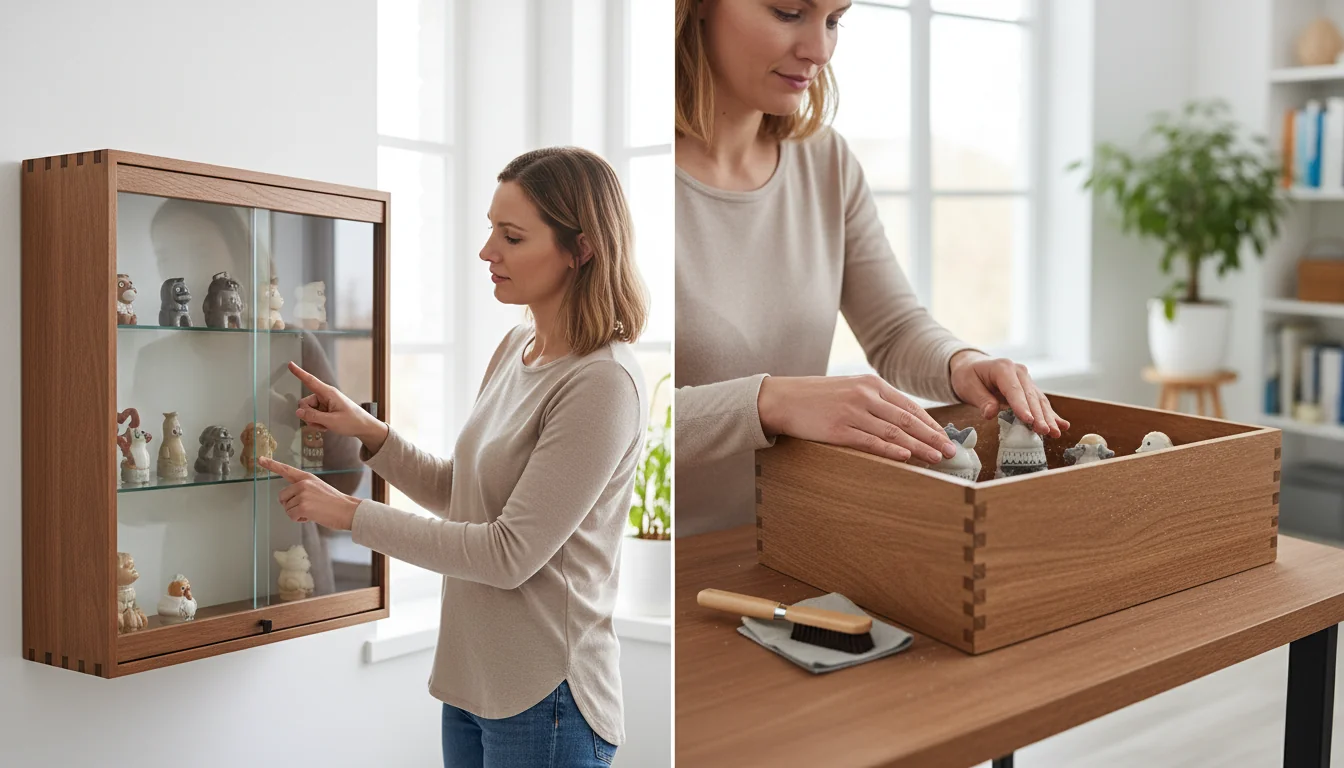
Fast access: door types compared
Access speed influences how often you open the case—each opening is a dust event. Choose a door that balances convenience with safeguarding the interior.
- Hinged doors (wall-mounted or box) offer full-width openings and accept perimeter seals.
- Lift-off lids on a freestanding box can be very tight, but you must clear overhead space.
- Sliding panels are quick, yet tracks are typical dust highways unless well shielded.
- Magnetic front panels ensure tool-free entry while keeping a firm closure line.
- Lockable latches add tamper resistance without sacrificing closure pressure.
Avoid rapidly opening and closing in dusty environments. Wait 10–15 seconds after cleaning nearby surfaces before opening to minimize airborne particles entering.
If you handle trading cards or medals weekly, opt for a hinged, gasketed door for both dust control and fingertip access. For pieces that rarely move, a tightly sealed shadow box or a closed case with compression points maximizes interior preservation.
For small valuables that need enclosed storage, consider a 12‑slot watch case as a compact, sealed alternative to an open shelf.
Light defence: glass or acrylic
Acrylic and glass behave differently for clarity, weight, and UV filtering—key to color preservation and surface protection.
- Laminated safety glass can include UV-filter interlayers that limit fading.
- Acrylic display panels are lighter and clearer edge-to-edge but can scratch; anti-static cleaners reduce dust cling.
- Anti-UV coatings on glass display fronts help protect inks and textiles.
- For museum-grade needs, archival materials and sealed vitrine construction stabilize the microclimate.
- LED lighting emits little heat; fiber optic lighting keeps heat sources outside the case entirely.
A well-specified laminated pane is both strong and UV filtering—ideal for jerseys, photos, and signed memorabilia that need long-term color stability.
For a figure tier or card display, acrylic’s impact resistance and lighter weight can be practical—especially for wall-mounted cases where overall load matters. For heirlooms, glass with coatings provides superior long-horizon fade resistance.

Cleaner air: placement strategies
Positioning affects how much dust the case must resist. Airflow, traffic, and floor turbulence change the baseline contamination risk.
- Wall-mounted units sit above floor-level eddies, often reducing settled dust ingress.
- Freestanding boxes need perimeter clearance; keep them away from doorways and vents.
- Avoid direct sun; combine UV-filter glazing with curtains or low-UV lamps.
- Use discreet desiccant to buffer humidity swings in sealed cases.
- If lighting is needed, prefer low-heat LED or external fiber optic illumination.
| Closed wall-mounted | Freestanding box |
|---|---|
| Less floor dust, strong sealing options, minimal footprint | 360° viewing possible, needs space, more floor turbulence |
| Great for dust protection with gaskets and compression latches | Access can be faster with sliding or lift-off panels |
| Stud-mounted stability; typical jersey cases weigh ≈ 35 lbs | Leveling feet help; assess tipping risk on soft flooring |
Mount wall cases away from HVAC supply vents. If you can feel airflow on the door seam, relocate or baffle the vent for better preservation.
In short, location amplifies or reduces the case’s built-in protection. A well-sealed case in a calm corner outperforms an average case under a drafty return grille.
Low upkeep: maintenance for longevity
Smart care preserves clarity and sealing performance without inviting dust inside more than necessary.
- Dust the exterior weekly; open the case only when rearranging or rotating items.
- Use microfiber and pH-neutral cleaner; for acrylic, use anti-static spray to cut cling.
- Inspect door seals quarterly; replace flattened gaskets to restore closure pressure.
- Clean tracks and hinges; lubricate lightly where manufacturer allows.
- Refresh desiccant as needed to maintain a stable microclimate.
Opening less often is a form of protection. Group tasks—rearrange, clean, and document in one session—then close and leave sealed for weeks.
If you also store watches or small keepsakes, a closed organizer reduces handling cycles. See this 10‑watch oak option as a dust-safe complement to a larger display.
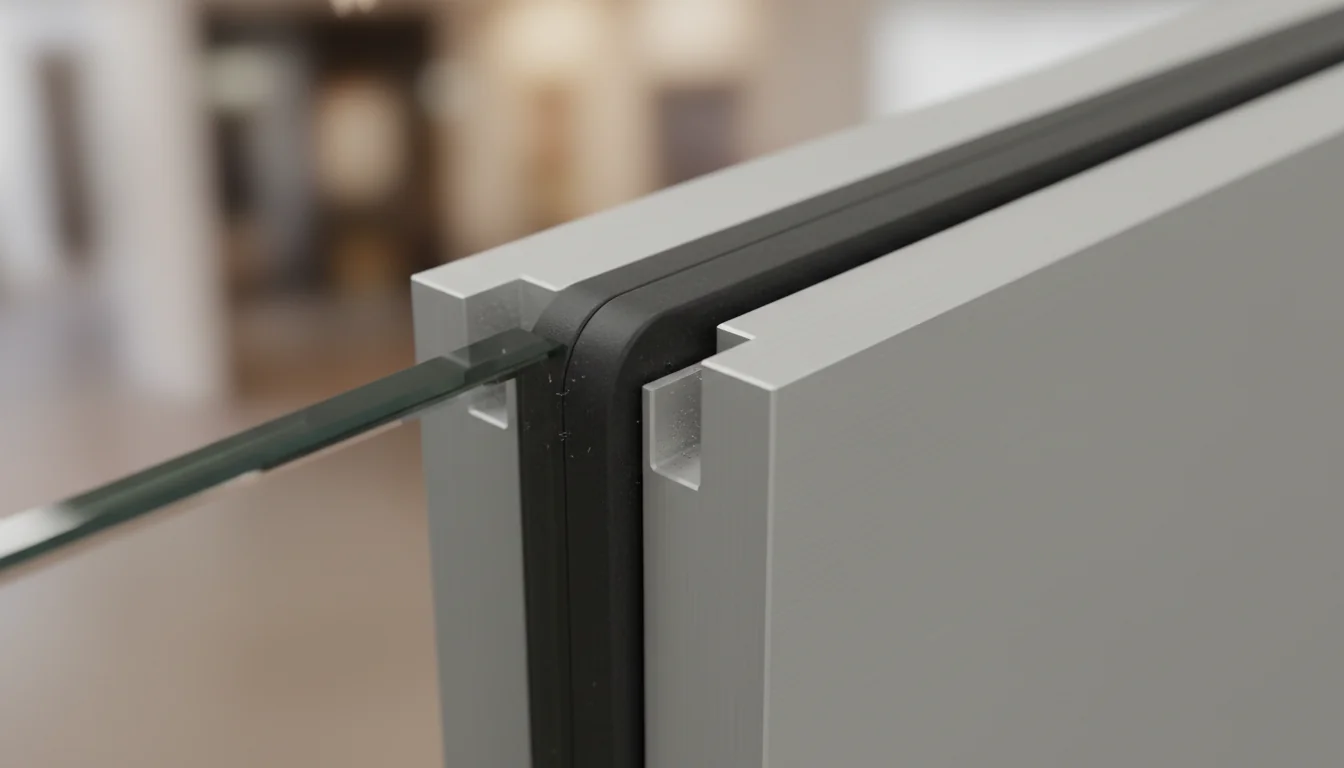
Tamper control: locks and safety
Security intersects with conservation. The best cases combine discreet locks with structural stability to safeguard contents and people.
- Lockable access limits handling and accidental opening.
- Tempered or laminated glass reduces injury risk if a panel breaks.
- Freestanding designs need levelers; anchor tall units to walls to prevent tipping.
- Wall-mounted cases must be stud-mounted; confirm load capacity with hardware specs.
- Choose concealed hinges or magnetic doors to remove pry points.
A typical wall jersey case can weigh about 35.00 lbs empty. Always fasten into studs or use rated anchors to keep the protective shell secure.
When access is restricted and the structure resists tip and tamper, you gain two layers of protection: fewer touches and fewer shocks to fragile items.
How to choose in 5 steps
- Classify sensitivity: paper, textiles, metals, instruments, or resin figures.
- Log access frequency: daily, weekly, or display‑only.
- Audit environment: traffic, HVAC vents, sunlight direction.
- Pick material: acrylic for light weight; laminated glass for UV and safety.
- Specify sealing, locks, lighting, and mount hardware explicitly.
If you swap watches or small collectibles often, choose a shallow, front‑opening unit with magnets and foam-safe liners.
As an example for compact collections, consider a 12‑slot watch organizer that balances easy reach with a covered interior.
Avoid porous linings near paper or leather. Opt for inert interiors like felted or acrylic decks; see this 10‑watch option as a reference layout.
Why prioritize dust control?
Dust is abrasive and hygroscopic. It dulls finishes, traps moisture, and accelerates corrosion. A sealed enclosure reduces cleaning frequency and handling, two major sources of accidental damage and loss of clarity.
How do wall-mounted and boxes compare for access?
Wall cases favor controlled, front-door entry with locks. Boxes excel at fast reach with lids. If you handle items weekly, an an 8‑piece watch case shows how quick access can still stay covered.
What materials best support preservation?
Acrylic offers clarity and light weight. Laminated or tempered glass adds impact resistance and UV filtering options. Pair either with gaskets, sealed corners, and low-heat LED lighting for a protective setup.
Is a microclimate worth it at home?
Yes for metals, inks, and textiles. A passive desiccant drawer keeps RH steady inside the case. For compact displays, a compact six‑watch box illustrates enclosed organization that reduces exposure.
Which door style keeps dust out best?
Hinged fronts with compression and a continuous gasket seal more reliably than sliding lids. Magnetic assists help maintain even pressure along the edge, limiting fine particle entry.
How should I clean without adding static?
Use an anti-static microfiber cloth and pH‑neutral cleaner on acrylic or glass. Avoid paper towels. Work exterior first, then interior, and keep the door closed until air settles to limit re‑deposition.
Choosing between a wall-mounted case and a freestanding box comes down to how much you prize enclosure quality versus rapid handling—both shape cleanliness and long-term conservation.
- Seals, gaskets, and joints decide real dust resistance.
- Access frequency drives your door and latch choice.
- UV control and microclimate preserve color and materials.
If you need slim, covered storage with quick reach, explore a slim six‑slot design as a compact reference for balancing access and enclosure.
0 comments