


Nervous about airport security checks with metal on you or in your bag? You’re not alone. That knot of worry often starts before you even zip your carry-on.
This 2026 guide shows you how to move through screening with metal objects without stress—what really triggers detectors, how scanners work, what to say to officers, and simple packing tweaks that turn concern into confidence.
Have a metal implant, jewelry, or shoes with hardware? Ask yourself: “What would remove my worry in under three minutes?” You’ll find the exact answers below.
Know what actually alarms
Most anxiety comes from not knowing which metal items will beep. Understanding thresholds removes a big slice of worry before you reach the checkpoint.
- Small metal on clothing (tiny buttons, minimal zippers) usually passes; big buckles or clusters can trigger.
- Belts, watches, coins, and key rings are top causes of alarms—empty pockets early.
- Chunky jewelry stacks may beep; single modest pieces generally do not.
- Steel-toe footwear and large metal shanks can set detectors off; removable items are the safer bet.
- Implants can alarm walk-through detectors; full-body scanners typically clear them after identification.
| Item | Likelihood to alarm / quick fix |
|---|---|
| Belt buckle, watch, coins | High if left on you; place in bin or carry-on before the detector. |
| Metal zippers/buttons | Low unless oversized or numerous; spread items out, avoid clusters. |
| Chunky jewelry stacks | Medium; wear minimal layers or move pieces to your bag temporarily. |
| Steel-toe or shank-heavy shoes | Variable; be ready to remove if asked, especially outside expedited lanes. |
| Orthopedic implants | May alarm WMD; body scanner or pat-down resolves once disclosed. |
Build a “metal dump” habit in the queue: belt, watch, keys, coins, and bulky jewelry go straight into your bag before trays appear. It cuts alarms and reduces worry immediately.
Once you see what really beeps, you can dress and pack to avoid it—and that’s how you quiet pre-checkpoint worry.
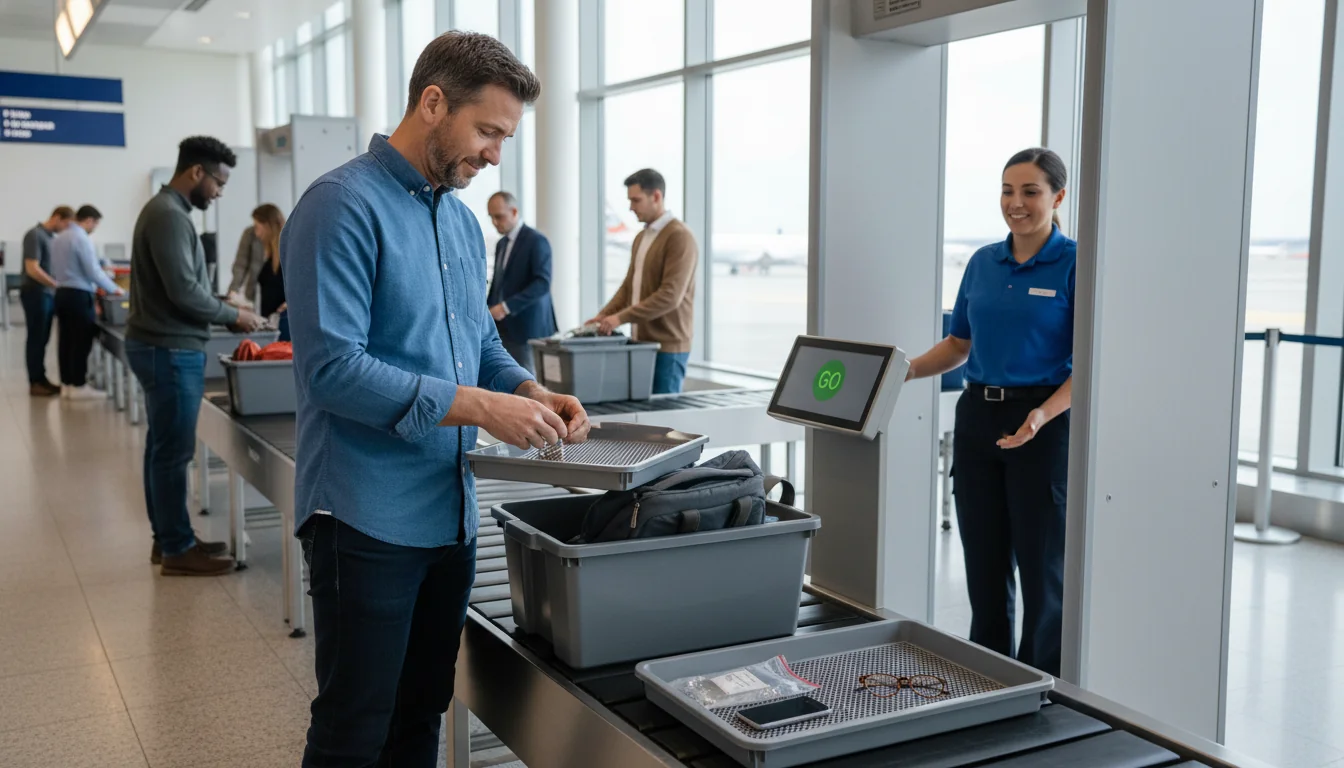
Dress for calm screening
A low‑metal outfit turns security from a guessing game into routine. The goal is simple: fewer removable parts, less interruption, less worry.
- Choose trousers and a jacket with minimal metal hardware; avoid oversized buckles/studs.
- Swap belt for drawstring or plastic fastener; keep pockets empty before you queue.
- Wear slip-on shoes; in many lanes in 2026 you’ll keep them on, but be ready if asked.
- Limit jewelry stacks; opt for one watch or bracelet rather than several layers.
- Avoid glitter-heavy fabrics; some scanners flag dense sparkles for extra checks.
Belts cause preventable alarms. If you must wear one, remove it before the metal detector and place it in your carry-on. It’s the fastest worry-saver at checkpoints.
Expedited lanes such as dedicated pre-screening often allow shoes and light layers to stay on, but procedures vary by airport and day—plan for both and eliminate last‑minute concern.
Implants and devices, minus stress
If you have a joint replacement, pacemaker, insulin pump, hearing implant, or surgical hardware, you can still move through airport security without anxiety—once you know the script.
- Tell the officer proactively: “I have a medical implant here.” Point to the location.
- Carry optional documentation or a device ID card; not required, but it can speed resolution.
- Expect a full-body scanner or pat-down if a walk-through metal detector alarms.
- For insulin pumps/CGMs, request alternative screening if you or your clinician recommends avoiding certain scanners.
- Mobility aids and canes go through X-ray or hand inspection; service animals are screened with care.
Full‑body scanners often resolve implant alarms quickly by showing location, letting you proceed without the lingering worry of repeated walkthroughs.
Use clear, calm language, and ask for a private room if preferred. Preparation replaces worry with control.
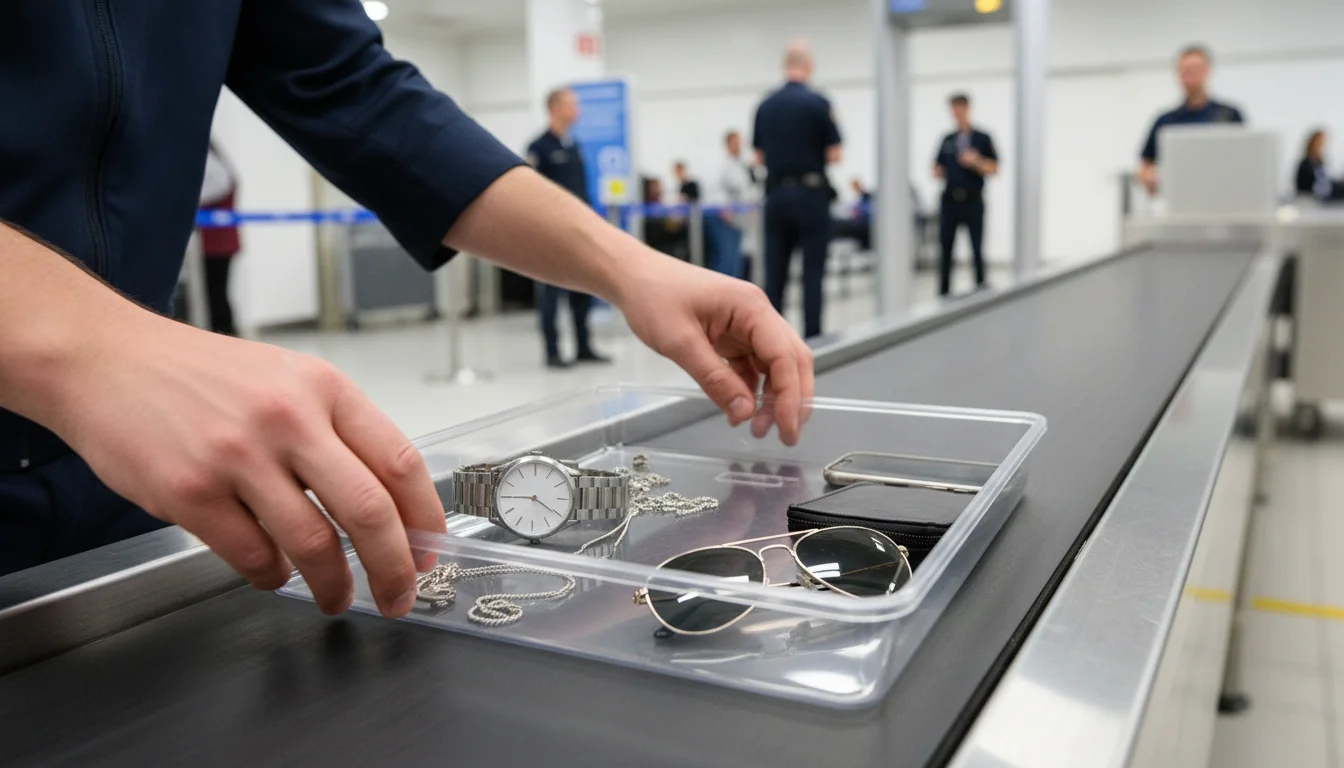
Scanner safety, explained simply
Knowing how detectors and imaging work reduces fear. Most passenger lanes in 2026 use non‑ionizing millimeter wave scanners and magnetic‑field metal detectors for people, and X‑ray for bags.
- Metal detectors use pulsed magnetic fields; they don’t emit X‑rays.
- Millimeter wave uses low‑energy radio waves; independent agencies deem exposure very low.
- Backscatter X‑ray for people is rare; if used, dose is extremely small.
- Pregnancy: all standard screening methods are considered safe; you may request alternative screening where allowed.
- You can ask officers about options; rules differ by country and airport.
If you’re uneasy, say: “I’m concerned about this scanner. What alternatives are available today?” A simple ask replaces silent worry with a clear path.
Understanding the tech reframes screening from “mystery risk” to a short, routine process designed for safety.
Pack smart to avoid alarms
How and where you pack metal determines how smoothly you pass security screening. Organize for clarity, and worry fades at the X‑ray belt.
- Put dense metal together in a side pocket for quick removal if asked (tools, chargers, tripod heads).
- Follow the liquids rule: containers ≤ 3.4 oz / 100 ml inside one 1 quart sealable bag, presented on top.
- Lithium batteries belong in carry-on; never packed loose with coins/keys.
- Money belt: keep thin and metal‑light; send it through X‑ray, not on your body.
- Sharp tools and multi‑tools go in checked luggage; declare where required.
Cluttered bags slow resolution. If officers can’t “see through” a dense metal cluster, your bag gets pulled—often the very source of checkpoint worry.
By 2026, more lanes use CT for carry‑ons, but instructions vary. Listen and adapt—prepared travelers glide through.
Timing, mindset, and scripts
A calm plan lowers your pulse more than any single hack. Build a routine at home and bring a simple script to use with officers.
- Arrive early enough to remove urgency from the equation—worry thrives on time pressure.
- Create a “Home Security Pre‑Check” pile: liquids bag, electronics, ID/boarding pass, device cards.
- Use a one‑sentence script: “I have metal here and an implant here; happy to use the body scanner.”
- For sensory needs, consider earplugs, sunglasses, and a card stating accommodations.
- Track checkpoint wait times via your airport’s channels and aim for quieter periods when possible.
Positive, brief communication reduces extra checks. Officers clear well‑prepared passengers faster, shrinking your window for worry.
A steady routine, respectful tone, and clear requests make the line feel predictable—and predictable beats anxious every time.
Step-by-step: sail through with metal
- Before leaving home, make a “metal sweep” and pack a top‑layer tray: liquids, laptop, belt, watch.
- In the queue, move metal from pockets into your carry-on—don’t wait for the tray.
- At the belt, place dense metal together in one bin; keep the bag uncluttered.
- State implants/devices upfront and follow officers’ directions calmly.
- Repack away from the belt to avoid rush—ending the last scraps of worry.
Use a small pouch labeled “metal.” Belt, watch, coins go here automatically—your built‑in worry‑killer.
Will trousers or a jacket with metal zippers/buttons alarm?
Usually not, if modest in size and number. Oversized buckles or clusters of metal may beep. If you’re concerned, choose low‑metal clothing and move removable items to your bag to reduce worry at the detector.
Do I need to remove all my jewelry?
No. Small pieces typically pass. Stacked bracelets or large necklaces increase alarms. Wear one or two items through, then add the rest after screening—an easy way to calm any concern about delays.
What about shoes with metal shanks or steel toes?
They can trigger some metal detectors. In many lanes you’ll keep shoes on in 2026, but be prepared to remove them if asked. If such footwear fuels worry, travel in low‑metal shoes and pack the others.
Are scanners safe during pregnancy?
Yes. Walk‑through metal detectors and millimeter wave scanners are considered safe. If you’re uncomfortable, you can request alternative screening where permitted, which often reduces anxiety more than the scan itself.
I have a hip or knee replacement—what should I do?
Inform the officer and point to the implant. Expect a body scan or pat‑down if a metal detector alarms. A brief, clear explanation typically resolves the check and removes lingering worry.
Can I wear a money belt through the detector?
If it contains metal, it may beep. The calm approach: place it in a bin or your carry-on for X‑ray, then put it back on after. That avoids unnecessary checks and concern.
Can I bypass airport security checks?
No. Screening is mandatory and designed for safety. Programs that expedite screening reduce time, not the requirement. Preparation—not shortcuts—is what eliminates worry at checkpoints.
Do gold items or small pins always trigger alarms?
Detector sensitivity varies. A single small item may pass; bundles or dense groupings are more likely to beep. Separate metal and avoid clusters to minimize alarms and ease your mind.
Airport Security Checks in 2026 favor prepared travelers: when you know what alarms, how scanners work, and how to pack, metal objects stop being a source of worry.
- Empty pockets and cluster removable metal in your bag before the detector.
- State implants/devices upfront; expect scanner or pat‑down to clear you.
- Keep bags uncluttered; follow the liquids rule to avoid secondary checks.
Use the steps above and walk to your gate with confidence—not concern.
0 comments