


I spent 90 days living with a stackable acrylic watch box, using it daily on a small dresser and a crowded shelf. You want a clear verdict, not fluff.
This long-term review answers the only questions that matter in 2026: how the clear case ages, how stable the stacks are, what to clean it with, how it treats bracelets and thick watches, and whether the layout fits real collections.
If you’re weighing tidy transparency against heavier wood or leather, this assessment will help you decide—quickly and pragmatically.
Clarity and build over time
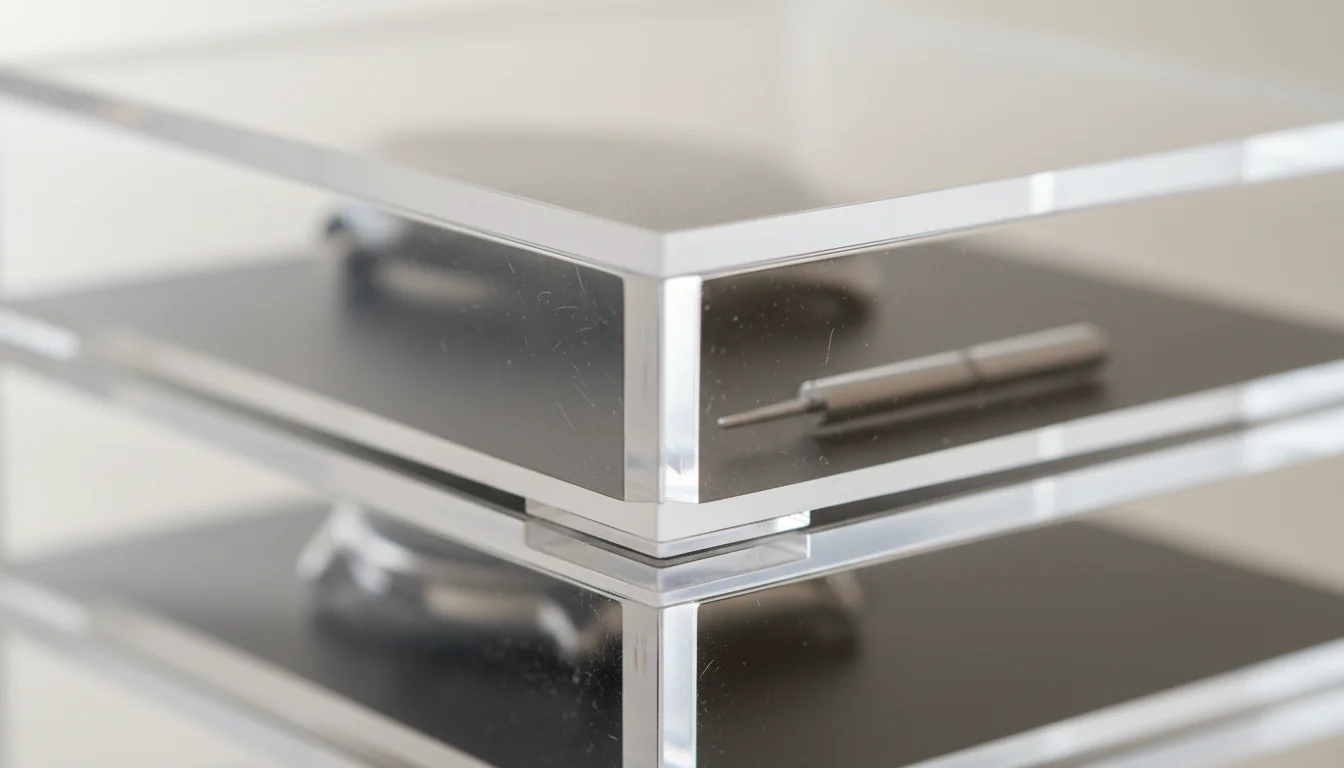
Acrylic wins on transparency and weight, but it can scratch. Over 90 days, I tracked clarity under window light, micro-scratch buildup, and rigidity when loaded with heavier steel watches.
- Optical clarity: still crisp; minor hairlines visible only at oblique angles.
- Panels: 3–4 mm sheets felt rigid; no flex within normal handling.
- Seams and glue lines: tight; no clouding at joints.
- Static: dust attraction peaked the first week, then stabilized with better cleaning.
Use a damp microfiber and a drop of dish soap; finish with a dry cloth. Avoid paper towels and ammonia cleaners.
This part of the review showed acrylic holds its crystal-clear look with basic care. If you expect zero micro-marks, you’ll be disappointed; if you accept patina-level hairlines, you’ll be fine.
"After week six, I stopped noticing faint hairlines unless I went looking under side light—normal for clear plastic in daily use."

Stacking that actually aligns
Stacking works only if the box with lid and base interlock predictably. My test focused on lip depth, pad friction, and tolerance when stacking three units filled with mixed weights.
- Lip depth: 2–3 mm channels prevented slip under gentle bumps.
- Anti-slip pads: thin silicone dots helped; felt pads moved too much.
- Weight distribution: put heavier pieces in the bottom layer; it reduces wobble.
- Footprint: a square stack saved shelf space versus multiple single cases.
Avoid four-high stacking on lightweight shelves. Two-high felt secure; three-high was fine on a solid cabinet.
For alternatives, browse our wider acrylic selection to compare lip styles, pad materials, and drawer vs lift-off formats.
In this review, the interlocking geometry mattered more than thickness alone. A modest lip beat a thick panel with flat edges every time.

Cushions, fit, and strap freedom
A storage box protects only if the cushions and compartments respect case sizes and strap styles. I tested bracelets, bangles-like cuffs, NATOs, and deployant clasps across pillow diameters.
- Pillows: 55–60 mm circumference worked best for 6.25"–7.5" wrists.
- Clearance: 15–18 mm between rows avoided bezel rub and crown presses.
- Bracelets: butterfly clasps sat flush; milanese loops needed the softest pillow.
- NATOs: fit cleanly if the slot height reached 50 mm; less was tight.
Not water resistant means dust-only protection. Acrylic lids seal out lint, not moisture.
From a review perspective, interior geometry made the biggest difference: a 2–3 mm deeper tray lowered the chance of crystal-to-lid contact during stacking.
Daily flow and access speed
If you change watches often, ease of access matters. I timed one-handed openings, swap speed, and how reliably each watch returned to its slot without bumping neighbors.
- Lift-off lids: fastest to open; need clear space above the stack.
- Drawers: slower but safer; no risk of lid grazing crystals.
- Labeling: tiny number tabs cut search time in half for larger rotations.
- Dust: with regular use, dust stayed outside; unused weeks showed a light film.
| What worked in 90 days | What needed adjustment |
|---|---|
| Two-high stacks for quick access and stability | Over-stuffed pillows causing crown pressure |
| Thin silicone dots under bases | Felt pads that slid on lacquered shelves |
| Numbered slots for larger collections | Top-clearance when using lift-off lids |
If you’re clumsy in the morning, pick a drawer model. The slower motion reduces accidental knocks.
This section of the review showed me that speed is secondary to repeatable, gentle placement. The best organizer is the one that forgives sleepy hands.
Value, returns, and who it suits
In 2026, clear acrylic boxes span a wide price range. You pay for panel thickness, drawer mechanisms, cushion quality, and machining that improves stacking tolerance.
- Entry: thinner walls, basic pillows, lift-off lids; light and affordable.
- Mid: thicker panels, better cushions, stronger interlocks; best balance.
- Upper: polished edges, smooth drawers, tighter tolerances; premium feel.
- Returns: many large retailers offer 90-day returns or free returns—verify the window before testing at home.
Check the return rules within the first week. Some stores ask that film protectors remain on to accept a return.
My review verdict: acrylic stacks are ideal for collectors who value visibility and modular growth. If you prefer tactile warmth over transparency, consider wood or fabric-lined alternatives.
How to set it up: quick guide
- Unpack and remove all films. Wipe with a damp microfiber to eliminate static dust.
- Test the stack on your shelf without watches. Confirm zero wobble and full interlock.
- Pre‑load silica gel (10–20 g) in a corner tray to control humidity.
- Seat cushions loosely. Fit bracelets without forcing clasps or bending spring bars.
- Label tiers subtly (bottom edge) to track categories: dress, divers, daily beaters.
Group by lug width or bracelet type. That makes strap swaps and sizing far faster.
If you just need a single display on a nightstand, consider a compact single-slot option and keep bulk storage elsewhere.
Why trust a 90‑day hands-on?
Short trials miss how lids loosen, how acrylic marks, and whether stacks drift. A quarter‑year reveals cleaning needs, humidity control, and real ergonomics—this is a time‑based appraisal, not a quick glance.
How does it compare to wood or leather?
Acrylic wins on visibility and weight; wood and leather win on tactile feel and sound damping. If capacity is your priority, explore a larger 18‑watch layout to scale cleanly.
What about big divers and chunky chronographs?
Cases up to ~46 mm fit comfortably when pillows aren’t over‑stuffed. Check crown clearance and avoid pressing rotating bezels against walls to prevent scuffs in daily use.
Does acrylic scratch too easily in practice?
Light swirls happen if you wipe dry dust. Use damp microfiber plus a plastic‑safe polish monthly. Avoid ammonia glass cleaners; they haze plastics over time.
Stacking safety: how many tiers is sensible?
Three tiers were stable on wood with rubber feet. On glass or metal, add non‑slip dots and keep it to two tiers. Test an empty stack first to be sure.
Can it double as a jewelry organizer?
Yes. Side trays handled rings, bracelets, and bangles without tangles. For single‑watch storage next to rings, a pale, minimalist case like this light‑tone box keeps the surface uncluttered.
Who benefits most from this format?
Collectors who rotate daily and want clear visibility. If you mainly store in the dark or in a safe, a soft roll may suffice; for desk‑side display, modular acrylic is easier to scan.
Any layout examples for small spaces?
For a tight bedside, consider one‑slot and two‑slot units. A warm mid‑tone single like this compact display keeps one favorite at hand while the rest sit in a drawer.
After three months of daily rotation, my conclusion is simple: a stackable acrylic watch box delivers clear visibility, modular growth, and reliable stability when you clean and stack it right.
- Keep cleaning gentle: damp microfiber only; plastic‑safe polish monthly.
- Limit tiers thoughtfully: two to three high with non‑slip bases.
- Control humidity: 10–20 g silica gel per unit for leather and steel health.
If you want a single favorite on display, a dark, modern piece like this graphite‑style box pairs well with a larger clear stack tucked away. Happy curating in 2026.
0 comments