


Looking for 8 transparent stackable acrylic watch boxes in 2026? You’re in the right place.
Do you want containers that protect, display, and save space without turning your closet into a maze of mismatched storage?
This guide explains what makes clear, stackable cases work: stable piles, dust control, smart dividers, and sizes that fit anything from a single heirloom to a growing collection. You’ll leave with eight box archetypes, concrete sizing tips, and setup steps built for 2026 homes and studios.
Clarity first: see every timepiece
Transparency is the core reason to choose clear enclosures. Acrylic (PMMA) offers glass-like clarity and a clean edge finish, so you can identify a watch at a glance and keep dust out while preserving the display value.
- Optical clarity: acrylic resists haze better than many clear plastics.
- Scratch and clean: surface hardness is decent; use microfiber and mild soap.
- UV stability: modern formulas reduce yellowing in indoor light.
- 360° view: six clear sides turn storage into a subtle display case.
- Label-free lookup: transparency reduces labeling clutter in closets.
Pair clear boxes with subtle tray inserts. Neutral velvet pads add contrast, making dials and bracelets easier to scan.
Unlike opaque bins, transparent cases shorten “search time.” That matters when you rotate watches before work, or when you catalog strap options next to cases and links.
Clear micro-compartment boxes keep tiny watch-repair parts safe. Small trays prevent nicks and lost screws during servicing.
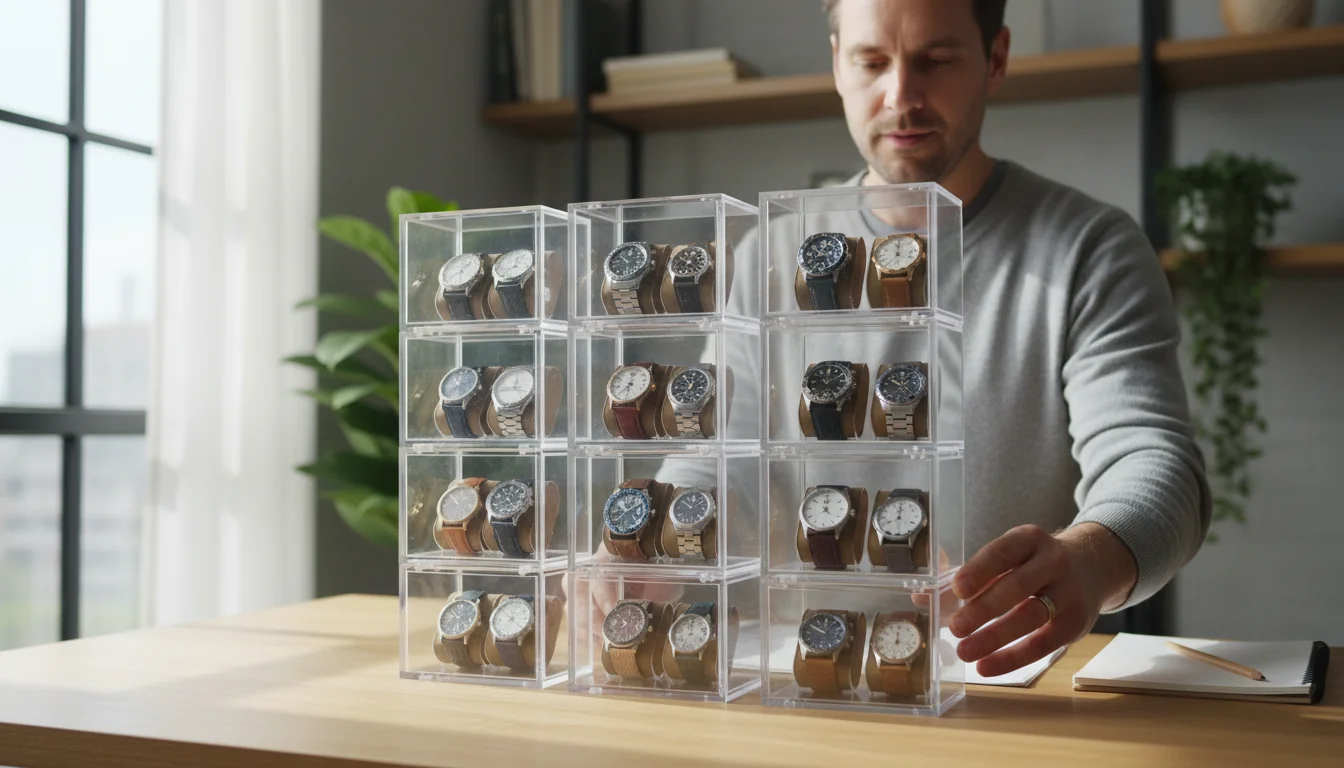
Safe stacking: stability engineered
Stackable systems rise securely when bases interlock with lids. Look for groove-and-foot geometry, optional magnetic doors, or latching lids that keep columns aligned on shelves.
- Interlocks: base rims nest into lid recesses for anti-slip stacking.
- Latches or magnets: hold fronts closed during movement.
- Load path: rigid sidewalls pass weight straight down.
- Front-door cubes: access a watch without unstacking the pile.
- Drawer modules: slide-out trays for bracelets, links, and tools.
Check the recommended stack height. Many clear cases are comfortable up to 8–10 units on firm shelving. Exceeding that can stress lids and warp columns.
Materials matter. Polypropylene is light and tough, but can turn brittle in cold garages. Acrylic keeps clarity and stiffness indoors, ideal for closets and display shelves.
Place heavier automatic models low in the stack. Keep lighter quartz and straps higher for stability and easier reach.
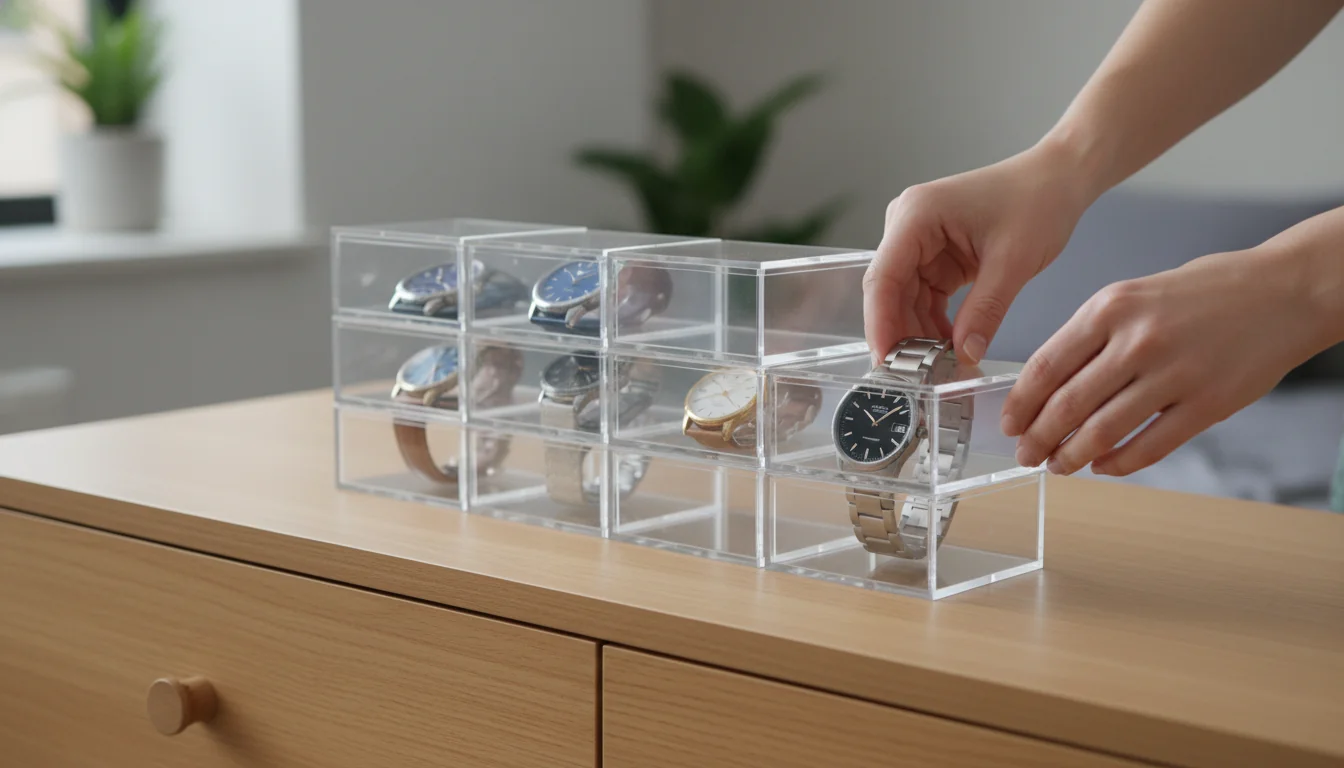
Space gains: modular footprints
The right footprint turns vertical space into order. Here are eight archetypes of clear, stackable enclosures that cover most home and studio scenarios in 2026.
| Box archetype | Typical use and specs |
|---|---|
| Front-door cube | Quick access without unstacking; common internal size ~15" x 11" x 9". |
| Drawer-style organizer | Shallow drawers for straps, links, and tools; stack 4–6 high on shelves. |
| Removable-divider case | Adjustable compartments for mixed watches and jewelry parts; snap-and-stack tiers. |
| Rotating tower | 12" x 8.5" base; heights around 15–24.5" with removable shelves; compact footprint. |
| XL tall unit | Extra interior clearance for large divers or cuffs; stack fewer, go taller. |
| Micro-parts tray box | Small clear storage for screws, pins, and springs; keeps repair bits damage-free. |
| Single-watch display cube | One watch per cube; perfect for highlights and gifting; stacks into grids. |
| 8-slot travel-ready case | Pre-cut interiors for up to 8 watches; stackable shell for shelf storage at home. |
- Measure shelf depth first; common cubes need 15–16" clearance.
- Mix-and-match: drawer modules below, cubes above, tower at the end.
- Reserve a micro-parts box for screws, spring bars, and clasps.
- Use identical footprints for neat columns and faster stacking.
If you rotate straps frequently, keep a divider case inside the same stack. You’ll find the right buckle size in seconds.
Protection: lids, seals, materials
Boxes protect against dust first, and minor bumps second. Lids with gaskets or snug latches improve particle control; magnetic fronts improve daily access while staying closed when you nudge the stack.
- Dust defense: tight lid fit and overlap edges reduce ingress.
- Gasket option: foam seals help in damp closets, not for immersion.
- Impact path: rigid corners, reinforced lids distribute small knocks.
- Cleaning: lukewarm water, mild detergent, soft cloth; avoid solvents.
- Parts safety: compartment trays stop screws from migrating.
Acrylic is water-resistant, not waterproof. Keep cases off wet floors and away from leaks. Use silica gel packs when humidity rises.
If you plan garage storage, consider more temperature-tolerant plastics for the outer tote, and place watch cubes inside that tote for double protection.
Drawer organizers with velvet inserts reduce micro-abrasions on polished bezels and bracelets during storage.
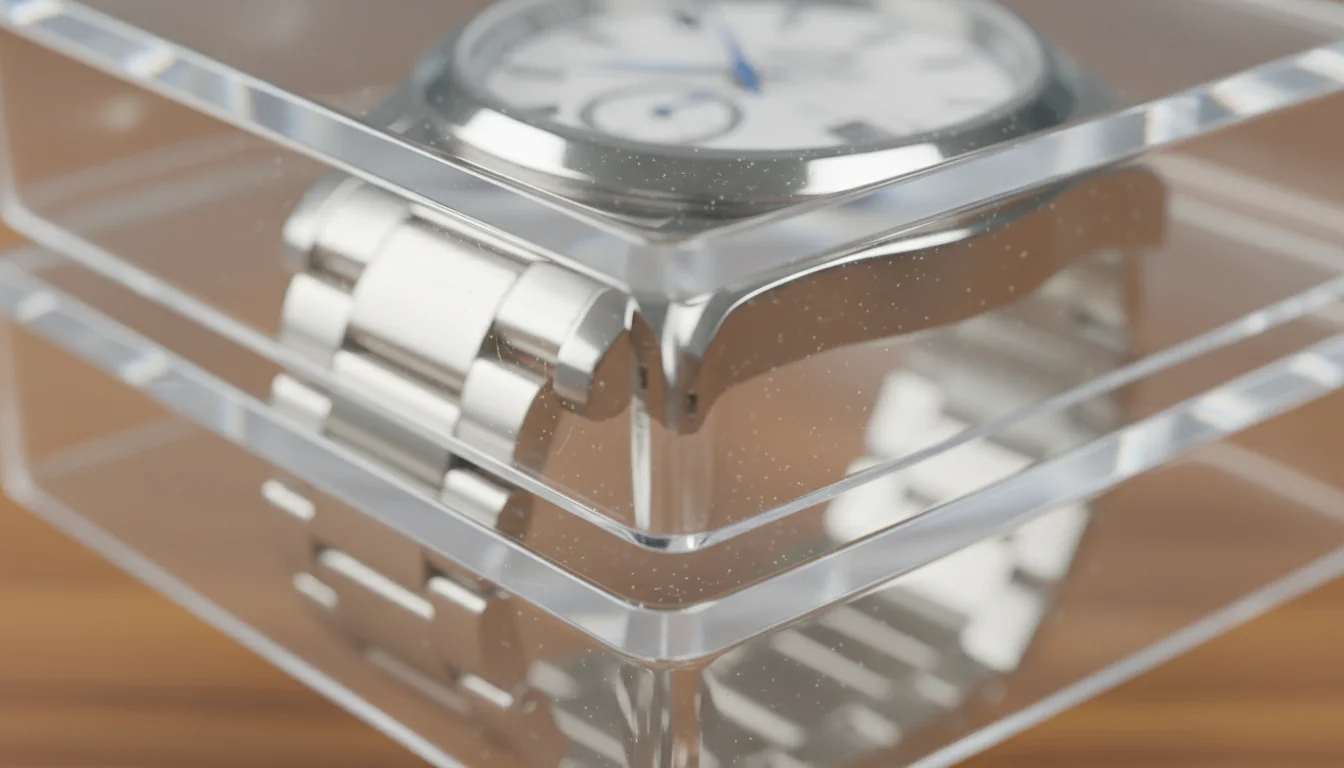
Display and cataloging: order you see
Transparent stacks become an at-a-glance index. Group by case size, dial color, or occasion. Clear fronts reduce misfiles and make “Home” routines faster on busy mornings.
- Color-code tiny stickers on corners for size or bracelet type.
- QR labels: link a note with purchase date, service records, and strap width.
- Top-down logic: daily wearers at eye level, rare pieces lower.
- Inventory sheets: keep “Products” and “References” lists synced to stacks.
In institutional closets, even those following U.S. Navy Uniforms guidance (Uniform Regulations, Chapter 2), clear containers support consistent personal appearance standards.
Photograph each watch inside its cube. Add the image to your inventory sheet, so guests or insurers can verify pieces quickly.
Setup guide: assemble, stack, secure
Most clear watch boxes arrive flat-packed. Follow these concise steps for a firm, square stack that stays aligned.
- Snap side panels fully; press until you hear a clean click on all edges.
- Seat the lid; run a finger along the seam to confirm an even fit.
- Add liners or pillows; set heavier watches in the lower units.
- Stack on a level shelf; match base feet to lid grooves precisely.
- Label discreetly; log the arrangement in your inventory sheet.
Do not stack on soft carpets. A soft base twists columns, misaligns doors, and stresses lids.
If you need a large-capacity option to anchor a stack, consider this 18-slot checkerboard case as the bottom module, then place front-door cubes on top for quick daily access.
Why choose transparent, stackable boxes?
They compress vertical space, keep dust off bracelets and dials, and let you see everything. Stacks create order without bulky furniture, ideal for closets, shelves, or a modest watch wall in a home office.
How do these compare to opaque shoe-style bins?
Clear watch boxes prioritize visibility and gentle interiors. Shoe bins excel for sneakers but lack tailored pillows and dividers. For a single highlight piece, try a citrus-toned single-watch cube to elevate presentation.
What are the key advantages in 2026?
Modular grids, easy cleaning, and improved interlocks. Newer gaskets limit dust, and drawer modules store links and tools neatly. For a bold accent color, consider a Klein-blue single holder that still stacks with clear units.
Are these boxes suitable for humid rooms?
Yes, for closets and bedrooms with normal humidity. Use silica gel inside and avoid bathrooms with steam. For extra protection, pick lids with tighter overlaps or foam gaskets and keep the stack off floors.
How do I protect tiny watch parts and accessories?
Use a small clear organizer with removable dividers for spring bars, screws, and clasps. Drawer units with velvet sections reduce scratches. For warm tones, a hazel-inspired single box pairs well with neutral trays.
How many units can I stack safely?
On firm shelving, many systems handle 8–10 boxes. Distribute weight, keep larger watches low, and verify the manufacturer’s guidance. If doors begin to bind, reduce the column height by one.
What’s the simplest cleaning routine?
Wipe with a damp microfiber cloth and mild soap. Avoid ammonia and alcohol; they haze acrylic. Dry with a lint-free towel and re-seat lids to keep dust out.
Transparent, stackable enclosures merge storage and display, turning a growing collection into a calm, scannable grid. Clarity saves time; stacking saves space; tailored interiors protect every finish.
- Choose the right footprint: cube, drawer, dividers, or tower.
- Stack on firm shelves; keep heavy pieces low for stability.
- Use gaskets, liners, and microfiber care to preserve clarity.
If you need a refined solo display to complement your stack, explore this tanned-look single case to spotlight a favorite piece while the main boxes handle volume.
0 comments