


Looking for 8 rigid carbon fiber watch cases in 2026 that truly protect and still look refined? You’re in the right place.
This practical guide focuses on cases—how they’re built, where they shine, and which formats suit daily wear, travel, and display. You’ll learn how to evaluate construction, fit, impact resistance, and maintenance without marketing fluff.
By the end, you can match a carbon-fiber case to your watch and lifestyle with confidence.
Rigidity explained: how carbon resists
Rigid carbon-fiber watch cases balance lightness and strength. A composite shell combines carbon fabric and resin, then cures into a stiff, impact-ready structure that shields lugs, bezel edges, and crystal perimeters from daily knocks.
- Autoclaved laminate: layered twill or plain weave, vacuum-cured for consistent stiffness.
- Forged composite: chopped fibers in resin, excellent isotropic impact behavior.
- Monocoque shells: fewer joints, higher torsional rigidity around the case body.
- Hybrid layups: carbon with aramid reinforcement at stress points for crack resistance.
- Finishes: matte twill hides scuffs; glossy clearcoat adds depth but shows micro-swirls.
If you bump doorframes often, choose matte twill. It camouflages micro-abrasions better than gloss.
Against common plastics, a rigid carbon case keeps shape under pressure, so alignment around crowns and pushers stays precise over time.

Eight formats: when to use which
Not all carbon-fiber cases serve the same job. Below are eight rigid formats you’ll actually use in 2026, from on-wrist shells to off-wrist storage cases and travel pods.
- Slim bumper shell: snap-on ring protecting bezel and corners with minimal bulk.
- Crown-guard frame: reinforced shoulder zones for tool watches with tall crowns.
- Full surround cover: bezel-to-back wrap with raised lip for crystal clearance.
- Integrated screen-lip: carbon rim with a thin 9H overlay to deflect scratches.
- One-watch travel pod: rigid clamshell with foam channel and strap cavity.
- Two-watch roll, rigid core: carbon spine with hinged flaps, crush resistant.
- Multi-slot display box: autoclaved carbon panels, lockable lid, soft pillows.
- Dry-safe carry case: waterproof polymer shell with carbon-fiber tray insert.
| Format | Best use |
|---|---|
| Slim bumper shell | Daily wear, light impact, low profile |
| Crown-guard frame | Outdoor use, crown protection, gloves |
| Full surround cover | Drop defense, rough travel |
| One-watch pod | Carry-on safety, hotel storage |
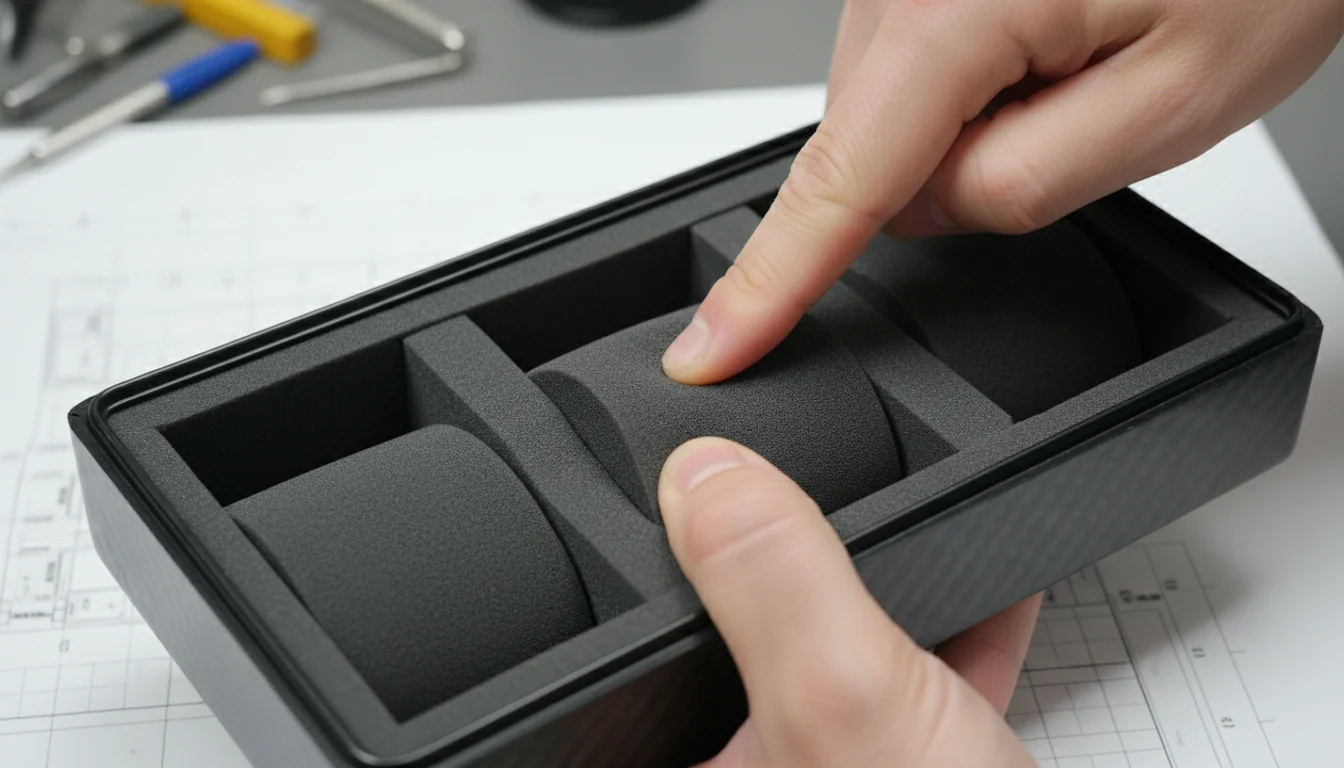
Check interior foam density. 45–65 kg/m³ balances shock absorption and imprint resistance.
If you prefer rigid display storage to on-wrist shells, explore these carbon-fiber watch boxes for multi-watch organization with crush-resistant lids.
Fit and comfort: precise tolerances
Great cases protect without interfering. Look for exact cutouts around the crown, pushers, microphones, and charging surfaces. A well-made carbon shell will seat with a decisive “click” and sit flush to the case band.
- Sizing: match case diameter and thickness; a 1–1.5 mm lip guards glass without snagging sleeves.
- Tolerances: ±0.1–0.2 mm keeps sensors clear on smart models, avoids button binding.
- Weight: rigid shells add ~5–20 g; travel pods vary from 120–450 g with lining.
- Inserts: microfiber or Alcantara-style linings prevent hairline scuffs on polished lugs.
Some forged shells flex slightly to absorb shocks, then rebound—helpful on active days.
For off-wrist rotation that complements protective storage, see this carbon-fiber winder selection to keep automatic movements running between wears.
Protection metrics: drops and abrasion
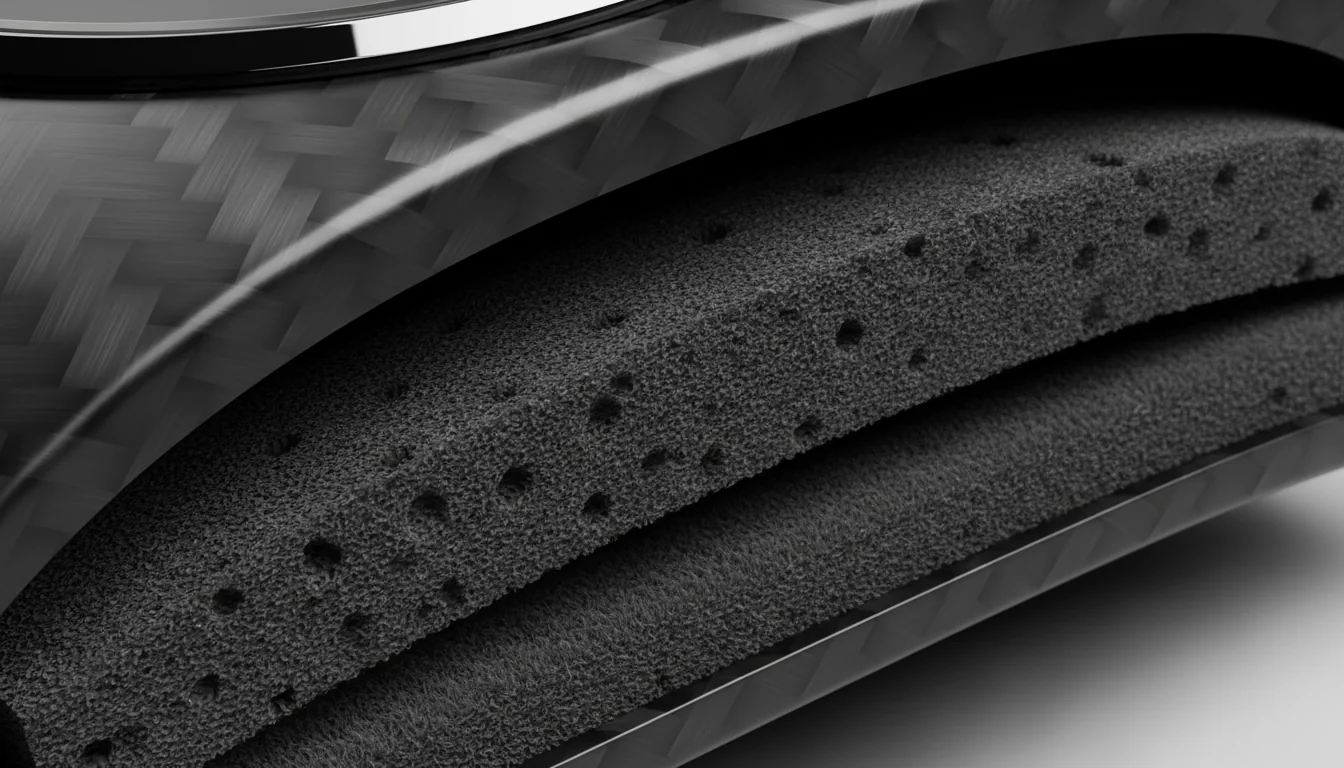
A rigid carbon case should publish basics: material, finish, impact expectations, and abrasion handling. While lab standards vary, you can still read signals of real-world toughness.
- Drop notes: look for designs tested to ~1–2 m on wood or tile to protect bezel edges.
- Lip height: 0.8–1.2 mm above glass deflects flat drops; more can hinder gesture swipes.
- Finish: matte hides micro-scratches; gloss is showier but needs gentler cloths.
- Travel seals: dry-safe cases use gaskets; aim for dust and splash resistance on the lid.
Pair a rigid shell with a rounded-edge protector if you often brush walls or handrails.
For travel, prefer carbon-framed pods with pressure-distributing ribs. They resist crushing better than soft rolls when packed under shoes or gear.
Guide 2026: choose, fit, maintain
Follow these steps to select and use rigid carbon-fiber cases with fewer surprises.
- Define use: daily bumper, travel pod, or display box for your rotation.
- Measure precisely: diameter, thickness, crown height, and strap clearance.
- Choose finish: matte for stealth wear; gloss for visual depth at home.
- Check lining: soft fibers and firm foam prevent imprinting and play.
- Test buttons: ensure unhindered crown turns and pusher clicks post-install.
Avoid adhesives that bond to polished steel. Use press-fit or reversible tabs for on-wrist shells.
For a compact, rigid single-watch carry, consider this one-watch travel sleeve that keeps lugs and crystal centered with a firm channel.
If you store between wears and want gentle motion plus protection, a carbon-accent single winder pairs well with a rigid case on the shelf.
FAQ: quick answers for 2026
Why pick rigid carbon over soft shells?
Rigid composites spread impact across the case, keeping shape and alignment. Soft covers cushion dings but can compress under load. Carbon balances low weight with hard-edge protection.
How do these compare with metal guards?
Metal guards resist abrasion but add heft and may transmit shock. Carbon shells are light, stiff, and thermally neutral, so they stay comfortable while guarding bezel edges and corners.
Are they suitable for smart models with sensors?
Yes—if tolerances are tight. Ensure openings clear sensors and chargers, and that a raised lip doesn’t block swipe gestures. A 1 mm rim is a safe starting point.
What about maintenance for glossy finishes?
Use a microfiber cloth and mild soap. Avoid ammonia and rough towels. Matte twill hides swirls; gloss needs gentler care to preserve depth.
Can a rigid case work with a desktop winder?
It can—remove the on-wrist shell if it impedes the cushion. A compact winder like this single-unit model keeps movement healthy while the watch is off wrist.
Do multi-slot storage options compromise rigidity?
Not if panel thickness and hinges are solid. Look for autoclaved panels and secure latches. A six-slot carbon display organizes a rotation without crush risk.
Any quick sizing rule for on-wrist shells?
Match the exact case diameter and verify button cutouts. If between sizes, choose the tighter tolerance to avoid rattle, provided buttons move freely.
Eight real-world picks, decoded
Across the eight formats listed earlier, here’s how to prioritize in 2026 based on lifestyle and environment, keeping the focus squarely on cases and how they behave.
- Urban commuters: slim bumper shells with 0.8–1.0 mm lips slip under cuffs yet resist subway bumps.
- Weekend hikers: crown-guard frames with hybrid aramid reinforcement at corners for trail knocks.
- Frequent flyers: one-watch pods with rigid ribs stand up to carry-on compression.
- Home curators: multi-slot display boxes with matte carbon panels reduce fingerprint cleanup.
- Gym-goers: full surround covers with smooth inner linings to avoid salt-crystal scuffing.
- Beach days: dry-safe carry case with gasketed lid to keep sand out of bracelets.
- Desk duty: integrated screen-lip shells for accidental knocks against laptops and mugs.
- Collectors on the move: two-watch rigid rolls with firm pillows to prevent crown-to-crown contact.
Forged composites disperse point impacts more evenly than some woven-only laminates of the same mass.
If in doubt, choose the simplest format that meets your shock and abrasion needs. Less bulk means fewer fit issues and more comfort.
Care and longevity for carbon shells
Rigid carbon-fiber cases last for years if cleaned and handled correctly. The composite itself resists fatigue, but finishes deserve attention.
- Wipe weekly: damp microfiber, then dry. Avoid gritty cloths that haze clearcoats.
- Inspect tabs: press-fit points can polish over time; reseat to maintain snap tension.
- Rotate pods: alternate storage pillows to reduce permanent strap imprints.
- Travel packing: place rigid pods near the suitcase spine, not edges that take hits.
For gloss shells, finish with a non-abrasive polymer spray to boost slickness and cut fingerprints.
With proper care, a matte twill case will keep its stealth look far longer than painted plastic guards of similar weight.
In 2026, rigid carbon-fiber watch cases deliver real-world protection, low weight, and clean aesthetics—whether on your wrist, in a travel pod, or in a display box.
- Match format to use: bumper, frame, surround, or storage.
- Prioritize fit tolerances and interior linings for daily comfort.
- Choose matte for stealth durability; gloss for showroom depth.
For a minimalist single-watch carry with rigid protection, see this compact carbon-inspired sleeve as a finishing touch to your setup.
0 comments