


Want your watches on the wall, secure, dust‑free, and beautifully lit? This 2026 field guide decodes lockable wall‑mounted display watch boxes so you can pick, mount, and maintain them with confidence.
What makes these boxes safer and more practical than shelves or drawers? You’ll learn how case depth, door materials, lock types, and lighting shape real‑world use and day‑to‑day enjoyment.
Expect a hands‑on tour of seven configurations, sizing rules, security choices, and mobile‑friendly checklists you can apply today.
Display first: clarity and depth
Mounted watch boxes live at eye level, so sightlines matter. The door, glazing, and interior depth decide whether lugs, bezels, and straps read cleanly or feel cramped and shadowed.
- Glazing options: tempered glass for scratch resistance; UV‑blocking acrylic for lighter weight and safer kids’ rooms.
- Mirror‑back panels boost a “360° view,” helpful for sculpted cases and open‑casebacks.
- Internal depth: aim for 2.75 inches clearance for 44–46 mm heads and thick straps.
- Shelf spacing: 3–3.5 inches between rows keeps crowns from kissing the door.
- Finish choices: black frames spotlight dials; cherry wood warms vintage pieces.
Cases with a mirrored back can elevate perceived depth, similar to trophy or 3D artwork displays—useful in narrow hallways where space is a luxury.
If you’re torn between glass and acrylic, choose tempered glass for scratchy environments; pick UV acrylic where impact resistance is the top priority.

Security choices: locks that fit life
Locking turns a wall cabinet into a protective case. The right mechanism balances deterrence, ease of access, and where the box hangs—home office, lounge, or a shared hallway.
- Cam/keyed locks: classic, affordable, and easy to service.
- Keyless combination: no keys to lose; ideal for occasional access by family.
- Electronic keypad: fast entry; set temporary codes for cleaners or contractors.
- Smart Bluetooth: access logs and alerts; mirrors modern electronic locks used for key safes.
| Lock type | Best for |
|---|---|
| Keyed cam | Private rooms; simple, reliable daily use |
| Keyless combo | Shared households; no spare keys needed |
| Electronic keypad | Frequent code changes; quick, audible feedback |
| Smart/Bluetooth | Audit trails; app‑managed guest access |
If the cabinet sits near a door or window, choose internal hinges and a recessed lock to reduce tampering leverage.
Smart access aligns with 2026 home trends—think secure, connected spaces—yet a well‑installed keyed case still deters casual access effectively.
Lighting and lining: show, don’t cook
Light turns a wall display into a gallery. The wrong setup fades straps; the right one flatters texture and dial color without heat or UV stress.
- LED strips or top lights: low heat, energy‑efficient, excellent color rendering.
- Diffusers soften hotspots; angled rails avoid glass glare.
- Anti‑tarnish microfiber or velvet liners protect metals and crystals.
- Cable routing: surface or flush‑mount channels keep installs tidy.
Power LED rails from a hidden outlet or a high‑capacity power bank; cable‑clip to the wall plate for a clean look.
On Jan 4, 2026, new Qi2 chargers and powerful hubs dominated CES talk—handy context if you plan discreet USB‑C power for lighting without opening the box often.
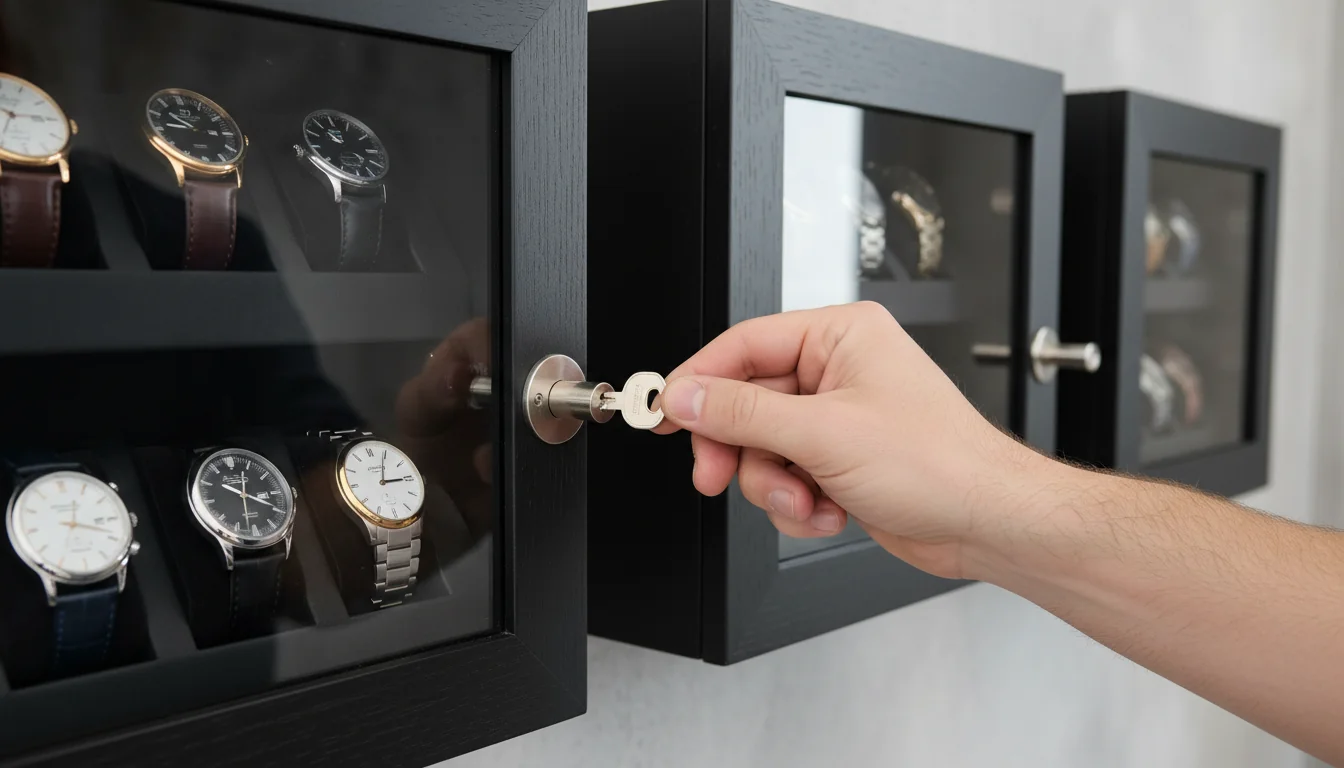
Seven configurations that work
Here are seven lockable wall display formats that consistently satisfy collectors. Each “box” solves a different space, capacity, or security need.
- Shallow 6‑slot shadow case: minimal depth, great for small wrists; acrylic door keeps weight low.
- Deep 8–10 watch cabinet: glass door and adjustable rows for 65 mm heads or chunky divers.
- Mirror‑back gallery box: raises visual drama; pair with LED top lights for evening sparkle.
- Keyless keypad case: fast code access; clean facade—no visible keyhole.
- Smart‑lock enclosure: Bluetooth access logs; useful in shared home offices.
- Recessed wall unit: flush to plaster; museum feel; plan wiring before drywall closes.
- Hybrid display + drawer: visible rows on top, hidden valet drawer below for straps and tools.
Knife or shot‑glass shadow boxes often share the same mount and lock principles—look for UV acrylic, solid hinges, and row spacing that suits watch cushions.
Aim beyond “pretty.” Good boxes protect, organize, and guide quick daily selection without fiddling.
Mounting: safe on stud, level on brick
A secure wall install is half the performance story. Treat a loaded case like a small cabinet: anchor correctly and respect weight limits.
- Use a stud finder and two anchors at minimum; add a third for wider frames.
- On masonry, use sleeve anchors; on drywall, toggle bolts rated above total load.
- Leave 1/4 inch ventilation gap behind to avoid wall condensation on colder exteriors.
- Check door swing: hinged left/right vs. drop‑front to clear nearby furniture.
| Internal depth | Recommended use |
|---|---|
| 2.0–2.3 in | Slim dress watches, flat straps |
| 2.4–2.7 in | Mixed collections up to 44 mm |
| 2.75–3.25 in | Oversized cases, thick rubber straps |
Do not repurpose an “adjustable through‑the‑wall locking drop box” for watches—humidity control and lining protection differ from mail or payment use.
If you route power inside the wall, follow local code for low‑voltage cable and keep clear of studs used by garage door openers or integrated video wiring runs.
Materials: wood warmth vs. metal minimal
Box materials set both aesthetics and longevity. Choose a shell that complements the room and supports the hinges and lock hardware you prefer.
- Solid or engineered wood: tactile warmth, easy to refinish; match cherry, oak, or ebony tones to furniture.
- Aluminum frames: slim sightlines, rust‑resistant; great for contemporary spaces.
- High‑impact polymers: lighter cabinets; good for kids’ rooms or rental walls.
- Hardware: metal hinges and cam plates should be through‑bolted, not just screwed to thin panels.
If you love dark dials, choose a light liner; for light dials, a charcoal liner adds contrast for quick morning picks.
Metal‑trimmed doors with tempered glass feel premium and resist daily wear far better than thin acrylic panels.

How to size, mount, and maintain (quick guide)
- Measure watches on cushions; check the deepest point to confirm internal clearance.
- Pick a wall at eye level; avoid direct sun to protect straps and linings.
- Find studs; use a level and two or three anchors rated above total load.
- Set LED lighting; test for glare on glass and adjust angle or diffuser.
- Log combinations or spare keys in a secure place; review monthly.
Test a compact single‑slot box finish before committing to a large wall cabinet; it’s a low‑risk way to check color harmony.
If you want a tiny, standalone reference for finish and lining feel, explore a compact single‑slot option before scaling up a wall display.
Why choose wall display boxes?
They save floor space, showcase dials at eye level, and add a locking layer against casual access. Compared with drawers, the door seals reduce dust, and LED lighting makes quick daily selections easier. For minimal setups, see this minimalist single‑watch pick.
How do these cases compare to tabletop boxes?
Wall units reclaim surfaces, deter handling, and allow stronger lighting. Tabletop versions are simpler to move but collect dust faster and lack the gallery impact of a hanging cabinet.
What are the main advantages for collections?
Lockable doors, anti‑tarnish liners, and UV glazing protect finishes. Adjustable rows adapt from dress pieces to tool watches. For tone matching in warm interiors, a link like a walnut‑toned single case shows how wood complements gold or cream dials.
Do these wall cases suit small apartments?
Yes. Shallow shadow formats take little depth and keep entryways neat. Mount above a console to avoid door swing conflicts and maintain eye‑level viewing.
How do I clean and use the cabinet safely?
Use a microfiber cloth and a non‑ammonia cleaner for glazing, then vacuum liners gently. Lubricate hinges annually. For color testing, a tan single‑holder helps preview how straps read against different liners.
Real‑world placement: rooms and routines
Pick a wall that supports your daily rhythm and keeps watches safe from humidity, heat, and knocks.
- Bedroom: opposite windows to mitigate UV; away from radiators.
- Home office: near task lighting; consider smart locks if visitors pass through.
- Hallway: use deeper cases with door clearances; avoid high‑traffic pinch points.
- Garage entry: distance from moisture and fumes; never above damp walls.
In public‑facing areas, verify mounting height and egress clearances per local codes before fixing the cabinet to the wall.
If you use cameras or integrated video near the entry for general security—common with modern garage door openers—ensure the lens doesn’t reflect off the case glass at night.
Troubleshooting: glare, dust, and door swing
Even good boxes need fine‑tuning. Here are the field fixes professionals rely on when a wall display misbehaves.
- Glare on glazing: angle LEDs toward the liner; add a matte diffuser strip.
- Dust film: check door seals; replace worn magnets with stronger catches.
- Door clipping frames: reverse hinge side or switch to a drop‑front design.
- Watches touching door: move thicker pieces to upper rows or deeper shelves.
A 2–3 mm felt pad behind each watch cushion subtly pushes dials forward and reduces door contact.
If the wall isn’t plumb, shim the upper mounts to level the cabinet and prevent the lock from binding.
Lockable wall‑mounted watch cases do more than decorate; the right boxes protect, organize, and streamline your routine in 2026.
- Depth and glazing decide comfort, clarity, and UV safety.
- Locks range from keyed cams to smart access—match to traffic.
- Mounting on studs with proper anchors is non‑negotiable.
Before commissioning a large wall piece, preview color and liner contrast with a glossy ruby lacquer single piece to confirm the look you’ll live with daily.
0 comments