


Small treasures deserve thoughtful, wall-friendly homes. If your curated finds are multiplying, how do you keep a clean look while caring for the integrity of your collections?
In this 2026 guide, you’ll learn seven discreet wall storage solutions tailored to compact assortments—what to use, how to mount, and how to protect each piece from dust, light, and knocks.
Ready to turn limited wall space into a tidy, secure gallery for your most meaningful sets?
Recessed depth: clean, flush lines
Between-stud cavities transform dead space into storage that looks built-in. This approach keeps a small assortment visible, tidy, and almost invisible from the side.
Solution 1 — Recessed between-stud shelves
- Use wall cavities at 16" on center; aim for 3.5" interior depth for slim objects and miniatures.
- Add a picture-ledge lip to prevent slips while keeping label-forward display for small sets.
- Line shelves with felt for scratch protection; choose light, neutral colors for visibility.
- Integrate a touch-latch panel for a flush, handle-free façade that hides the ensemble.
Pre-paint the niche interior in a mid-tone; your small collections pop visually without harsh contrast.
Solution 2 — Hidden art-panel cabinet
Mount a shallow cabinet and hang a framed print or mirror on a piano hinge. It conceals delicate assortments without inviting attention.
- Add a low-profile magnetic lock for subtle security that blends with decor.
- Include micro-LEDs on a timer to avoid UV and heat; light only when opened.
- Use breathable liners for metals or paper ephemera to reduce tarnish risk.
45–55% relative humidity helps protect paper, fabrics, and patinated metals on wall displays.
For rental homes, consider cleats so the cabinet bears on studs. Patching two cleat holes later is kinder to walls than many small anchors.
Dust control: clear, minimal fronts
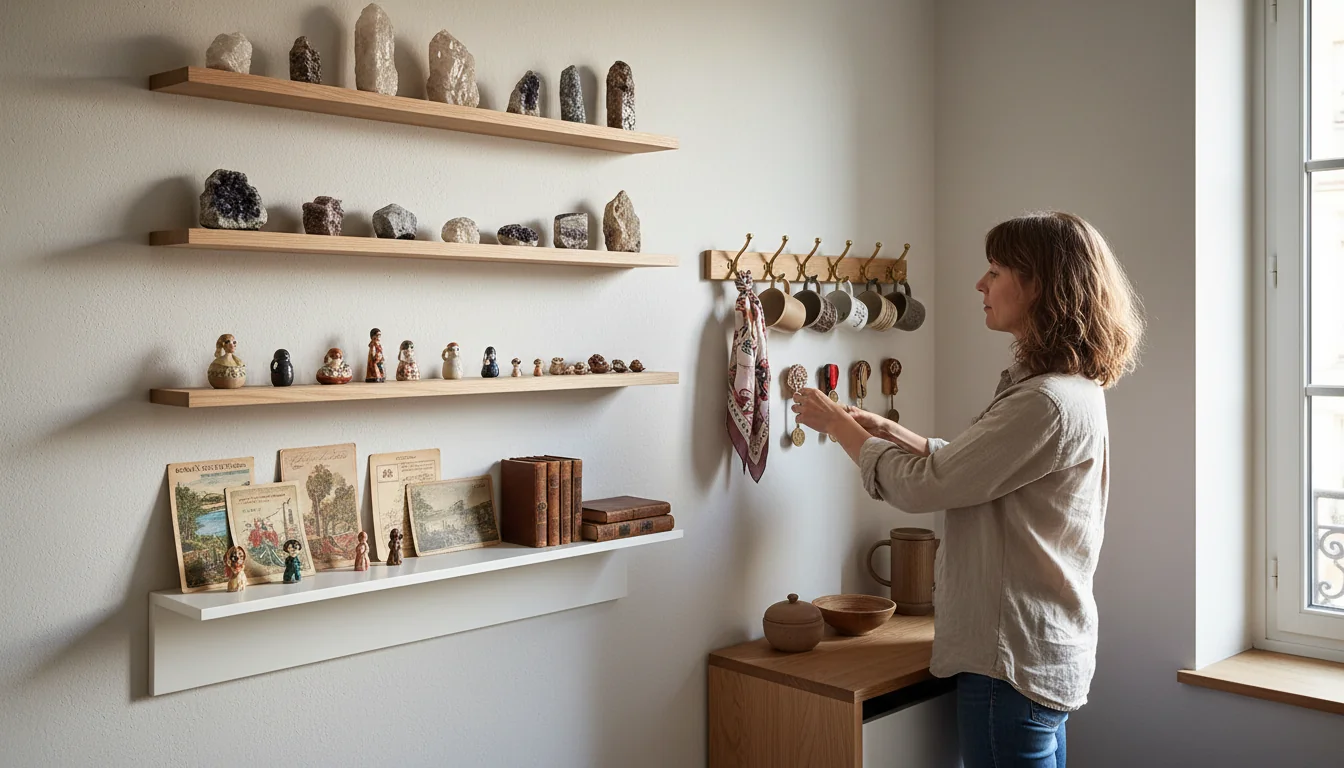
Wall shelves look sleek, but open fronts invite dust. Choose shallow display formats with protective faces for small sets you handle rarely.
Solution 3 — Slim shadow boxes with covers
- Select 1.5–3" internal depth shadow boxes with UV-filter acrylic.
- Use museum putty or pins to stabilize lightweight items in micro-sets.
- Arrange by theme; labeled corners aid quick retrieval for rotating collections.
- Mount on a rail for tool-free swaps during seasonal refreshes.
Keep framed displays away from direct sun. Even UV acrylic can’t fully prevent color fade over time.
Solution 4 — Picture ledges with clear rails
A picture ledge with a clear edge rail preserves the open look while guarding against drops, ideal for pins, coins, or small media spines.
| Use case | Best wall option |
|---|---|
| Trading cards in top loaders | Ledge + 1" clear rail, 2.5" spacing |
| Mini perfume bottles | Shadow box, 2–3" depth, felt base |
| Compact discs or small media | Narrow shelf, 5–6" depth, lip front |
Label-forward layouts speed selection. This makes a small collection feel organized and ready to use.
If you rent, use a continuous mounting rail at the top; this distributes load and limits wall damage while keeping the design adjustable.
Modularity: evolve as sets grow
Flexible wall systems let you reconfigure spacing when your curation changes. They shine when quick rearrangement matters.
Solution 5 — Pegboard and slim rail grids
- Combine small shelves, hooks, and bins; keep depth under 4" for narrow hallways.
- Use short pegs for minis; longer pegs for boxed sets, labeled sleeves, or clamshells.
- Add shallow trays for badges or tokens; subdivide with removable dividers.
- Place highest-use pieces at eye level; archive items near the top.
A 3-foot pegboard column often triples vertical capacity over ad‑hoc shelves in small spaces.
For very small assortments, a single-track rail with clip-on boxes can be neater than full panels, while still expandable in February 2026 and beyond.
- Pro advantage: Reconfigure in minutes; no new holes needed on the wall grid.
- Good practice: Keep the total load under the rail’s rating; spread weight symmetrically.
- Visibility win: Mix shelves and mini-bins so each subset stays distinct.
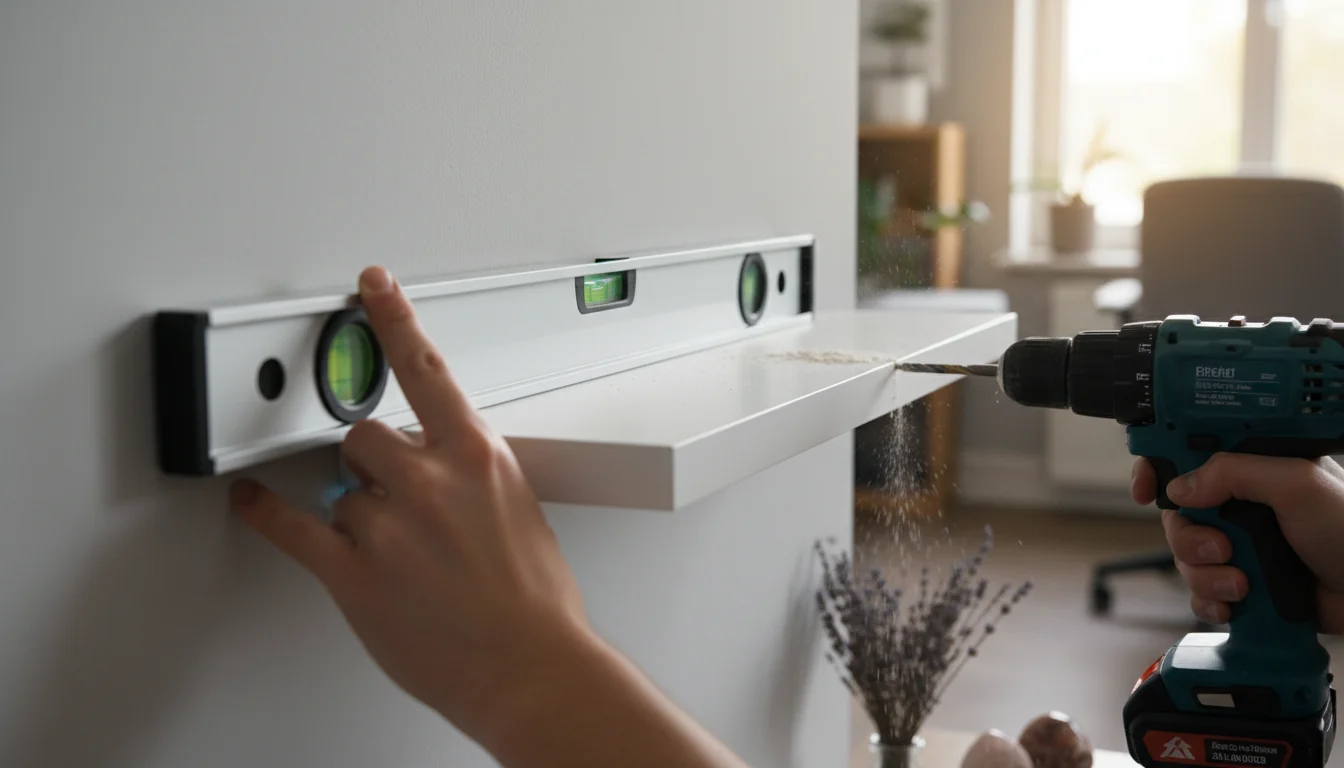
Use anchors suited to your wall type. Hollow-wall toggles differ from masonry sleeves—check weight ratings.
Camouflage: hide in plain sight
When you want minimal visual noise, choose designs that read as architectural elements or everyday decor.
Solution 6 — False panels and utility façades
- Create a “service panel” look with slatted doors hiding shallow shelves for delicate items.
- Use a magnetic touch-latch; no visible hardware to hint at storage.
- For keys or micro-collectibles, a recessed box behind a vent-style grille keeps things discreet.
- Line the back with cork or EVA foam for vibration damping on shared walls.
Match paint sheen to the wall (often eggshell). Mismatched gloss can reveal hidden doors.
If you display valuable pieces, install a small cam lock or concealed hasp inside the door. Security starts with being unnoticeable.
When “no drilling” truly matters
- Use adhesive rails designed to release without wall damage; check weight per segment.
- Opt for lean solutions like picture ledges with two small screws in a single stud.
- Favor friction-fit shadow boxes on existing hooks to avoid new holes.
Adhesive-only mounts suit very small collections. Heavier layouts should engage at least one stud.
Narrow gaps: use every inch
In tight rooms, shallow shelving and micro-cabinets prevent visual clutter while keeping a compact assortment accessible.
Solution 7 — Micro-shelving for media and cards
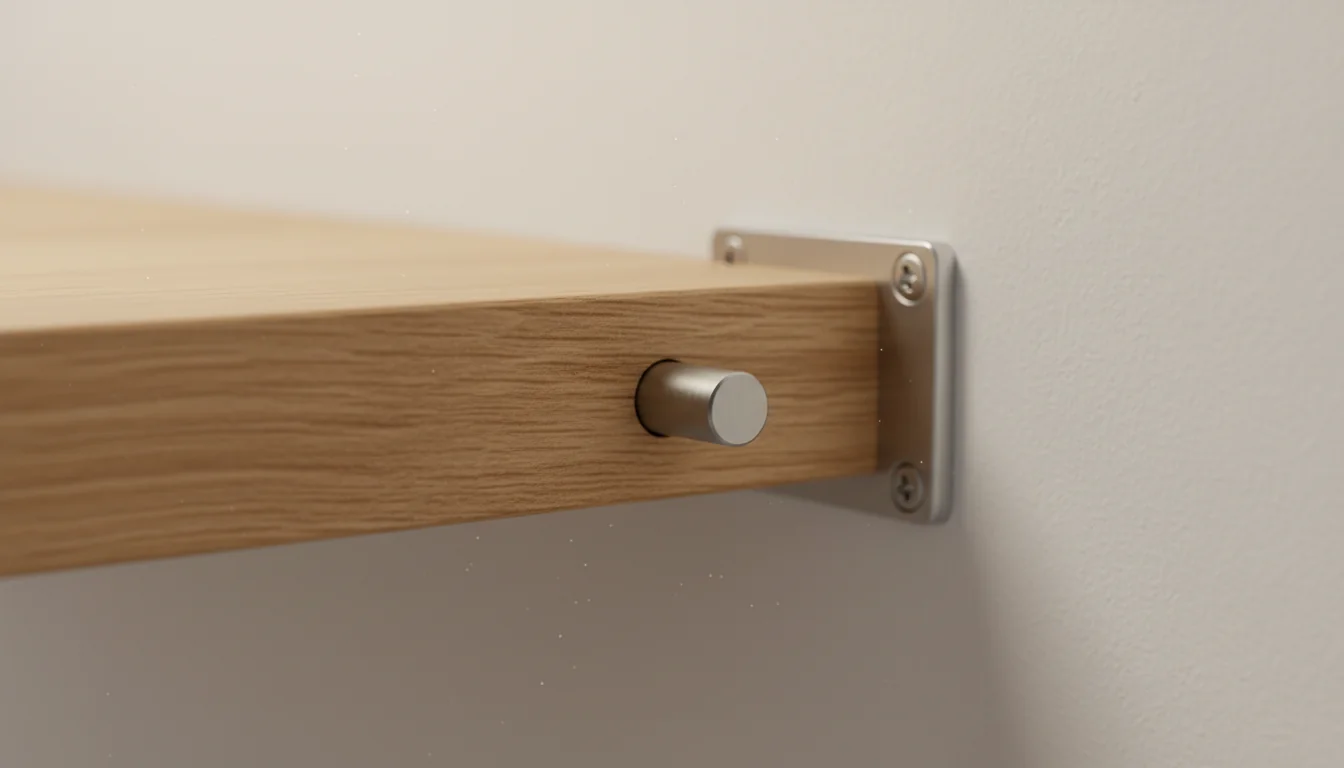
- Choose 4–6" depths for compact discs, slim cases, or mini books in small runs.
- Use front lips to resist falls in narrow hallways or near doors.
- Stagger shelf depths: deeper at the bottom, shallower near eye level for a lighter look.
- Group by frequency of use; archive at higher rows, live sets at reach height.
Shifting 1–2 shelves to 5" depth can reclaim a surprising number of spines in small spaces.
Consider a slim, latching door to reduce dust for comics or sleeves. Vent the cabinet top or add desiccant if humidity spikes seasonally.
Category fits: display by type
Some assortments have special needs. Tailor the wall solution to protect form, finish, and labels.
Wine, miniatures, and fragrances on walls
- Wine: use label-forward wall racks; keep bottles horizontal and away from heat sources.
- Miniatures: shallow cases with removable dividers and clear fronts for dust control.
- Fragrances: ledges with anti-slip liners; mount away from sun to protect notes and dyes.
- Coins and pins: magnetic boards behind fabric maintain a clean, soft presentation.
Ask yourself, “How can wine bottle racks elevate your kitchen?” Wall racks free counters and make small wine sets easy to choose.
If your home’s kitchen is compact, vertical wine grids keep a modest cellar in sight but discreet. They also reduce handling, preserving labels.
How to plan a discreet wall setup
- Audit your collection: count pieces, weights, and the tallest/deepest item.
- Choose a system matched to type: ledge, case, rail, or recessed niche.
- Map studs and hazards; mark eye-level zones for most-used subsets.
- Select mounts and anchors; confirm load ratings with a 20% safety margin.
- Stage and label; install lighting last to minimize heat and glare.
Overloading adhesive shelves. Heavy arrangements for small collections still need mechanical fixing.
Why choose wall storage for compact assortments?
Walls reclaim vertical space, keep fragile pieces off busy surfaces, and create a cohesive view of your collections without crowding rooms.
How do these ideas compare to standard bookcases?
Bookcases are deep and floor-hungry. Discreet wall options are shallower, safer for micro-sets, and emphasize curation over bulk storage.
What are the key advantages for small collections?
Better visibility, less dust, controlled lighting, and modularity. You access items quickly while preserving condition and order.
Is this suitable for rental homes?
Yes. Use rail systems, picture ledges into studs, and adhesive-rated hooks for ultra-light sets to minimize wall impact.
How do I protect delicate finishes and papers?
Keep out of direct sun, add UV acrylic fronts, and target 45–55% RH. Use acid-free liners and avoid warm spots.
Can I combine display with hidden storage?
Absolutely. A hinged art panel or vent-style door hides rarely used pieces while ledges show daily favorites nearby.
What’s the fastest win for very tight spaces?
Install a narrow picture ledge with a clear rail. It secures a small set, reads minimal, and mounts with two clean fixings.
Discreet wall storage turns limited surfaces into curated, protected displays that respect scale and condition.
- Match the solution to item type, depth, and handling needs.
- Prioritize dust control, light management, and gentle liners.
- Use modular systems to grow with evolving collections.
Start small, plan carefully, and let your wall quietly showcase what you’ve gathered with care in 2026.
0 comments