


A cluttered chest of drawers makes mornings slow and stressful. Ready to turn the top and drawers of your dresser into a calm, functional hub?
In this 2026 guide, you’ll learn 10 practical ideas to organize small items on a dresser—what to keep on the surface, how to divide drawers, and where to add storage without crowding your bedroom. Clear steps, smart tools, and mistakes to avoid.
Top ten: at a glance
Start with a quick overview before you fine‑tune each zone of the dresser. These 10 ideas balance access, aesthetics, and daily speed.
- Create a tray‑based “drop zone” on the surface for keys, phone, and glasses.
- Clear clutter off the top; keep 30–40% of the dresser surface empty.
- Use expandable drawer dividers for socks, underwear, and smaller items.
- Corral jewelry in stackable inserts; store watches in a rigid case.
- Group tech bits (cables, batteries) in lidded bins; add labels.
- Stand skincare in shallow bins in a top drawer to avoid spills.
- Add vertical add‑ons: a slim shelf, peg rail, or wall hooks above the dresser.
- File‑fold fabrics to see everything at once; arrange by color for speed.
- Use over‑the‑door or bedside organizers to offload overflow categories.
- Set a weekly 5‑minute reset so the chest of drawers stays tidy.
Keeping only daily‑use items on the dresser can cut your morning routine by 5–7 minutes because there’s less visual search.
Next, let’s optimize the surface before moving into the drawers of your dresser.
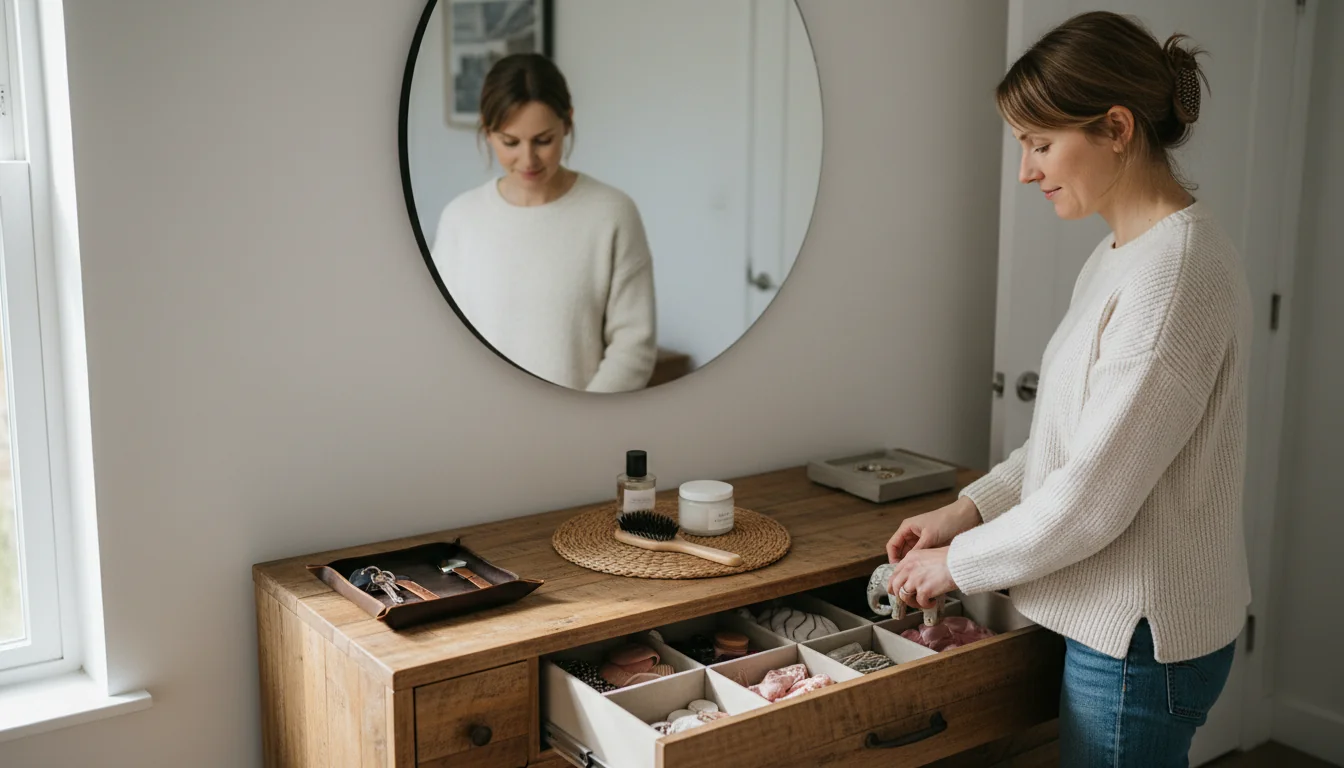
Surface clarity: quick wins
The top of the dresser invites piles. Stop the spread with defined boundaries and a simple, repeatable layout that keeps essentials within reach.
- Place a rigid tray (about 8–12 inches wide) as a “drop zone” for phone, keys, and wallet.
- Use a small lidded box for loose items like rings, lip balm, or safety pins.
- Limit décor to an odd number (1–3 pieces) to avoid visual clutter.
- Leave a 30–40% “breathing strip” empty to fold laundry or stage outfits.
- Mount a shallow mirror or art above; add a peg rail for necklaces or caps.
Avoid tall, wobbly containers on the dresser. One bump can send small items rolling off the top and under furniture.
Once the surface is set, the next gains come from dividing the drawers inside your dresser.
Smart drawers: precise homes
Drawers swallow smaller items unless you divide and label. Give every category a snug “home” so you can grab and go without riffling.
- Measure internal width and depth; choose expandable dividers that brace firmly.
- Use shallow trays (2–3 inches high) for jewelry, hair accessories, and watches.
- Stand skincare or grooming items in low bins to prevent leaks.
- File‑fold thin fabrics; heavier clothing belongs in the closet to save drawer space.
- Label the lip of each section: “socks,” “batteries,” “spare cables,” “earbuds.”
| Small item | Best dresser zone / organizer |
|---|---|
| Rings, studs, pins | Top drawer; felt insert with micro‑compartments |
| Watches | Rigid watch case; shallow drawer or surface |
| Cables, chargers | Lidded bin; labeled cord wraps by device |
| Skincare, balms | Spill‑proof tray; products upright in rows |
| Keys, wallet | Surface drop‑zone tray; one‑touch return rule |
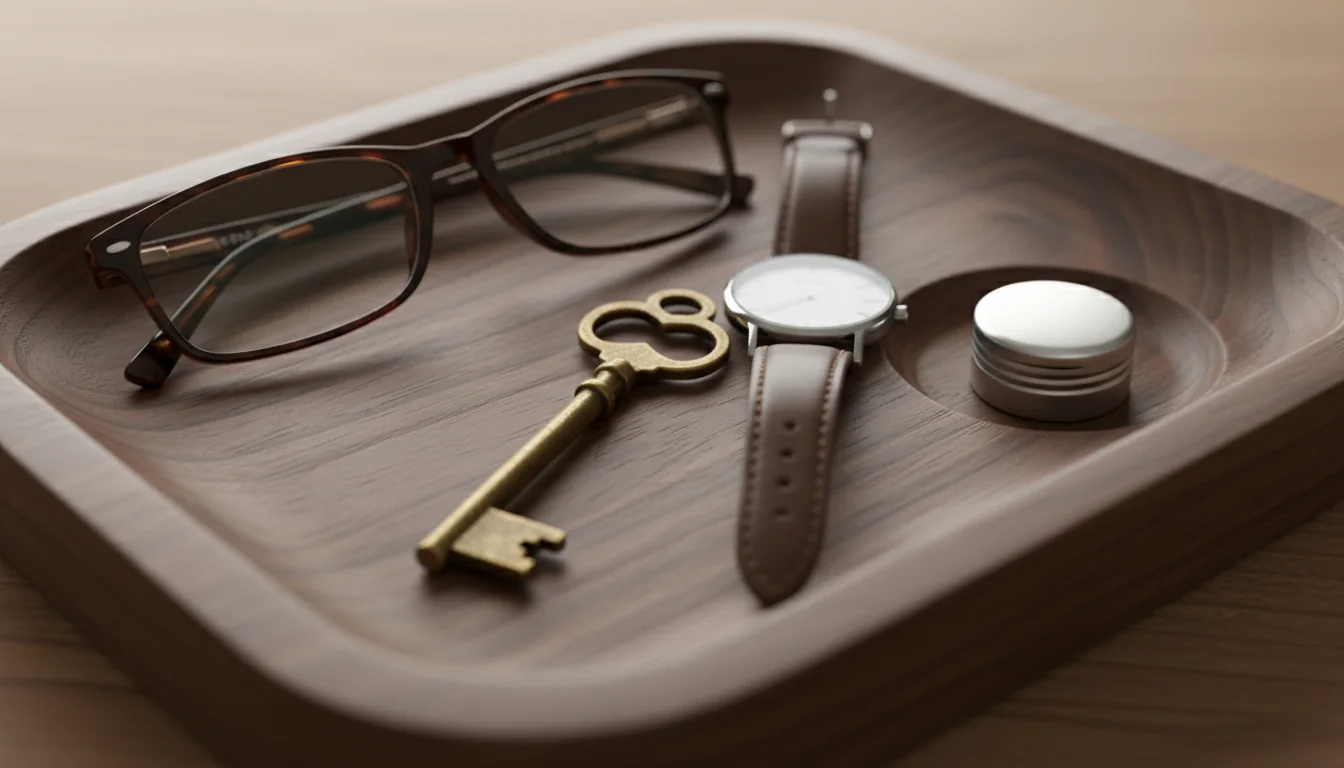
Protect and display timepieces with a dedicated watch case; it keeps the top drawer tidy and the dresser surface uncluttered.
With the drawers mapped, boost capacity by using vertical space near the dresser.
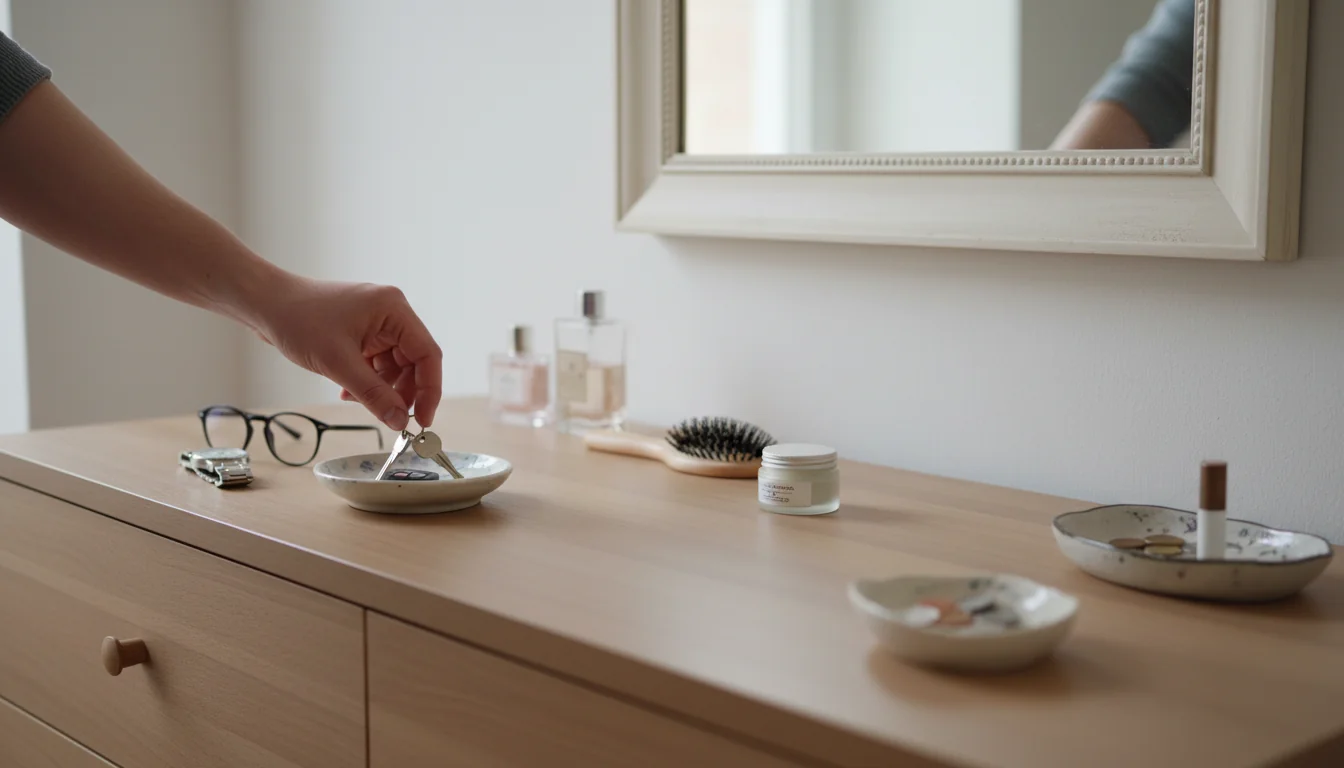
Vertical add‑ons: more space
When floor space is tight, go up. Add slim structures above or beside the dresser to lift small items off the surface.
- Install a shallow shelf or hutch top to stack boxes and small baskets.
- Use wall hooks or a peg rail for belts, scarves, and necklaces.
- Mount a narrow magnetic strip inside a nearby cabinet for hair clips.
- Hang an over‑the‑door organizer on the bedroom door to offload overflow.
- Add a slim cart beside the chest of drawers if you need mobile storage.
Go vertical first, then reassess the dresser surface. Offloading just one category frees surprising space.
Now refine the logic inside the chest of drawers so every small item has a clear place.
Category logic: find fast
Speed comes from consistent categories. The same items must return to the same dresser zones—every time.
- Top drawers for daily‑use small items: underwear, socks, glasses, skincare.
- Middle drawers for accessories: belts, ties, jewelry organizers, hair tools.
- Bottom drawers for seasonal or bulkier soft items to anchor the unit.
- Use 1–2 word labels and color coding where helpful (e.g., charger types).
- Micro‑sort small tech: batteries by size, cords by device, stored coiled.
Baby items are tiny and many. Keep diapers and creams in the top drawer; dedicate a small bin to mittens, socks, and pacifiers so nothing gets lost in big drawers.
In compact rooms, a smaller chest of drawers can still manage a lot with the right structure.
Tiny rooms: big order
Working with a small bedroom or shared space? Make the dresser earn its footprint with smart add‑ons and thoughtful overflow zones.
- Choose a tall, narrow chest of drawers to reclaim floor area.
- Place a smaller dresser inside a closet to centralize storage.
- Use under‑bed bins for out‑of‑season accessories to relieve the dresser.
- Add baskets on a shelf above the rod for seldom‑used small items.
- Keep the top of the dresser mostly clear to visually enlarge the room.
Do not crowd the space with furniture. One versatile dresser plus a few wall solutions beats multiple small units.
With the layout solved, cement your routine with a short weekly reset for the dresser.
How to reset a dresser in 5 steps
- Sweep the top: return everything to the drop‑zone tray or drawers.
- Tidy top drawers: re‑coil cables, refill labels, wipe spills.
- Re‑fold fabrics: file‑fold any collapsed piles for instant visibility.
- Purge duplicates: remove extras to a backup bin outside the dresser.
- Final check: leave 30–40% of the surface free for daily use.
Set a 5‑minute timer every Sunday evening to keep the dresser tidy all week.
Don’t turn the dresser into a catchall for mail and papers. Keep those in a separate station.
Why focus on the dresser first?
It’s the most‑used hub after the closet. A streamlined dresser reduces decision fatigue and keeps small essentials in one predictable place.
How does a chest of drawers compare to nightstands?
Nightstands handle bedtime items. The dresser manages categories that would overwhelm a small table, like accessories, tech, and skincare.
What are the biggest benefits of tidy dresser drawers?
Faster mornings, less visual noise, and fewer lost small items. Dividers and labels prevent mixing and save daily minutes.
Will these ideas work in a nursery?
Yes. Keep diapers and creams top‑drawer, then micro‑sort socks, mittens, and pacifiers so tiny things don’t vanish in big drawers.
How do I maintain an uncluttered dresser surface?
Use a single tray as a boundary, limit décor, and run a weekly 5‑minute reset. Keep 30–40% empty for everyday tasks.
What small organizers are most useful?
Expandable drawer dividers, shallow trays, lidded bins, cord wraps, and labeled inserts. Choose shallow depths for easy access.
Where should watches and jewelry live?
Use a rigid watch case and felt inserts in the top drawer. That keeps the dresser surface clean and prevents scratches.
A calm dresser anchors a calm bedroom. With clear zones, simple dividers, and a brief weekly reset, small items stay visible and within reach.
- Define the surface with one tray and leave space free.
- Divide drawers so every small item has a labeled home.
- Go vertical to expand capacity without crowding.
Apply one idea today; your next visit to the dresser will feel lighter and faster.
0 comments