


Flying soon with delicate souvenirs or dense gear in your cabin bag? Unsure how to keep those items safe without breaking airline rules?
In this 2026 field-tested guide, you’ll get 10 carry-on suitcase tips for fragile and heavy items: how to distribute weight, where to place vulnerable pieces, and how to prep for security without stress. Every tactic is short, practical, and focused on protecting your items from airport to arrival.
Know the limits: cabin rules
Before you pack a single item, confirm what the cabin allows. Policies change, but your belongings don’t get lighter at the gate.
- Weigh each bag at home, including your personal item. Many carriers cap carry-on weight around 8–10 kg (17–22 lb).
- Measure your luggage to standard cabin dimensions and check any duffle bag against size limits.
- Keep fragile items out of checked luggage; valuables, medications, and documents stay in the cabin.
- Review what you may not carry (e.g., certain tools or hazardous materials) to avoid last‑minute removals.
- Know overweight and oversized rules to avoid overweight fees and repacking chaos at the counter.
| Common policy note | What to do with your items |
|---|---|
| One carry-on + one personal item, cabin only | Split delicate pieces: keep the most vulnerable in the personal item under the seat. |
| Weight cap (often 8–10 kg) | Distribute weight evenly; shift dense gear to your personal item if permitted. |
| Liquids limited to 100 ml each | Use a leakproof toiletry bag; isolate glass vials away from pressure points. |
| Batteries restricted in checked baggage | Keep lithium batteries and power banks in your carry-on with terminal protection. |
Take a photo of the airline rules page and your packed scale reading. If challenged, you have quick proof on hand.
Lithium batteries and most high‑capacity packs are cabin-only. Don’t bury them under heavy items; keep them accessible for screening.
Set these boundaries first so your items fit the cabin reality of 2026, not just your suitcase.
Build a safe base: weight
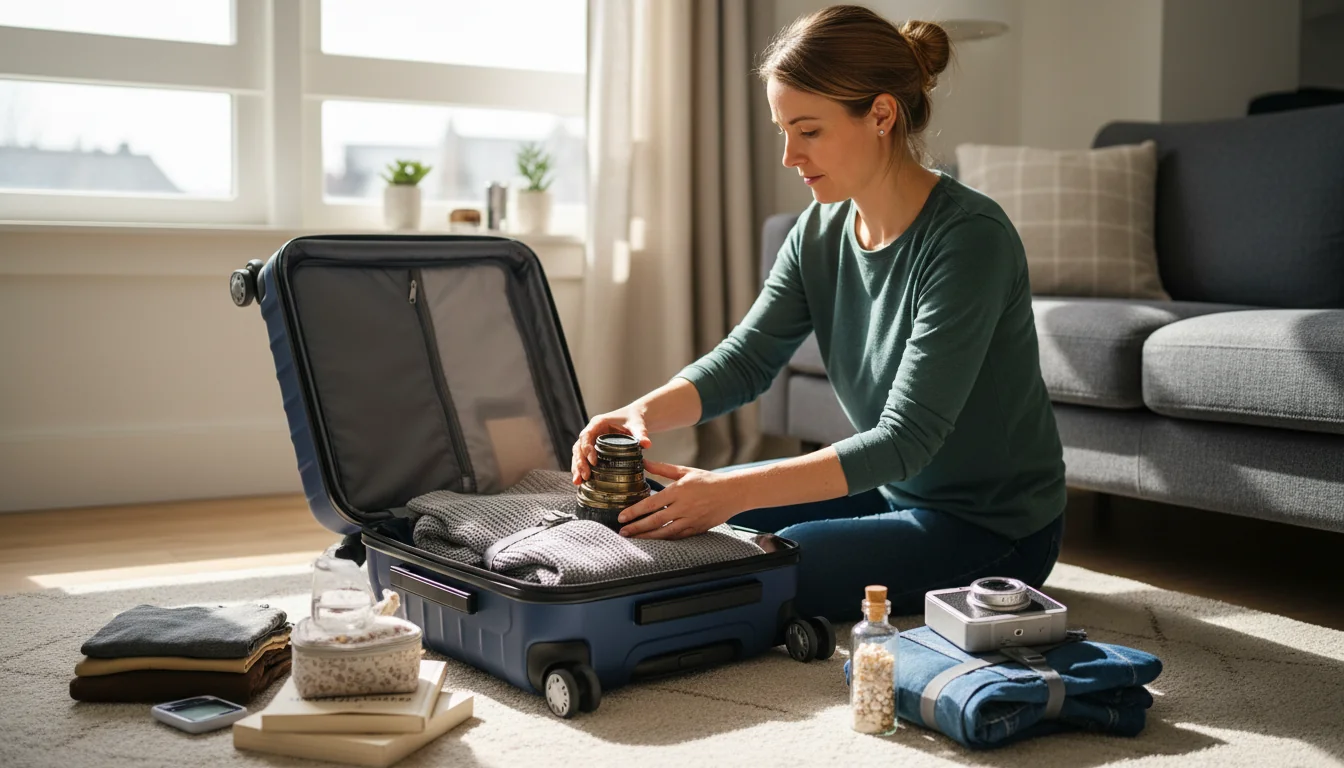
Heavy pieces can crush fragile items if they migrate upward. Create a low, stable foundation that locks mass near the wheels.
- Place dense items—shoes, toiletry bags, books—at the bottom and hinge side to reduce vertical shift.
- Distribute weight evenly left‑to‑right to prevent the carry-on from tipping in overhead bins.
- Fill gaps around heavy items with rolled tees or socks so nothing slides into fragile pieces.
- Use packing cubes as “bricks” to contain clusters of small heavy items.
- If your bag has two compartments, place the heavier cluster opposite the telescopic handle tubes.
A suitcase that’s top‑heavy is more likely to slam your delicate items when bins open. Low mass equals less momentum.
Once the base is solid, your fragile items can ride higher, cushioned and centered.
Cushion delicate pieces: layering
Fragile items fail when they touch hard walls or each other. Your clothing becomes protective foam if you layer correctly.
- Wrap each breakable individually using socks, scarves, or bubble sleeves; never nest two pieces together.
- Build a soft “raft”: base of hoodies or jeans, wrapped item in the center, then another soft layer on top.
- Keep delicate goods toward the center of your luggage, away from zippers, corners, wheels, and handle ends.
- For sunglasses or camera filters, use rigid micro‑cases placed inside a padded pouch.
- If you carry ceramic mugs or ornaments, pad the interiors with tissue before wrapping the exteriors.
Label a small pouch “FRAGILE CENTER.” When repacking mid‑trip, you’ll remember where the delicate cluster belongs.
If an item is irreplaceable, keep it in your personal item at your feet. The floor is less jarring than the overhead bin in turbulence.
This “soft‑inside‑soft” method puts your items in a protective nest that travels well.

Smart containers: tubes and cases
Some belongings survive best inside rigid micro‑homes. Add structure where clothing alone can’t protect sensitive items.
- Use hard cases for eyewear, small lenses, or mini‑electronics; place these in the core of your suitcase.
- Choose a leakproof toiletry bag for glass vials; wrap each bottle, then wedge the bag among soft layers.
- For flat art or prints, a slim tube or rigid folder prevents bending; carry it as your personal item if allowed.
- Pack small heavy items (adapters, metal accessories) in a compact box at the base to stop them drifting into fragile areas.
- For food souvenirs, verify what’s permitted and cushion both inside and outside the original packaging.
Security may open containers. Design your layout so pouches and cases lift out in seconds without exposing loose fragile items.
Liquids over 100 ml aren’t allowed in the cabin. Pack travel sizes only, or move larger containers to checked baggage.
With the right small cases, your items resist pressure, bumps, and hurried inspections.
Organize access: inspections
Airport screening can undo careful packing if agents dig blind. Build a layout that opens neatly and protects items during checks.
- Use a clamshell layout: delicate goods centered, electronics on top in a padded insert that opens flat.
- Put your clear liquids bag in your personal item so it exits quickly without jostling fragile items inside the suitcase.
- Cable ties and labeled pouches help agents reseat your items without guesswork.
- Keep proof of battery rules saved offline; it’s easier to protect your gear when you calmly cite policy.
- Place a thin note on top: “Fragile center; please open flat.” It informs without lecturing.
Photograph your layout before the airport. If your items are moved, you can repack them exactly as designed.
An inspection‑friendly layout keeps your items intact and your stress low.
Balance comfort: carry strategy
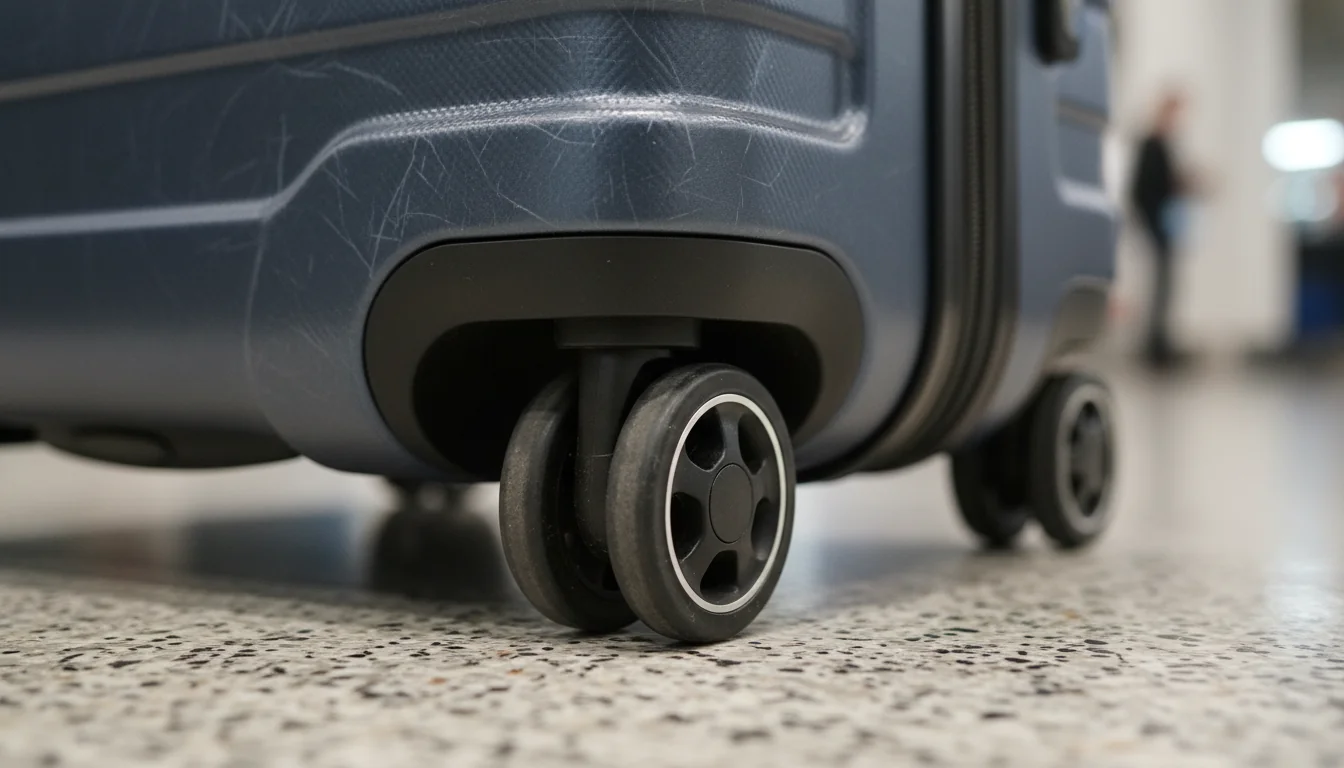
How you carry matters as much as how you pack. Reduce strain and protect items from gate to seat.
- Use your personal item wisely: keep the most sensitive pieces under the seat where you can protect them.
- Wear bulk (jackets, boots) to free space for fragile items that need extra cushioning in the bag.
- Choose a subtle exterior; flashy cases invite extra attention during screening.
- Board prepared: handles locked, tags visible, so you can stow without tipping your luggage onto delicate items.
- If bins look tight, request to place sensitive items below the seat rather than forcing overhead space.
Cabin moves, bins slam, and bags shift. Keeping the most fragile items at your feet often prevents micro‑cracks and scuffs.
Your carry strategy finishes what careful packing started—safe arrival for your items.
Quick-start checklist: pack like a pro
- Confirm cabin allowance and size for your luggage and personal item.
- Weigh everything; note total carry-on weight to avoid fees.
- Build a heavy base with shoes and toiletry bags.
- Wrap each fragile piece individually; pad interiors first.
- Center delicate goods away from edges and wheels.
Stage your items on the floor by layers before loading the suitcase. Seeing the plan prevents fragile‑on‑top mistakes.
Never place a single heavy item above a delicate cluster. One shift can crack multiple pieces at once.
The 10 essential tips, condensed
- Know your allowance: one cabin bag plus one personal item is common, but verify details.
- Weigh and measure all items; keep a margin under the cap.
- Anchor dense goods low; distribute weight evenly.
- Wrap each fragile item solo and pad interiors before exteriors.
- Center delicate goods away from edges, zips, and handle tubes.
- Use rigid micro‑cases and a quality toiletry bag to corral risk.
- Pre‑stage for screening: liquids isolated, electronics quick to remove.
- Keep batteries, valuables, and medications in the cabin only.
- Choose under‑seat storage for the most vulnerable items.
- Photograph your layout to restore items after inspections.
10 carry-on suitcase tips for fragile and heavy items boil down to weight control, smart placement, and padding that survives inspections.
Why focus on your items, not just the bag?
Airline rules shift, but items break the same way: from pressure, impact, and friction. Optimizing placement and padding protects contents in any suitcase.
How do delicate pieces compare to other belongings?
Fragile goods demand isolation and a center position. Standard clothing tolerates edge pressure; delicate items do not. Treat them as single travelers.
What are the main benefits for your items?
Less movement, fewer cracks, and faster inspections. Proper layering cuts shock, while even weight avoids collapse onto delicate items mid‑flight.
Do these tips fit short flights and long trips?
Yes. Cabin dynamics are similar regardless of route length. The same placement rules protect items from taxi to touchdown.
How should I handle heavy gifts or souvenirs?
Cluster heavy goods low and locked in. If a fragile gift is also heavy, add extra layers and keep it under the seat, not overhead.
Any item types that should never be checked?
Lithium batteries, key electronics, jewelry, prescriptions, and irreplaceable items. Keep them with you to reduce loss and damage risk.
What if my carry-on is weighed at the gate?
Shift dense items to your personal item if rules allow. Wear your heaviest layers. Keep fragile items centered if the bag must be handled.
Are cheeses or food items okay in the cabin?
Check current regulations and liquid limits. Firm, well‑wrapped food usually travels better; cushion it and separate from electronics.
Protecting belongings in the cabin is a design problem you can solve before you zip the case.
- Control weight and keep dense goods low and balanced.
- Center and cushion fragile pieces with layered clothing.
- Plan for screening so items return to their safe nest fast.
Apply these 2026 habits once, and your items will arrive calm, intact, and ready for the trip you planned.
0 comments