


Wooden Watch Box

Loose watches on a dresser collect dust, pick up hairline scratches, and get mixed with cufflinks and bracelets. A wooden watch box solves this specific problem by combining a rigid case, a hinged lid, and lined compartments that hold each timepiece steady. Unlike open trays or soft rolls, a box encloses everything in one footprint while presenting your dials at a glance.
Choose a box to gain measurable benefits: fewer micro-abrasions, faster dressing thanks to a visible layout, and safer storage for straps and accessories in a dedicated drawer. From single-slot chests to 12-slot displays with a glass lid, the right wooden watch box upgrades both protection and order. Explore the sections below for clear comparisons, sizing tips, and material guidance to select the box that truly fits your routine.
Rigid storage and glass-top display come together here—scroll to compare capacities, lining types, and hardware, then pick a wooden watch box you’ll enjoy using every day.
A box is fundamentally different from other holders because the shell is hard, the lid closes over the compartments, and the interior is lined. This triad creates a controlled micro-environment for watches—dust stays out, straps don’t migrate, and crystals avoid contact with abrasive surfaces.
| Format | Protects from scratches/dust | Keeps fixed layout | Quick viewing |
|---|---|---|---|
| Wooden box with lid | High (enclosed; lined slots) | High (individual compartments) | High (glass top options) |
| Watch roll (soft) | Medium (crowding can occur) | Medium (shared core) | Low (must unroll) |
| Valet tray/stand | Low (open to dust, contact) | Low (items migrate) | High (but exposed) |
If you own solar-powered timepieces, a clear lid lets light reach the dials even when the box is closed, keeping them charged while protected.
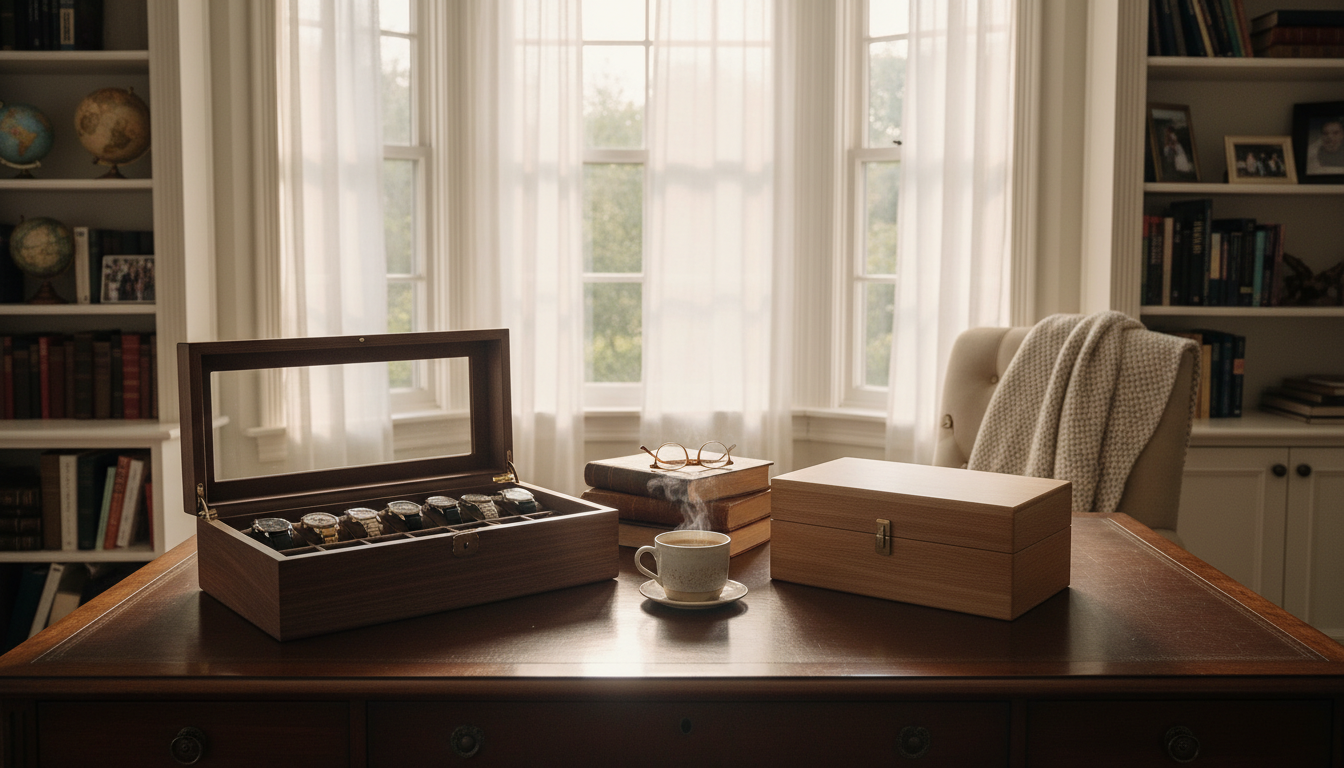
A display-focused box turns storage into decision support. Slots align each dial, a glass top provides a quick overview, and an optional drawer centralizes accessories. Compared with mixed jewelry cases, a dedicated watch box reduces time spent searching and limits metal-on-metal contact.
| Lid type | Benefit for viewing | Care note |
|---|---|---|
| Glass lid | Crisp clarity, scratch-resistant; premium presentation for displays. | Clean with glass-safe spray; avoid ammonia near wood finish. |
| Acrylic window | Lightweight; reduces risk of shattering around children or pets. | Use microfiber only; plastic polish can remove fine swirls. |
| Solid lid (no window) | Discreet look; shields contents from UV and prying eyes. | Label interior rows for faster recall if you rotate often. |
If you’re comparing configurations, see a broader panorama in the selection of watch chests where windowed lids, drawer depths, and slot counts can be contrasted side by side.
A well-organized lid-to-drawer box can cut morning selection time by 30–60 seconds—real convenience if you match straps to fashion watches and other accessories daily.
The advantage of a box is modular capacity: single-slot for a prized piece, 5–6 for a focused set, 8–12 for an enthusiast, and 20+ for deep rotations. The structure remains constant—rigid walls, lid, lined slots—while the grid expands to fit your watch count and case sizes.
| Capacity (slots) | Approx. footprint (W×D×H) | Best for |
|---|---|---|
| 1 | 13×13×9 cm / 5×5×3.5 in | Gift presentation; desk display |
| 5–6 | 30–33×20–22×12–15 cm | Weekday rotation; compact dressers |
| 8–10 | 35–40×22–26×12–16 cm | Growing collections; mixed case sizes |
| 12 | 40–45×25–28×13–17 cm | Comprehensive storage plus drawer |
Want a focused view of mid-size displays? Explore the eight-slot references to compare pillow shapes, glazing, and clasp types across similar footprints.
Large-lug sports watches can exceed slot width even if case diameters match. Check internal clearances, not just the stated slot count.
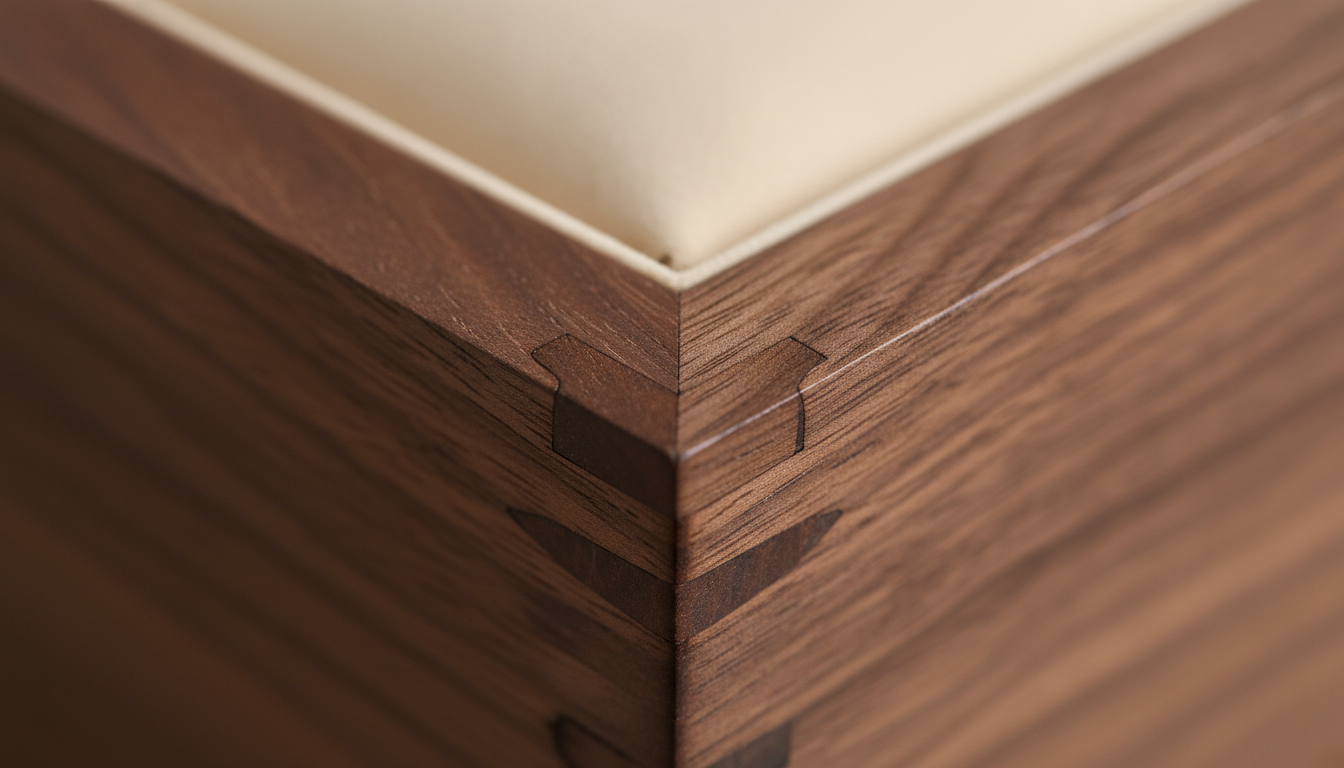
Material and construction define the look and lifespan of a box. Solid hardwoods and well-executed joints add stability; veneers on engineered cores improve weight and cost efficiency. Interior fabrics—velvet, microfiber, or linen—buffer contact points and add a refined tactile feel.
| Wood species/finish | Visual tone | Care guidance |
|---|---|---|
| Walnut (satin) | Warm brown; visible grain | Dust with microfiber; occasional wax for sheen |
| Mahogany (polished) | Reddish brown; classic formal look | Avoid strong sunlight to prevent color shift |
| Cherry (gloss) | Amber; deepens over time | Use non-abrasive polish; spot-test cleaners |
| Ebony veneer (matte) | Dark charcoal; modern vibe | Wipe prints frequently; avoid silicone sprays |
For larger layouts with classic proportions, see the ten-slot series to assess hardware choices, wood tones, and drawer implementations designed for broader collections.
“A thoughtfully built box protects against dust, organizes daily wearers, and elevates the look of your space—all in one compact footprint.”

Use these criteria to pick the right box for your watches and your space. Each point ties back to how a rigid, lined case with a lid will serve you daily.
For a compact weekday set, consider a 6-slot layout; see a representative example in this six-watch format that emphasizes balanced spacing and gentle lining.
If you want room to grow without a large cabinet, a slim 10-slot box with a glass lid is a smart upgrade; explore a layout akin to this ten-watch configuration for visible organization and a tidy footprint.
When comparing “Home > Products > Wood Watch Boxes” categories, prioritize dimensions and inner materials over marketing terms. The right box will specify internal slot width and pillow size clearly.
Because a box encloses the layout, it controls dust and contact better than trays or stands. The lined slots, rigid shell, and windowed lid protect finishes while keeping everything visible. It’s a single, stable footprint that organizes watches and accessories without crowding.
Travel cases excel on the move but compromise on fixed presentation. A box provides steady spacing, a lid, and a drawer—better for display and storage at home. For a compact home base with presentation value, consider a 5-slot arrangement such as this five-watch chest that balances capacity with minimal footprint.
The lid is central to the box concept: it reduces dust, shields from casual bumps, and—when fitted with glass or acrylic—lets you check the lineup instantly. Solid lids add privacy; windowed lids accelerate selection and keep solar dials exposed to light.
Yes, provided the internal slot width and pillow circumference match your case diameters and bracelets. Look for deeper rows and wider cushions. Many boxes comfortably house 42–46 mm cases; check specifications for lug-to-lug clearance and lid height.
Use a soft brush or compressed air for lint, then a microfiber cloth. For windowed lids, clean glass with a non-ammonia product; for acrylic, use plastic polish. If you want a scalable display with premium lining, review an 8-slot format like this velvet-lined layout for gentle support and neat spacing.
A drawer consolidates straps, links, tools, and jewelry directly under your watches, reducing clutter and speeding selection. It keeps small parts away from the slot rows, preventing accidental contact with crystals or bezels—especially useful when you rotate frequently.
A wooden watch box brings three strengths together: rigid protection, tidy presentation through a windowed or solid lid, and stable compartments that prevent shifting. Choose the capacity that matches your rotation and the lining that treats your finishes kindly, then enjoy a calmer, faster routine each day.
If you’re considering a higher-capacity route with discreet proportions, examine a refined twelve-slot setup such as this twelve-watch format to understand how drawer depth, glazing, and hardware choices fit your space.
For adjacent choices and sizes, you can also browse related collections: complement this category with comprehensive watch cases, pair it with focused eight-slot options, or scale up smartly via ten-watch layouts—all anchored by the box format that keeps watches safe, visible, and ready.


